Best Low MOQ Custom Jewelry for Shopify Brands: The Scaling Strategy for Growing Labels
Zoey
Launching an accessory line is one thing. Scaling it into a recognized, profitable brand across modern digital channels is an entirely different battle.
Whether you are managing a high-traffic Shopify storefront, driving thousands of direct buyers through a high-engagement Instagram label, or curating an exclusive line for an independent designer boutique, you quickly hit the exact same structural wall: your audience constantly demands fresh drops, personalized custom collections, and seasonal catalog expansion. But legacy jewelry factories still force you into their rigid, high-volume production models.
Sinking thousands of dollars of your hard-earned operating capital into massive upfront orders per SKU is no longer just risky—it is an operational trap. It locks up your cash flow in warehouse deadstock, leaving you with depleted budgets for your Meta ad scaling, influencer gifting campaigns, and cross-channel marketing.
That is exactly why modern, agile growing jewelry brands are shifting away from mass-production and turning toward responsive low moq custom jewelry manufacturer pipelines.
Instead of gambling your vital marketing budget on unvalidated bulk stock, aligning with a flexible manufacturing partner allows you to execute precise market tests, roll out personalized name or engraving edits safely, and expand your permanent product lines with absolute capital protection.
In this strategic sourcing guide, we will break down the best low-MOQ custom jewelry frameworks built specifically for scaling contemporary brands—whether you sell via Shopify, social commerce, or physical boutiques—and how the right manufacturing infrastructure can stabilize your margins and help your business grow sustainably.
Why Growing Shopify Brands Prioritize Agile Production Over the Lowest Unit Price
When an accessory brand is in its growth phase, Shopify cash flow velocity is the single metric that dictates survival.
Many contemporary Shopify store owners and independent brand directors fall into a common sourcing trap: chasing the absolute lowest per-piece factory cost by agreeing to massive, multi-hundred-unit bulk minimums. What they fail to realize is that saving $1 on the front-end production cost means absolutely nothing if 70% of that inventory ends up sitting dead in a warehouse, completely unmarketable.
For a scaling label, operational flexibility and capital liquidity are infinitely more valuable than a razor-thin unit price. Aligning with an agile, asset-light manufacturing setup gives multi-channel Shopify brands four massive strategic advantages:
1. Eliminating the “Deadstock” Capital Trap on Your Balance Sheet
Instead of suffocating your business by locking up thousands of dollars in high-volume, single-SKU runs, a low-MOQ structure keeps your working capital completely liquid. Every dollar you don’t bury in excess inventory is a dollar you can deploy directly into aggressive Meta/TikTok ad scaling, high-impact Instagram influencer seeding campaigns, or optimizing your Shopify themes and checkout funnels to maximize conversion rates. You shift your capital from a liability (unsold stock) into an active growth engine (Shopify traffic and customer acquisition).
2.Frictionless Market Validation via Your Shopify Dashboard
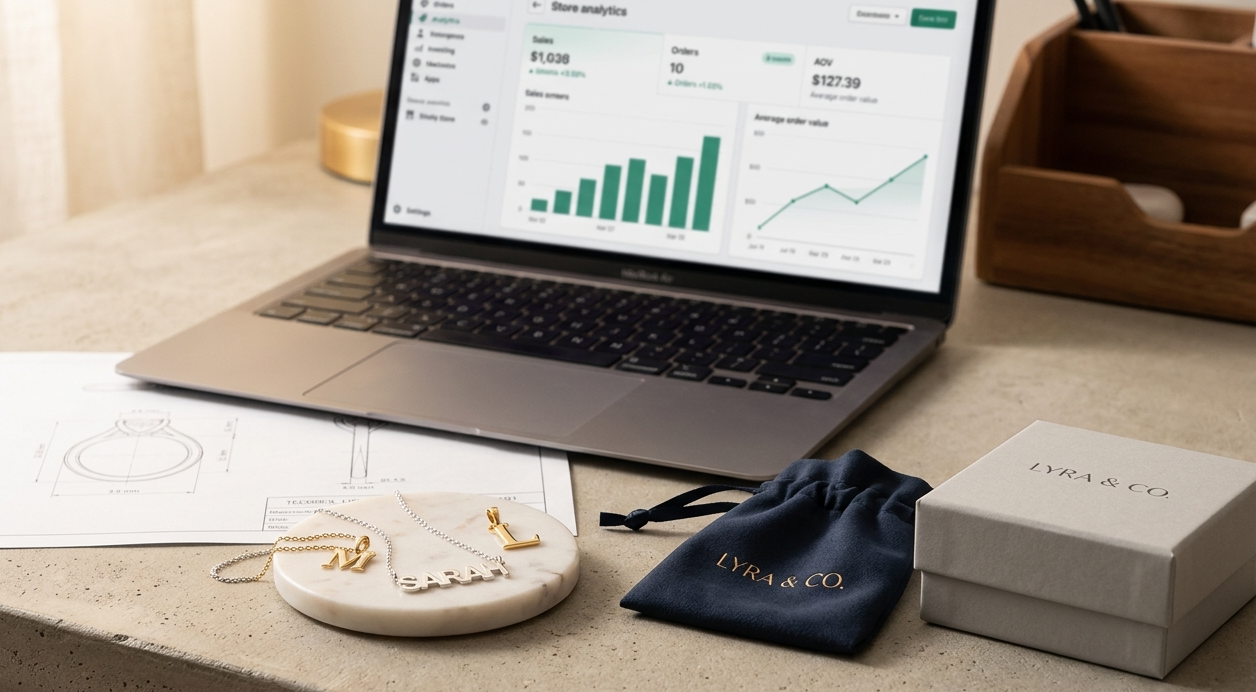
Modern social commerce moves at lightning speed. A specific font trend, zodiac collection, or geometric charm design can go viral on TikTok or an Instagram Reel in a matter of hours. A responsive production line allows you to launch 5 to 10 distinct custom concepts simultaneously in small, agile batches of 10 to 30 units. You let your real-time Shopify analytics dashboard and pixel data tell you exactly what your audience is adding to cart, completely removing the dangerous, expensive guessing games from your product development cycle.
3.Compressed Lead Times for Hyper-Targeted Shopify Injection Drops
Traditional high-volume manufacturing pipelines come with bloated, multi-week lead times that cause you to completely miss peak viral trend windows. Agile small-batch manufacturing compresses the timeline from conceptual CAD sign-off to retail-ready physical stock. This rapid turnaround allows your team to sync flawlessly with your marketing calendar—injecting fresh, limited-run capsule edits and holiday drops into your Shopify catalog precisely when your store’s consumer buying intent is at its absolute highest.
4.Strategic Risk Mitigation & AOV Optimization During Collection Scaling
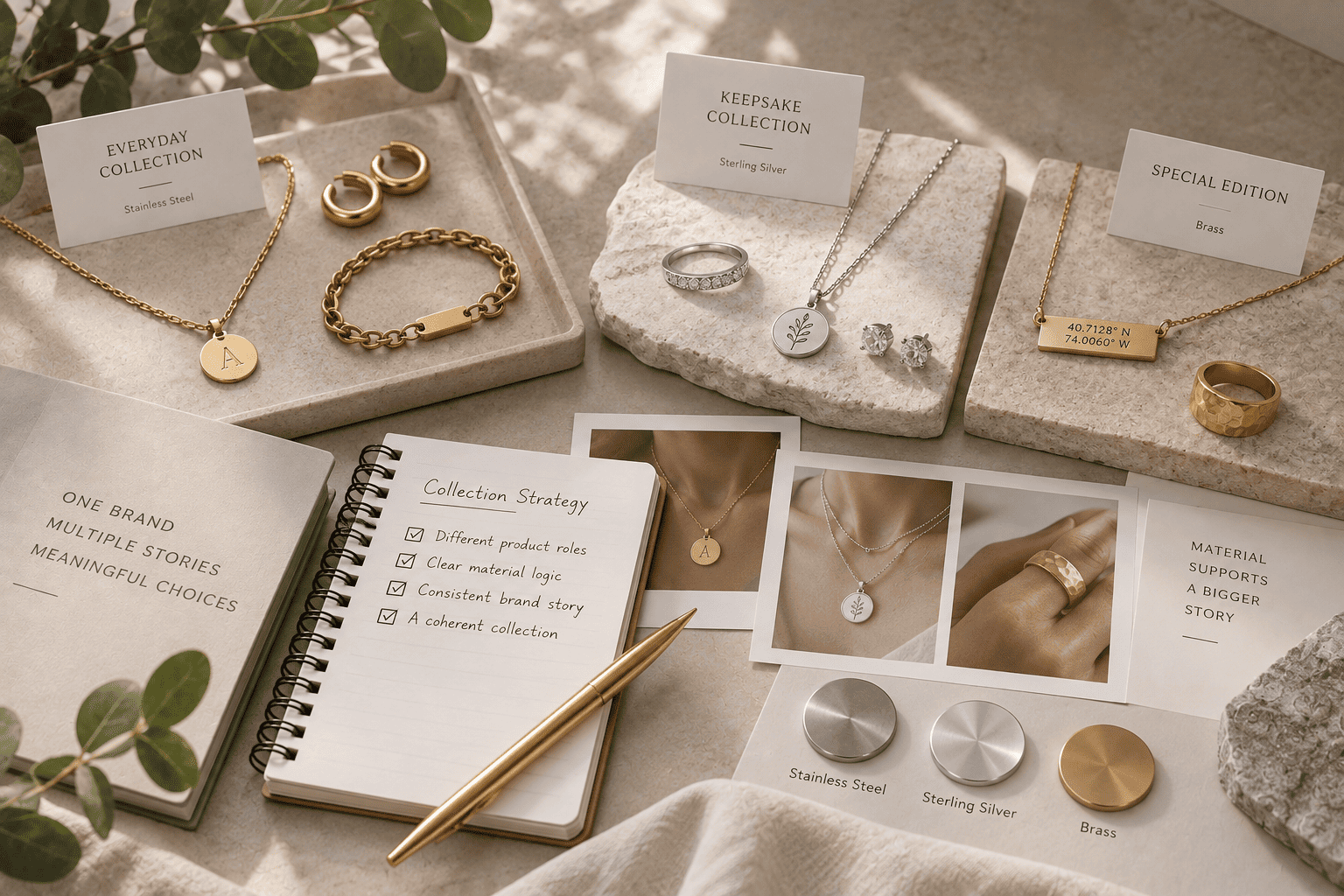
Building a permanent, multi-year product line requires a healthy SKU diversity. Low-MOQ production allows you to safely build out a broad product architecture—mixing staples like waterproof stainless steel chains with premium 925 sterling silver keepsake pendants. You can safely expand your Shopify store’s digital footprint, deploy strategic native bundling apps to instantly increase your Average Order Value (AOV), and elevate your brand’s market positioning without exposing your cash flow to catastrophic financial risk if a particular design underperforms.
Best Low MOQ Custom Jewelry Categories for Shopify Brands
1. Custom Name & Typographic Necklaces (The High-AOV Engine)
The Ecommerce Reality: Personalized text, signature scripts, and custom initial plate necklaces remain the undisputed crown jewel of social-commerce conversions. Because they are hyper-personal, they completely bypass comparison shopping—allowing your store to capture massive margins.
Why the Low-MOQ Setup Wins: Instead of guessing which font will go viral and pre-ordering 500 units of a deadstock style, partnering with an experienced custom name necklace manufacturer allows you to upload 10 different trending typography styles to your storefront simultaneously. You let your customers type their names using frontend customizer apps, and we handle the entire execution on the backend on an agile, order-by-order basis. This reactive, precision fulfillment model means you can instantly offer an infinite matrix of personalized scripts to your audience without holding a single piece of physical inventory beforehand.
2. Personalized Initial & Monogram Jewelry (The Flawless Entry-Level Gift)
The Ecommerce Reality: Monogram rings, initial bracelets, and stamped pendant charms are timeless assets with universal demographic appeal. They require incredibly simple frontend choice matrixes on your website, reducing buying friction and cart abandonment.
Why the Low-MOQ Setup Wins: Many scaling Shopify labels utilize initial jewelry as their ultimate “Lead Magnet” or entry-level collection. With low-minimum support, you can safely stock an agile matrix of letters A–Z in core plating finishes (18K Gold, Rose Gold, Silver) without burying your working capital in less common characters. It is the perfect setup for deploying native post-purchase upsell apps to maximize your Average Order Value (AOV).
3. Custom Birthstone & Family Keepsake Collections (The Emotional Margin Driver)
The Ecommerce Reality: Birthstone-integrated necklaces and multi-gem family bracelets tap into powerful emotional triggers. They are the absolute ultimate weapon for Q4 holiday surges, Mother’s Day campaigns, and high-converting birthday email flows.
Why the Low-MOQ Setup Wins: Managing 12 different monthly gemstones alongside multiple metal variants is an inventory nightmare under traditional manufacturing setups. A flexible production pipeline allows your brand to launch intricate channel-set or claw-set birthstone concepts seamlessly. You test the aesthetic demand during peak gifting seasons without the catastrophic financial risk of over-ordering slow-moving seasonal stock.
The Ecommerce Reality: Modern Gen-Z and Millennial consumers demand premium-weight, structural accessory lines they can wear to the gym, the beach, and the shower without worrying about tarnishing.
Why the Low-MOQ Setup Wins: Aligning with a dedicated custom stainless steel jewelry manufacturer that supports low volumes is the ultimate tactical advantage for scaling brands. It allows you to offer 100% waterproof, sweatproof everyday luxury that drives your customer return-rate down to near 0%. You achieve incredible production cost-efficiency without heavy upfront capital investments, allowing your brand to run aggressive influencer seeding campaigns with healthy, protected profit margins.
5. Exclusive Brand Logo & Custom Motif Collections (The Community Builder)
The Ecommerce Reality: As your Instagram following and Shopify email list mature, your audience transitions from buying “generic styles” to buying into your brand community. Custom logo pendants, signature-engraved tags, and limited-edition motif drops instantly solidify your brand identity.
Why the Low-MOQ Setup Wins: Launching a brand-exclusive community collection can feel incredibly daunting if factories require a 500-piece commitment. Our agile production workflows allow you to drop highly exclusive, limited-edition runs of your signature logo pieces. You can create artificial scarcity, trigger massive FOMO among your core audience, and test the waters of high-end custom branding with absolute financial safety.
Why Flexibility Matters More Than Low Prices
Many pre-revenue stores focus entirely on one front-end metric: the factory quotation. However, experienced Shopify brands that survive past their first year know that chasing a razor-thin unit price at the expense of agility is a false economy.
In a modern e-commerce landscape driven by fluctuating ad costs and rapid consumer transit, flexibility is your ultimate strategic defense. Aligning with an agile low moq custom jewelry manufacturer provides your business with concrete financial and operational advantages that a rigid, low-cost mass manufacturer can never replicate:
1.Real-Time Product Optimization & Feedback Loops
The Reality: No matter how extensive your pre-launch research is, your initial batch will generate critical customer feedback. Buyers might request a subtle adjustment to a chain length, a slightly different finish, or a modification to a personalized font script.
The Agile Advantage: A flexible partner allows you to execute fast design adjustments between small production runs based on real Shopify review data. If you are locked into a 500-piece traditional factory commitment, you are stuck with hundreds of units of an unoptimized design that hurts your conversion rates and return metrics.
2.Complete Control Over the Unboxing Experience (AOV & Retention)
The Reality: Premium retail margins require premium presentation. Long-term brands do not ship jewelry in cheap plastic baggies; they require cohesive custom packaging—microfiber pouches, signature debossed boxes, and branded welcome cards.
The Agile Advantage: A truly flexible manufacturing partner doesn’t just customize the metal; they align your packaging customization with your low-MOQ product scaling. This allows you to launch cohesive, limited-edition collections with fully branded presentation without forcing you to pre-order thousands of packaging units that drain your upfront marketing capital.
3.Dynamic Inventory Planning vs. Capital Freeze
he Reality: The faster you can turn over your inventory, the healthier your cash flow. Traditional manufacturing models tie up your capital for months due to bloated production lead times, forcing you into high-risk predictive ordering.
The Agile Advantage: Transitioning to an order-by-order or small-batch ongoing product development model decouples your brand from the traditional inventory cycle. You maintain a lean warehouse footprint, minimize the risk of capital freeze during seasonal transitions (such as post-Q4 cool-downs), and keep your balance sheet exceptionally liquid.
Ultimately, the ability to launch a concept, analyze real-time storefront data, improve the design based on user behavior, and relaunch within days creates infinitely more enterprise value than saving fifty cents on an inflexible, bulk-ordered supplier.
Ready to Transition to a Zero-Inventory Risk Growth Model?
📩 [Contact Our Supply Chain Team Today] — Let’s discuss your upcoming collection roadmap, packaging customization, and low-MOQ sourcing strategy.
How Growing Jewelry Brands Scale Without Large Inventory Risks
The top 5% of scaling Shopify and social-first brands rarely achieve sustainable growth by taking massive, speculative inventory gambles on unproven designs. Instead, they treat product development as a data-driven science, executing a continuous growth loop supported by responsive, low-MOQ infrastructure:
Step 1: The Agile Matrix Drop
Instead of sinking thousands into a single design, successful brands launch a highly curated, small-batch capsule collection (typically 10 to 30 units per SKU). They upload these new concepts to their storefronts, sync them with frontend customization apps, and immediately open the doors for consumer traffic.
Step 2: Real-Time Performance Auditing
With a lean initial batch, the brand monitors direct response indicators within their Shopify analytics dashboard and pixel data. They track Add-to-Cart (ATC) rates, dwell times on product pages, and early social media engagement from influencer seeding. They let actual buying behavior—not guesswork—identify the winning styles.
Step 3: Immediate Reactive Scaling
Once a specific name font, initial charm, or structural stainless steel piece proves its conversion velocity, the brand doesn’t wait weeks for traditional factory timelines. They leverage our order-by-order fulfillment model, instantly scaling production to feed the active Meta or TikTok ad funnel without the risk of over-ordering.
Step 4: AOV-Driven Collection Layering
Once a core winning product is established, the brand uses native Shopify bundling apps to introduce complementary items—such as matching initial bracelets to pair with a viral custom necklace style. This tactical expansion naturally drives up Average Order Value (AOV) and gross margins.
Step 5: Capital-Light Architecture Expansion
Over time, these micro-wins compound. By continuously rolling out safe, low-MOQ test drops and expanding only the proven variants, the brand builds an extensive, multi-SKU product catalog. They achieve enterprise scale and high Customer Lifetime Value (LTV) while keeping their warehouse liabilities at an absolute minimum.
The Bottom Line: Sourcing for the Modern E-Commerce Era
The modern jewelry market moves too fast for legacy supply chains. Consumer preferences shift in days, ad costs require tight efficiency, and cash flow velocity dictates which brands thrive and which brands freeze.
Aligning your scaling business with a flexible, low-MOQ custom jewelry manufacturing infrastructure isn’t just about avoiding a high minimum order quantity. It is about equipping your Shopify storefront or social commerce brand with the ultimate operational moat: the ability to launch, validate, and scale products in real time with near-zero inventory risk.
Beyond the Quote: Key Criteria for Selecting a True Growth Partner
valuating a low moq custom jewelry manufacturer requires looking past the initial PDF price quotation. In the high-velocity e-commerce and social commerce landscape, an unreliable supplier will cost you infinitely more in missed holiday deadlines, customer chargebacks, and tarnished brand equity than any front-end discount could ever justify.
When auditing potential manufacturing infrastructure to support your long-term product lines, experienced Shopify brands vet suppliers against these four non-negotiable operational capabilities:
The Sourcing Reality: Many factories claim to offer “low MOQs,” but their internal workflows are still built on legacy, high-volume batch systems. When you need a quick, order-by-order fulfillment for a viral custom name necklace line, they stall.
The Standard: Your partner must possess the dedicated technical infrastructure to handle rapid, on-demand custom production without compromising structural integrity or plating durability. They should seamlessly transition from an agile sample run to automated, continuous fulfillment as your ad spend scales.
2. Cross-Material Mastery & High Perceived-Value Finishing
The Sourcing Reality: A scaling brand cannot rely on a one-dimensional supplier. As your collection architecture matures, your catalog will naturally demand a mix of diverse materials to maximize margins.
The Standard: Ensure your manufacturing partner has proven expertise across everyday performance materials like high-grade 316L stainless steel as well as premium fine jewelry metals like 925 sterling silver. The finishing, structural polishing, and stone-setting must meet the strict standards required by independent boutiques and high-end digital labels.
3. Compressed, Reliable Turnaround Times & Logistical Agility
The Sourcing Reality: Missing a peak Q4 holiday window or an automated email drop because a factory delayed production for a week can devastate a growing brand’s quarterly revenue.
The Standard: A true flexible partner operates on compressed, transparent production timelines. The workflow from digital CAD approval to retail-ready physical fulfillment must be tightly optimized, giving your marketing team complete predictability when scheduling product drops and influencer seeding campaigns.
The Sourcing Reality: Forcing a brand to source jewelry from one factory and custom boxes from another creating a logistical nightmare, inflating shipping costs, and slowing down time-to-market.
The Standard: Your manufacturer should provide a fully integrated private-label ecosystem. This includes seamless brand identity execution—such as precision logo engraving and custom motifs—alongside low-MOQ branded packaging customization (microfiber pouches, premium boxes). Your product and its unboxing experience should arrive as a singular, cohesive asset.
The Verdict: Sourcing for Enterprise Value
The best manufacturing partners do not operate as mere transactional order-takers. They function as a quiet, bulletproof extension of your operations team. They absorb the supply chain volatility, eliminate your warehouse liabilities, and protect your critical working capital, allowing you to focus 100% of your energy on what matters most: scaling your brand community, optimizing your conversion funnels, and driving long-term customer retention.
Final Thoughts: Scaling Confidently, One Collection at a Time
Survival and growth in today’s hyper-competitive direct-to-consumer (D2C) jewelry market come down to one variable: how efficiently you deploy your capital. Continuing to operate under rigid, high-volume sourcing models is an unnecessary existential risk for a growing Shopify brand.
By transitioning your supply chain infrastructure to an agile, low-MOQ framework, you stop gambling your marketing budget on warehouse stock. Whether you are scaling an initial typographic script line, injecting a waterproof 316L stainless steel collection into your ad accounts, or launching a brand-exclusive custom motif drop, your sourcing strategy must match your digital marketing velocity.
The ultimate objective of choosing a flexible manufacturing partner isn’t just about minimizing an order sheet—it is about securing the financial liquidity, operational speed, and product testing freedom required to build a resilient, long-term brand equity that scales confidently.
Ready to Pressure-Test Your Next High-Margin Collection?
You have built the front-end brand storefront, refined your ad creatives, and captured an active consumer audience. Now, it is time to build the responsive backend infrastructure your business deserves.
Whether you are designing a complex personalized entry-level concept or expanding an established multi-SKU Shopify catalog, our team acts as your dedicated, flexible manufacturing partner. We help growing labels execute precision custom lines with reliable turnaround times, private-label motif integration, and low-MOQ unboxing customization.
Don’t let rigid supply chain bottlenecks freeze your cash flow.
📈 [Submit Your Tech Pack or Sourcing Request Today] — Contact our production consulting team to review your design vectors, sample workflows, and reactive fulfillment pricing models. 👇
Some custom jewelry designs look complicated immediately. They may contain multiple stones, detailed lettering, layered components, unusual shapes, or several decorative effects. Other designs look almost effortless: a clean pendant, a simple geometric form, or a minimal personalized piece. It is tempting to assume that
A jewelry brand often begins with a relatively simple material strategy. Perhaps your first personalized collection is made primarily in stainless steel. Or your brand has built its early identity around sterling silver. As those products gain traction, using the same material across the collection
When developing a custom jewelry product, material selection can look like a technical decision. Should the piece be made in stainless steel, sterling silver, brass, or another suitable material? What will work for the design? What fits the target price? Those questions matter, but for
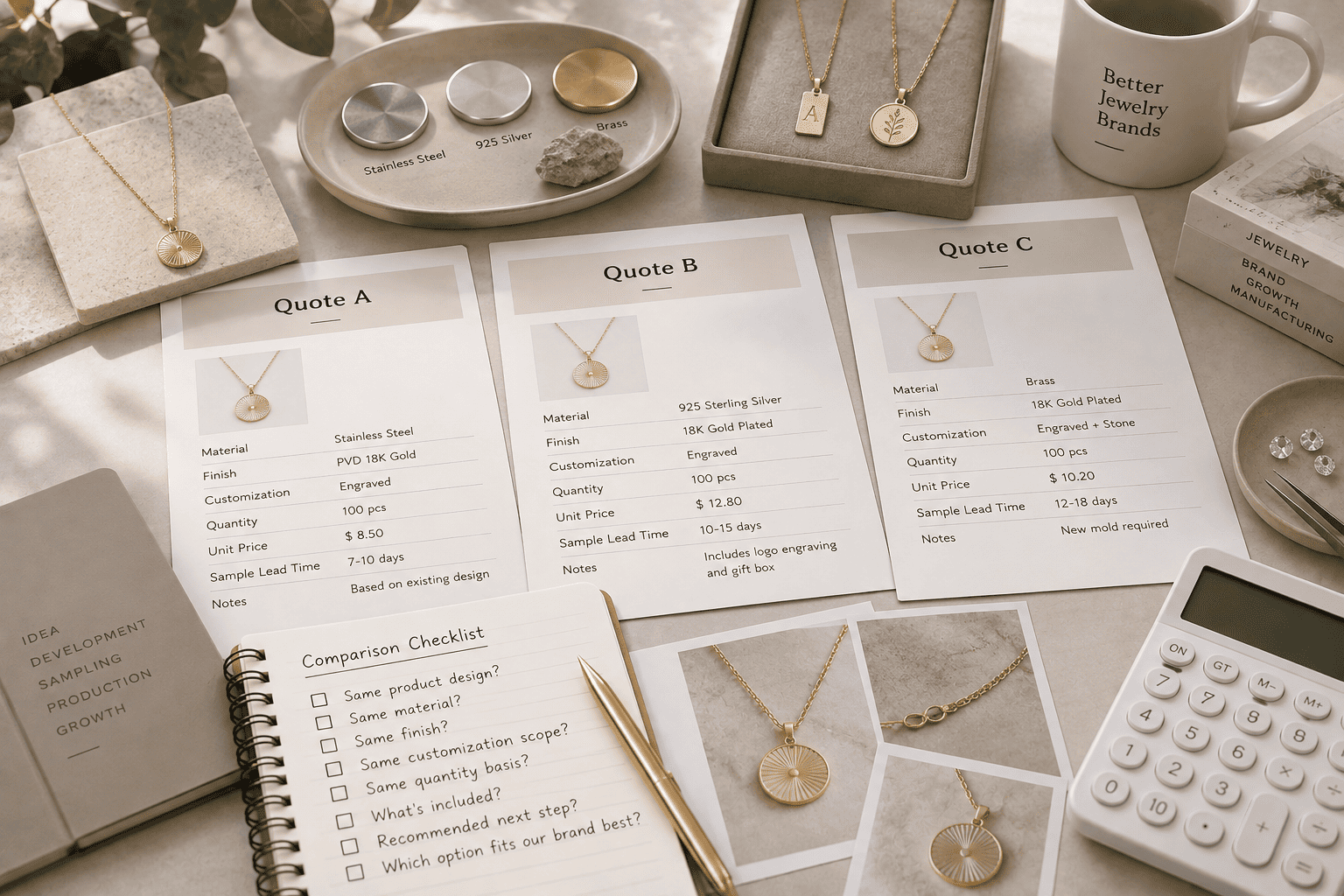
Receiving multiple quotes from custom jewelry manufacturers can feel like an important milestone. After developing a product concept and starting conversations with manufacturers, brands finally have something concrete to evaluate. One manufacturer may provide a lower unit price. Another may offer a higher quotation but
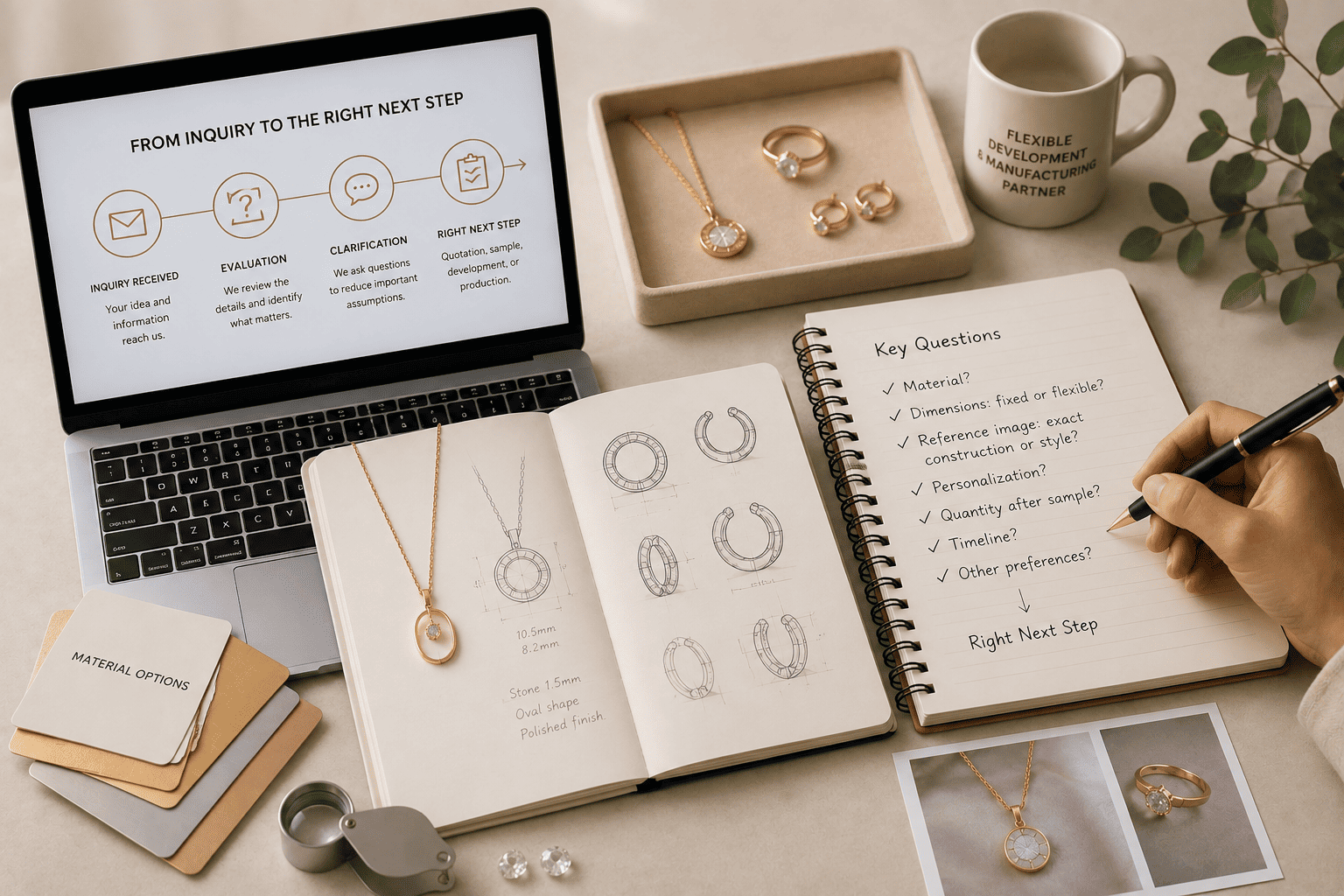
You send a custom jewelry manufacturer your product idea, reference images, and the information you already know. Instead of immediately receiving a final quotation and production timeline, you may receive several questions in return. What material are you considering? Is this dimension fixed or still