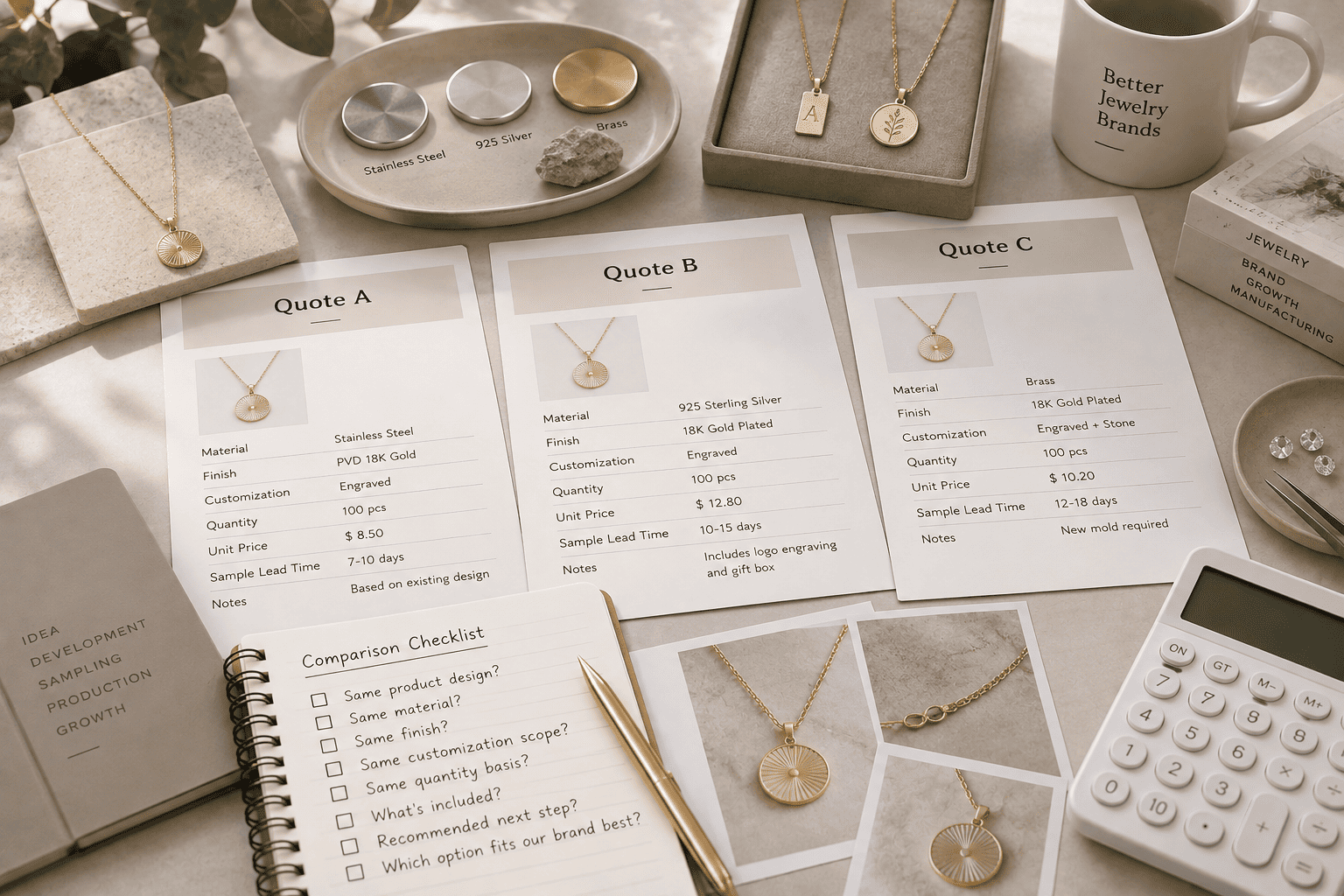

Receiving multiple quotes from custom jewelry manufacturers can feel like an important milestone.
After developing a product concept and starting conversations with manufacturers, brands finally have something concrete to evaluate. One manufacturer may provide a lower unit price. Another may offer a higher quotation but appear to include more development support or a different manufacturing approach.
At first glance, comparing the numbers seems straightforward.
The natural question becomes:
Which manufacturer is offering the better deal?
However, in custom jewelry manufacturing, price comparison only becomes meaningful after another question has been answered:
Are these quotations actually based on the same product, the same requirements, and the same manufacturing assumptions?
Two manufacturers may both describe a project as a “custom necklace,” yet their quotations may represent different materials, finishing expectations, customization levels, production quantities, or levels of product understanding.
A lower quotation is not automatically a better offer.
A higher quotation is not automatically a safer choice.
The useful comparison begins by understanding what each manufacturer is actually evaluating.
A Manufacturing Quote Is the Result of Underlying Assumptions
A manufacturing quotation is not simply a price attached to a product image.
It is the result of multiple decisions and assumptions made about the project:
- What material is being used?
- What finishing standard is expected?
- How much customization is involved?
- Is the product based on an existing manufacturing approach or a new development?
- What production quantity is being considered?
- What stage of the product journey has the brand reached?
If manufacturers are making different assumptions in any of these areas, the final numbers may not represent the same product.
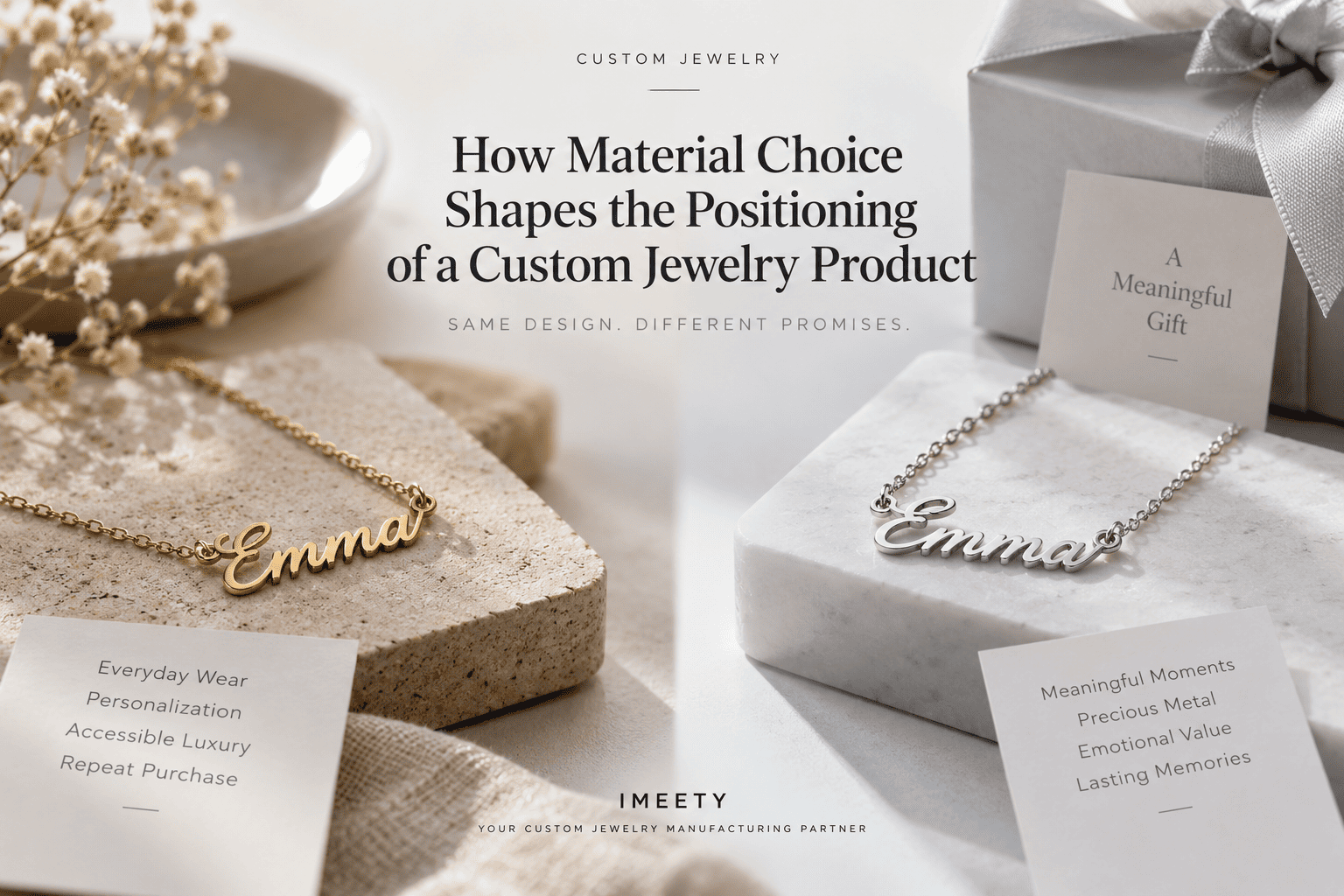
For example, two suppliers may both quote a gold-tone personalized necklace.
However:
- one quotation may assume stainless steel with a gold-tone finish;
- another may assume sterling silver with gold plating;
- one may interpret the personalization as a standard name jewelry format;
- another may consider it a more complex custom structure;
- one may calculate pricing based on a larger production quantity;
- another may evaluate a smaller initial production run.
The difference in price may not come from one manufacturer being more expensive.
It may come from the fact that they are evaluating different versions of the product.
Before comparing numbers, brands need to understand what each quotation is actually describing.
Start by Comparing the Product Scope, Not the Final Number
The easiest mistake during quote comparison is focusing on the unit price first.
A unit price only becomes meaningful when the product scope behind it is clearly aligned.
These factors are not only cost considerations. They determine whether two manufacturers are actually quoting the same project.
Material
Material selection can significantly influence both manufacturing requirements and the final product experience.
Different materials involve different production considerations, finishing processes, and product characteristics.
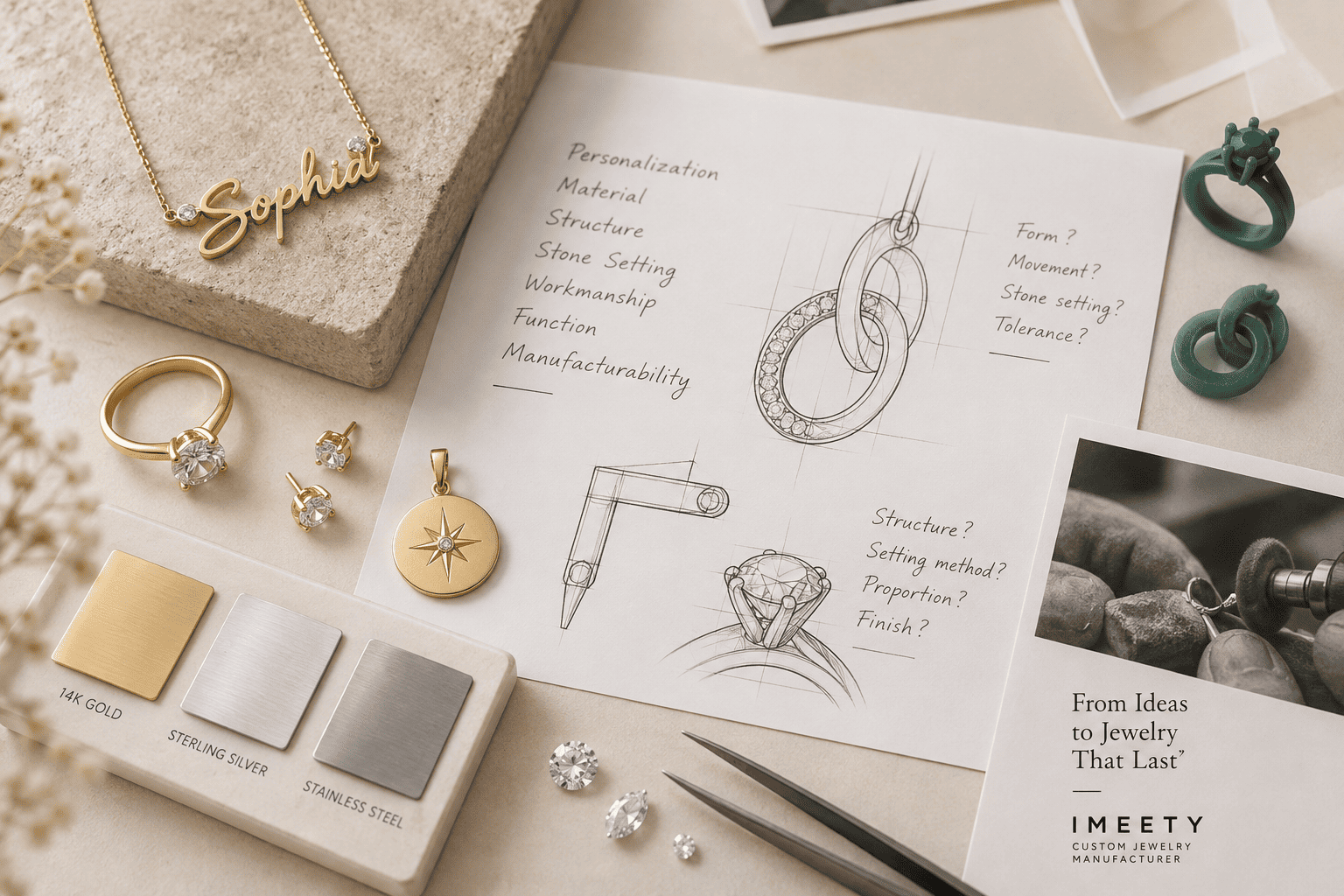
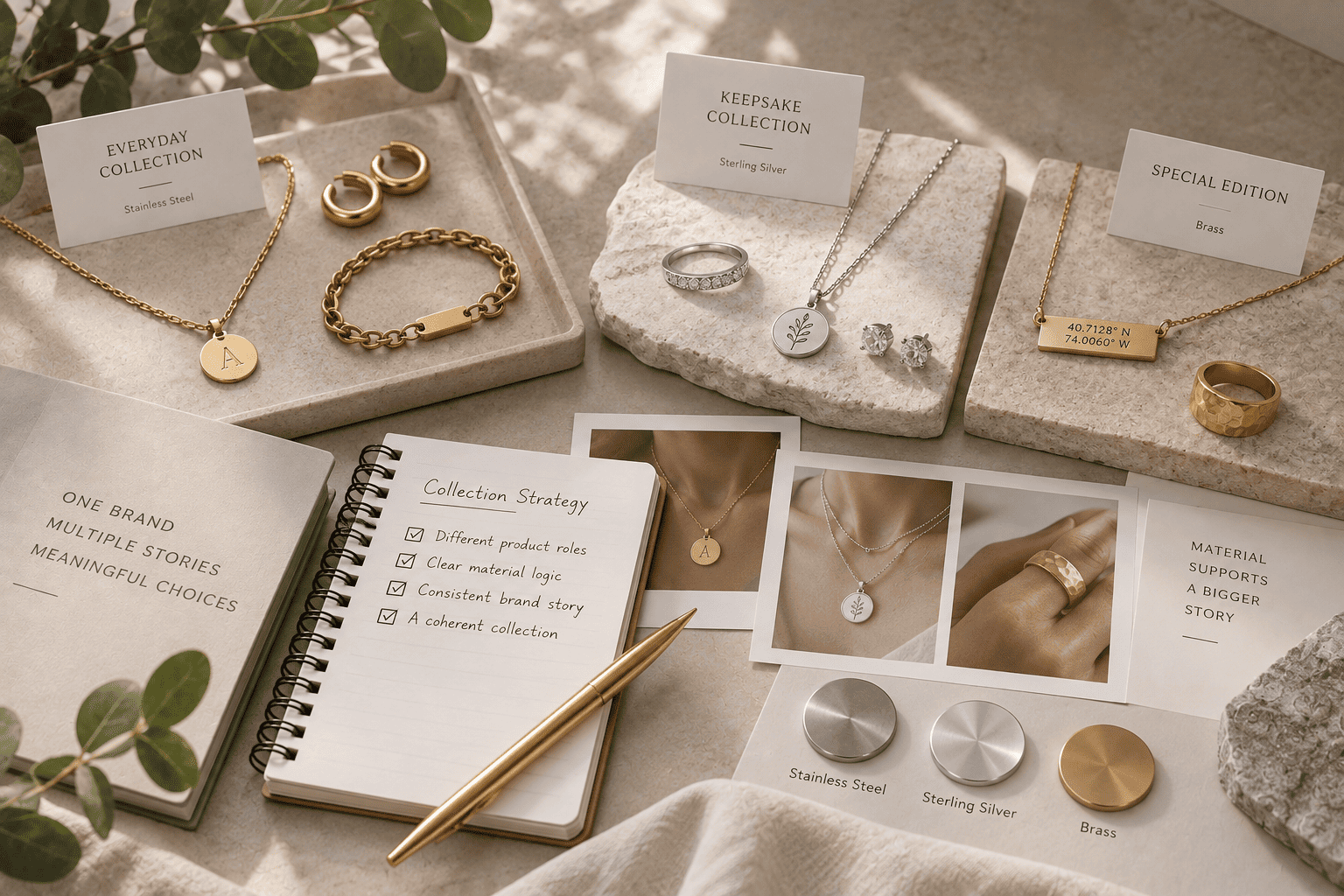
For example, stainless steel, sterling silver, and brass may all be suitable for custom jewelry projects, but they can create different expectations around:
- appearance;
- durability;
- finishing approach;
- product positioning.
If two quotations are based on different material assumptions, comparing only the unit price can create a misleading conclusion.
Finish
The quoted finish should also match the intended product result.
A gold-tone appearance, for example, may involve different finishing approaches depending on the base material and the expected product quality.
Brands should confirm whether the quoted finish represents the appearance, durability expectations, and positioning they want to offer customers.
Customization Scope
The word “custom” can describe very different manufacturing situations.
A personalized name necklace, engraved pendant, logo jewelry piece, and three-dimensional custom design may all fall under custom jewelry, but they do not necessarily require the same production approach.
The quotation should be evaluated against the actual level of customization involved.
Quantity Basis
Production quantity is another important assumption.
A quotation based on a larger production volume may not be directly comparable with one based on a small initial order.
Similarly, a sample-first project and an established repeat production program represent different stages of a manufacturing relationship.
Before asking why one manufacturer is cheaper, brands should first confirm whether both manufacturers are pricing the same production situation.
Understand What Is Included Before Comparing Offers
Manufacturers may structure quotations differently depending on the project.
Some quotations focus mainly on the estimated product cost. Others may include additional considerations related to development, customization, or production planning.
Neither approach is automatically better.
The important question is whether the brand understands what each quotation represents.
Before comparing offers, consider:
- Is this quotation based on a clearly defined product or an early estimate?
- Are any important product decisions still open?
- Does the quotation reflect the requested customization level?
- Are both manufacturers evaluating the same production quantity?
- Are the next development steps clearly understood?
A quotation that appears higher may include a more complete understanding of the project.
A quotation that appears lower may be based on a simpler interpretation.
The comparison becomes meaningful only when the assumptions behind each number are visible.
Price Differences Usually Come From Different Assumptions
When two quotations are different, the first reaction is often to ask:
Why is this manufacturer more expensive?
A better question is:
What assumptions or product requirements are creating this difference?
A lower quotation may reflect:
- a different material choice;
- a simpler interpretation of the design;
- a different customization scope;
- a different quantity basis.
A higher quotation may reflect:
- different product requirements;
- additional development considerations;
- different manufacturing expectations;
- a different understanding of the final product.
This does not mean the lower quotation is worse or the higher quotation is better. The important point is that price differences often have a reason behind them. How Much Does Custom Jewelry Cost? explains the manufacturing factors that can influence those differences in more detail.
Here, the purpose is different: before deciding whether a price difference is justified, first make sure the quotations are based on comparable assumptions.
Compare the Manufacturing Understanding Behind the Quote
The most valuable manufacturer is not necessarily the one that provides the fastest number.
A useful quotation starts with a clear understanding of what is being priced.
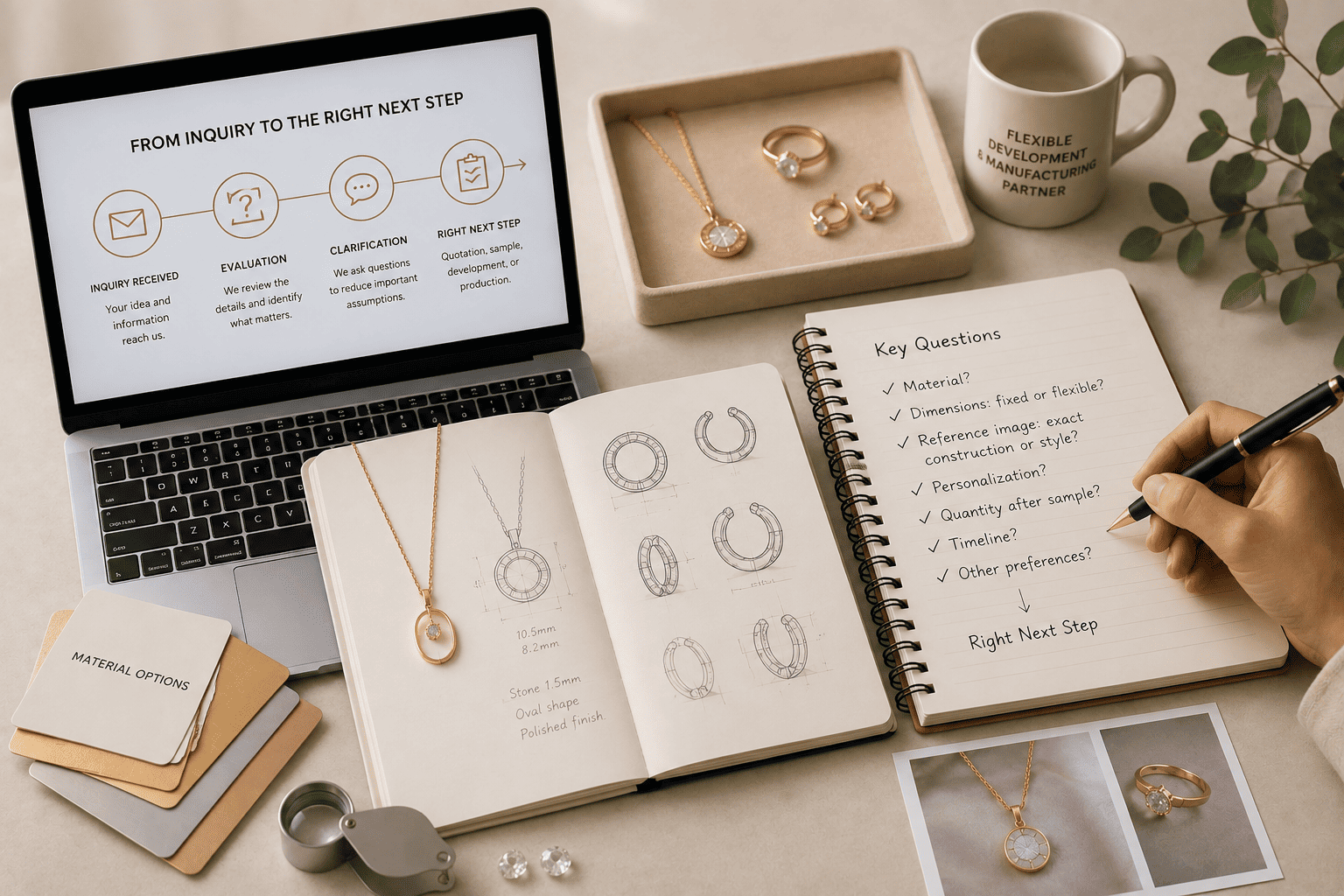
During the early conversation, pay attention to whether the manufacturer is trying to understand the product itself.
For example:
- Do they identify which parts of the reference image matter most?
- Do they distinguish between fixed requirements and flexible preferences?
- Do they ask questions that affect the final product?
- Do they understand the intended quantity and production purpose?
- Can they explain why certain decisions influence the quotation?
These questions are not unnecessary delays.
They show whether the quotation is based on a shared understanding or on assumptions that may create problems later.
A manufacturer who understands the product can usually provide a more meaningful recommendation, even if the first answer requires some clarification.
Compare the Recommended Next Step, Not Only the Price
A manufacturing quotation is not only about the number attached to the product.
It is also connected to what should happen next.
Some projects may already have enough information for a direct quotation and sampling discussion.
Others may need a few important details clarified before the quotation can become reliable.
More complex concepts may require additional product evaluation before a manufacturer can accurately understand the production requirements.
The question is not whether one manufacturer moves faster.
The question is whether the recommended next step matches what the project actually needs.
A quotation based on incomplete assumptions may appear faster, but it can create uncertainty later.
A short clarification stage may sometimes create a more efficient path toward the final product.
Questions Brands Can Ask When Comparing Manufacturing Quotes
A useful comparison does not require turning the process into a negotiation checklist.
The goal is simply to understand whether different manufacturers are evaluating the same project.
Useful questions include:
Are we comparing the same product?
Confirm that materials, finish, dimensions, personalization, and major design requirements are aligned.
Are we comparing the same production basis?
Check whether quantity, order stage, and production expectations are comparable.
What assumptions are included in this quotation?
Understand which details are confirmed and which areas are still based on interpretation.
What creates the difference between these quotations?
The difference may come from material, customization level, production method, development requirements, or another factor.
What would be the recommended next step after this quotation?
The answer can reveal whether the manufacturer understands the current stage of the project.
These questions do not exist to challenge the manufacturer.
They help both sides evaluate the same situation.
Why Quote Comparison Is Also a Communication Test
Choosing a manufacturing partner is not only about comparing numbers.
The early quotation process also reveals how a manufacturer handles uncertainty.
Custom jewelry projects often begin with incomplete information. A reference image may not define every production detail. A product idea may still contain flexible decisions. A brand may know the desired customer experience but not every technical specification.
A useful manufacturing partner should be able to explain:
- what information affects the product;
- what assumptions are being made;
- what decisions remain open;
- why a certain recommendation is appropriate.
The brand owns the product vision.
The manufacturing partner contributes practical knowledge about how that vision can become a physical product.
The strongest manufacturing relationships develop when both sides understand where each type of knowledge is needed.
Common Quote Comparison Mistakes
Choosing the Lowest Quote Without Understanding the Scope
A lower quotation may represent a different interpretation of the product.
Compare the assumptions before comparing the price.
Comparing Unit Prices Without Comparing Manufacturing Assumptions
Different materials, quantities, customization levels, or production expectations can make similar products appear to have very different economics.
Treating Every Price Difference as a Negotiation Problem
Sometimes the difference exists because two manufacturers are solving different versions of the same request.
The first step is understanding why.
IMEETY’s Perspective: A Useful Quote Starts With Shared Understanding
IMEETY is a Flexible Custom Jewelry Development & Manufacturing Partner.
When evaluating a custom jewelry project, our role is not simply to provide the lowest number as quickly as possible.
A useful quotation requires understanding what the brand is trying to create, which product requirements are fixed, which decisions remain flexible, and what level of manufacturing support the project actually needs.
For some products, the path may be relatively straightforward. For others, additional discussion around material, personalization, dimensions, workmanship, or product direction may be needed before a meaningful quotation can be provided.
The purpose of this evaluation is not to make every project more complicated.
It is to make sure the quotation reflects the product the brand actually wants to create.
For brands comparing manufacturing options, IMEETY’s Custom Jewelry Manufacturer capability supports the broader process of product evaluation, development, sampling, and production.
Final Thoughts
Comparing custom jewelry manufacturing quotes is not simply about finding the lowest number.
A useful comparison begins by understanding what each manufacturer is actually quoting.
Are the materials aligned?
Are the finishing expectations comparable?
Are the customization requirements understood in the same way?
Are the production quantities and assumptions consistent?
When those questions are answered, price becomes a much more meaningful factor.
The best manufacturing decision is not always the cheapest quotation or the most expensive quotation.
It is the offer that best matches the product requirements, manufacturing expectations, and long-term goals behind the project.
Frequently Asked Questions
Why are quotes from custom jewelry manufacturers sometimes very different?
Different quotations may be based on different assumptions about material, finish, customization scope, quantity, product complexity, or project stage. The first step is understanding what each quotation actually includes.
Should I always choose the lowest custom jewelry manufacturing quote?
Not necessarily. A lower quotation may represent a different product interpretation or production assumption. Compare the underlying manufacturing details before deciding.
Does a higher jewelry manufacturing quote mean better quality?
No. A higher price does not automatically mean better quality. It may reflect different materials, requirements, or project assumptions. The important question is what creates the difference.
What should I compare besides the unit price?
Compare material, finish, customization scope, quantity basis, product assumptions, included support, and the recommended next step.
Why do manufacturers ask questions before giving a final quote?
Questions help reduce assumptions and ensure that the quotation reflects the actual product the brand wants to create.
How many quotes should I get before choosing a manufacturer?
There is no universal number. More important than the number of quotations is whether they are based on comparable products and assumptions.
Can two manufacturers quote the same reference image differently?
Yes. Reference images often leave room for interpretation. Different manufacturers may make different assumptions about materials, construction, finish, or customization unless those details are clarified.
What makes a manufacturing quote useful?
A useful quotation is based on a shared understanding of the product, requirements, quantity context, and appropriate next step for the project.