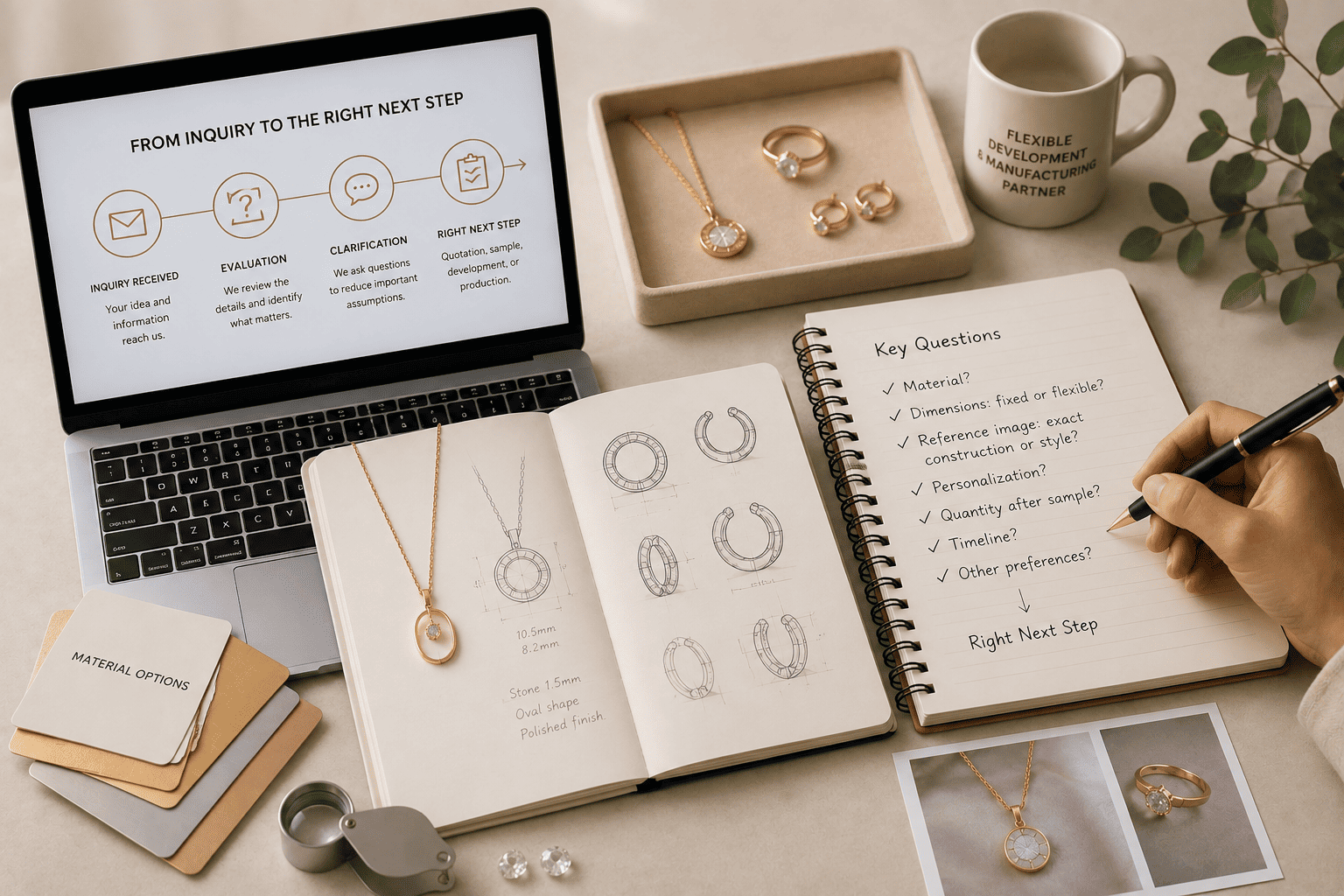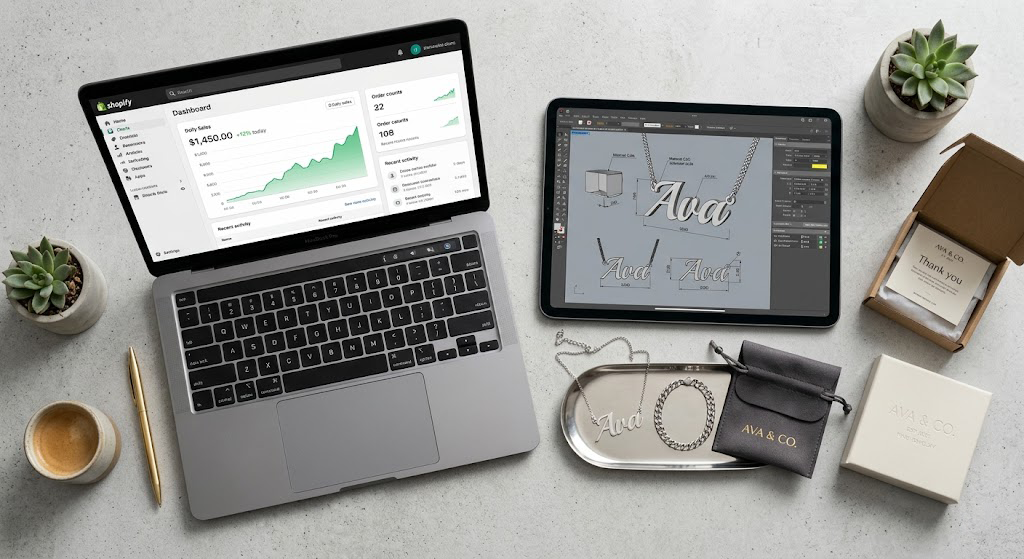

Historically, launching an exclusive jewelry capsule collection felt like a high-stakes financial gamble. Under legacy manufacturing setups, bringing a new design aesthetic to market required heavy upfront capital commitments, rigid minimum order quantities (MOQs), and months of predictive forecasting. For a growing jewelry label, this meant freezing critical working capital in unproven deadstock before capturing a single data point from actual consumers.
Today, that traditional paradigm is obsolete.
Driven by the acceleration of social commerce and shifting customer preferences, successful modern jewelry brands no longer make blind inventory bets. Instead, they scale through strategic agility. Leveraging advanced low moq custom jewelry manufacturing allows independent designers and scaling Shopify storefronts to launch highly exclusive capsule lines, run real-time market validation, and diversify their product catalogs without the liability of bloated production runs.
In this guide, we will unpack the operational mechanics of the low-MOQ strategy. You will discover how to leverage flexible production to drop exclusive collections, protect your cash flow, and build a highly responsive supply chain infrastructure that matches your digital marketing velocity.
Why Exclusive Collections Matter for Growing Jewelry Brands
In a crowded jewelry market driven by rapid social commerce algorithm shifts, standing out is no longer a creative choice—it is a survival strategy. Relying entirely on generic, open-market catalog wholesale jewelry inevitably drags your business into a margin-killing price war. When consumers can screenshot your product and find an identical match on a competitor’s store within seconds, your brand equity evaporates.
Developing exclusive, proprietary collections completely alters this dynamic. By shifting your catalog toward unique design elements and custom motifs, your brand achieves critical operational advantages:
- De-escalating the Price War: Exclusive items completely bypass direct comparison shopping. Because the design is uniquely yours, you decouple your brand from market-average pricing floor rates, protecting your gross margins.
- Maximizing Average Order Value (AOV): Signature drops allow you to command a premium retail markup. Customers are inherently willing to pay a premium for everyday luxury pieces that they cannot discover anywhere else on their social feeds.
- Driving Organic Customer Lifetime Value (LTV): When your product line is exclusive, your store becomes a destination. This uniqueness naturally triggers customer retention and repeat purchases, reducing your long-term reliance on volatile paid ad channels.
For scaling Shopify labels and independent designers, exclusive products are the literal foundation of sustainable enterprise value.
However, traditional manufacturing setup models create a massive operational bottleneck: the paralyzing weight of upfront inventory exposure. Forcing a brand to bet thousands of dollars on a new, unvalidated design aesthetic creates an unnecessary cash flow risk.
This is exactly where aligning with an agile Low MOQ Custom Jewelry Manufacturer transforms from a production choice into a core growth catalyst. It bridges the gap between high-margin design exclusivity and lean capital efficiency.
The Capital Trap: The Reality of High-Volume Constraints
Despite the rapid marketing velocity of modern social commerce, the traditional manufacturing backend remains structurally rigid. When an emerging jewelry label approaches a conventional factory with a fresh, exclusive concept, they are almost always met with archaic sourcing barriers: hundreds of pieces required per SKU, forced variant multiplication across multiple metal platings, and heavy upfront capital saturation before capturing a single consumer data point.
For an agile e-commerce brand, this legacy manufacturing setup triggers three immediate bottlenecks:
- Marketing Capital Freeze: Every dollar tied up in unsold warehouse stock is a dollar stolen from your front-end customer acquisition and ad budgets.
- The Speculative Demand Trap: In a market driven by rapidly shifting algorithmic trends, betting heavily on unproven designs three months in advance is an unnecessary mathematical gamble that eats into your gross margins.
- Innovation Paralysis: When failure carries a high financial penalty, brands stop experimenting. Your catalog stagnates, and your return on ad spend (ROAS) drops simply because your supplier cannot match your testing speed.
Ultimately, these combined constraints act as a growth ceiling, forcing independent labels into a high-risk, low-agility business model.
The Velocity Framework: How Low-MOQ Sourcing Unlocks Lean Scaling
Transitioning to an agile production setup completely rewrites your brand’s operational playbook. Instead of deploying capital into risky, speculative bulk orders, a low-MOQ framework allows independent designers and scaling Shopify labels to operate a highly efficient, data-driven collection rollout:
- The Matrix Drop (Agile Introduction): You launch your new design aesthetic or exclusive capsule collection via a highly curated, small-batch run (typically 10 to 30 units per SKU). This keeps your initial upfront capital exposure near zero while populating your storefront with fresh content.
- Algorithmic Testing (Real-Time Validation): You open the doors to targeted traffic and sync the new product drops with your influencer seeding campaigns. Instead of guessing, you let actual direct-response indicators—such as Add-to-Cart (ATC) velocity, session dwell times, and social engagement—measure consumer demand.
- Performance Auditing (Data Analysis): Within weeks, your Shopify dashboard provides definitive clarity. You analyze concrete transaction data to separate your viral winners from your slow-movers, eliminating predictive bias entirely.
- Reactive Funnel Feeding (Rapid Expansion): Once a specific custom motif, metal geometry, or unique typographic style proves its conversion velocity, you instantly leverage our order-by-order fulfillment infrastructure to feed your active ad funnels—scaling production in real time to match demand.
- Frictionless Sunsetting (Risk Elimination): If a particular design variation fails to perform against your pixel data, you simply let the initial micro-batch sell out or sunset the listing. There is no deadstock liability, no frozen warehouse capital, and no damage to your net margins.
Ultimately, this operational loop transforms flexibility from a mere sourcing preference into your ultimate competitive moat. You achieve identical revenue potential as legacy bulk brands, but you execute it with a fraction of the capital and near-zero inventory risk.
The Profit Matrix: High-Converting Exclusive Categories Built for Agility
Not all jewelry categories are created equal. When building your exclusive collection roadmap, your focus should be on high-perceived-value product lines that naturally trigger emotion, driving up your Average Order Value (AOV).
Leveraging reactive production allows your brand to seamlessly drop and scale the four most profitable modern jewelry sectors:
1. High-Margin Custom Name & Personalized Jewelry
Personalized jewelry remains one of the strongest-performing categories in ecommerce.
- The Revenue Logic: Personalized jewelry remains the absolute highest-converting category in modern e-commerce. Because it carries an intense emotional connection, consumers are completely decoupled from price sensitivity, allowing you to command premium retail margins.
- The Agile Lineup: Launching a curated series of custom initial necklaces, dimensional nameplates, and bespoke custom letter pendants.
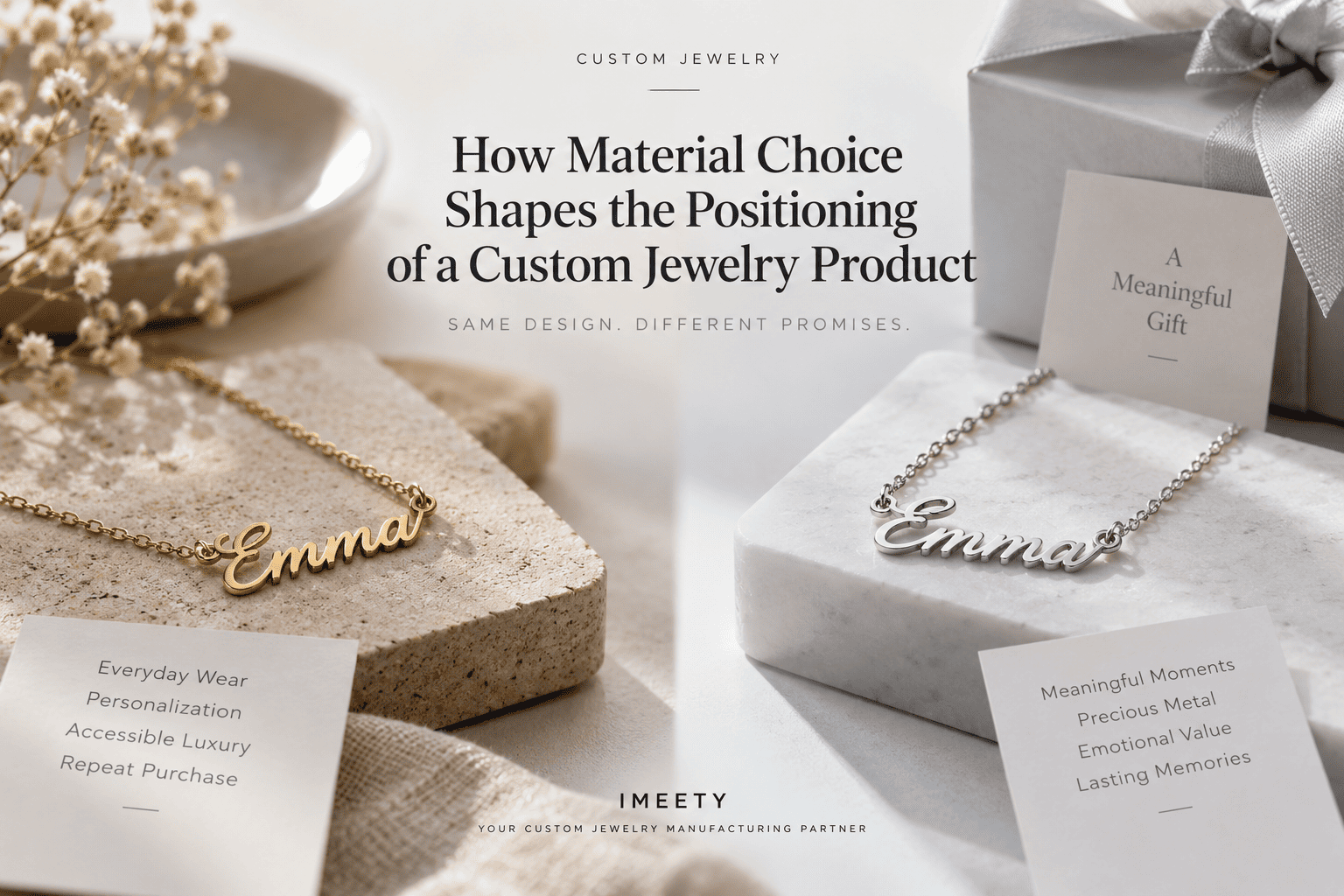
- The Execution: Instead of holding inventory for the entire alphabet or various font variations, align with a dedicated custom name necklace manufacturer to run an agile, order-by-order fulfillment model that eliminates front-end inventory risk entirely.
2. Gifting-Centric Birthstone & Zodiac Matrix Drops
- The Revenue Logic: Birthstone and zodiac jewelry are evergreen high-performers because they perfectly anchor into your Q4 holiday marketing and seasonal gifting calendars (Mother’s Day, Valentine’s Day).
- The Agile Lineup: Developing family birthstone pendants, custom constellation series, and targeted seasonal commemorative collections.
- The Execution: Rather than bulk-buying 12 different calendar stone variants in huge volumes, low-MOQ sourcing lets you test early social media engagement on a few key capsule drops, expanding production only on the specific monthly stones that your pixels validate.
3. Signature Private-Label Branding Drops
- The Revenue Logic: To move past generic dropshipping, a growing label must establish permanent brand equity. Creating signature hardware prevents competitors from cloning your active ad creatives.
- The Agile Lineup: Deploying brand-exclusive logo pendants, signature custom charms, and numbered, limited-edition jewelry series.
- The Execution: Utilize flexible tooling and low minimums to execute custom branding elements—such as precision laser-engraving and signature motifs—building immense customer loyalty without draining your cash flow on giant industrial factory runs.
4. Waterproof Stainless Steel Performance Lines
- The Revenue Logic: Modern consumers demand tarnish-free durability, and stainless steel delivers massive retail markups against exceptionally lean production costs. It serves as the ultimate catalog expansion tool for high-frequency daily wear.
- The Agile Lineup: Introducing minimalist structural bands, heavy Cuban link chains, and sweatproof utility pendants.
- The Execution: Partner with a specialized custom stainless steel jewelry supplier to drop high-perceived-value, vacuum-plated collections that seamlessly integrate into your Shopify catalog, letting you capitalize on the “waterproof lifestyle” marketing angle without committing to heavy steel tons.
The Missing Piece: Aligning Your Matrix with the Right Backend
Mastering the profit matrix is only half the battle—the true competitive edge lies in your execution velocity. If your current factory forces rigid lead times or massive upfront inventory commitments, your agility is instantly compromised.
To seamlessly transition from concept to market dominance without inventory liabilities, your brand requires a specialized manufacturing partner. As an agile private label jewelry manufacturer engineered specifically to help growing labels scale, we provide the flexible low-MOQ infrastructure, rapid flat preview approvals, and long-term production stability you need to bring these high-converting vectors to life.
👉 [ LAUNCH YOUR COLLECTION WITH IMEETY ]
The Cost vs. Velocity Myth: Why Agility Outperforms Unit Price
When auditing potential supply chain infrastructure, emerging labels often fall into a predictable sourcing trap: selecting a manufacturing partner based entirely on the lowest front-end production quotation.
However, experienced founders who have scaled past the seven-figure mark recognize that unit price is a deceptive metric if it requires sacrificing operational velocity. A factory that offers you a lower price per piece but demands an inflexible, high-volume initial commitment is actually inflating your long-term business risk.
Aligning with a truly flexible, low-MOQ manufacturing partner alters your brand’s financial health across four critical pillars:
- Radically Compressed Time-to-Market: In social commerce, trends move at the speed of an algorithm. A flexible partner allows you to bypass legacy industrial tooling delays and launch high-margin collections weeks ahead of competitors who are stuck waiting for massive batch runs.
- Frictionless Iteration Adjustments: When you drop a fresh typographic script or an intricate custom engraving concept, early consumer feedback might dictate a slight design or sizing tweak. With a low-MOQ infrastructure, you can implement real-time design modifications instantly, without writing off thousands of units of already-produced inventory.
- Tactical Micro-Drops & Seasonal Flexibility: True scaling requires keeping your storefront fresh. Agility empowers your marketing team to drop hyper-targeted, seasonal capsule lines—such as limited-edition Valentine’s or Mother’s Day releases—capturing peak holiday traffic without carrying long-term warehouse deadstock.
- Optimizing the Balance Sheet: Lowering your upfront production risk frees up critical working capital. Instead of burying your funds in physical storage boxes, you redirect that liquidity into high-converting Meta or TikTok ad funnels, influencer gifting, and conversion rate optimization (CRO).
Ultimately, the ability to respond instantly to real-time market demand generates an operational moat that no front-end unit-price discount can ever replicate. In modern e-commerce, the winner is no longer the brand that buys the cheapest; it is the brand that rotates its capital the fastest, tests the most concepts without penalty, and scales winners with absolute precision.
The Velocity Loop: The 4-Phase Revenue Architecture
Scalability in modern jewelry commerce is no longer determined by how much inventory you can afford to purchase upfront. Instead, it is governed by the speed of your data-driven verification cycles.
The top-performing Shopify labels use custom micro-batches to build a continuous, low-risk revenue loop through four highly optimized operational phases:
Phase 1: The Curated Launch
Instead of gambling your quarter’s capital on an untested concept, you drop a tight, highly exclusive capsule collection (typically 10 to 30 units per SKU). This populates your store with high-end, proprietary content while keeping your initial capital liability near zero.
Phase 2: Real-Time Algorithmic Validation
Once live, you immediately sync the new custom motifs or initial necklaces with your active social funnels and influencer seeding programs. You bypass all guesswork—letting actual Shopify transaction data, add-to-cart (ATC) velocity, and pixel analytics dictate customer demand.
Phase 3: Reactive Expansion Fulfillment
The moment the data confirms a specific typography script or geometric charm is a winner, you scale up. Instead of waiting weeks on traditional bulk timelines, you leverage our responsive manufacturing infrastructure to pump inventory directly into your scaling Meta and TikTok ad campaigns, matching production to real-time ad spend.
Phase 4: Multi-SKU Collection Layering
With a validated winner established, you expand your catalog horizontally to maximize Average Order Value (AOV). You drop complementary variations—such as introducing a matching custom chain bracelet to pair with your viral personalized name necklace—locking in high customer retention and long-term Customer Lifetime Value (LTV).
Aligning your scaling jewelry brand with a flexible, low-MOQ custom manufacturing infrastructure isn’t just about avoiding high minimum order sheets. It is about equipping your business with a bulletproof operational moat: the tactical freedom to design, validate, and scale exclusive products in real time with near-zero inventory exposure.
Beyond the Quote: Key Criteria for Selecting a True Growth Partner
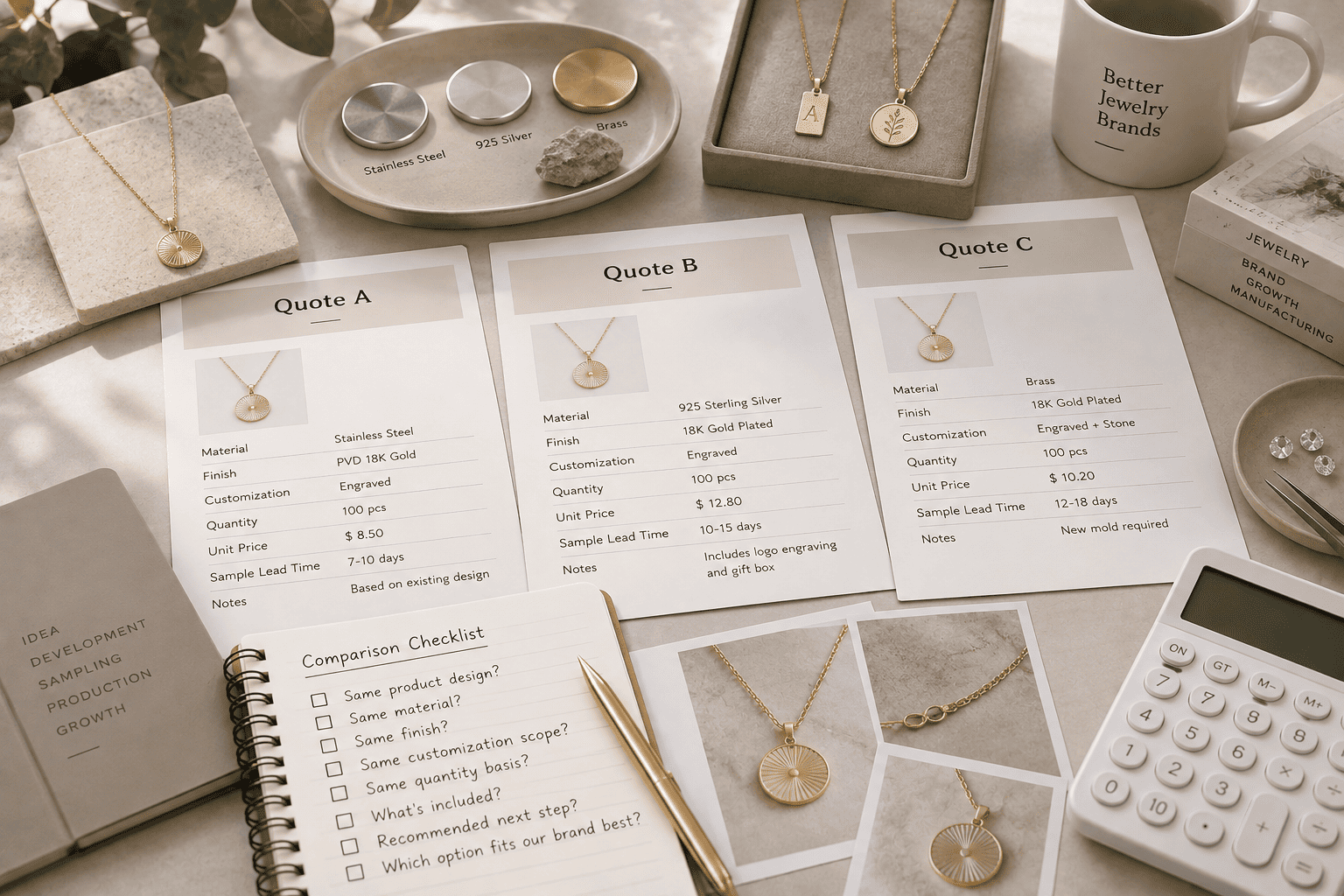
Evaluating a custom jewelry manufacturer requires looking past the initial PDF price quotation. In a high-velocity digital marketplace, an unreliable supplier will cost you infinitely more in missed holiday deadlines, customer chargebacks, and tarnished brand equity than any front-end discount could ever justify.
When auditing potential manufacturing infrastructure to support your exclusive capsule drops, experienced Shopify brands vet suppliers against these four non-negotiable operational capabilities:
1. True Order-by-Order Scalability & Technical Adaptability
- The Sourcing Reality: Many factories claim to offer “low MOQs,” but their internal workflows are still built on legacy, high-volume batch systems. When you need a quick, order-by-order fulfillment for a trending custom collection, they stall.
- The Standard: Your partner must possess the dedicated technical infrastructure to handle rapid, on-demand custom production without compromising structural integrity or plating durability. They should seamlessly transition from an agile sample run to continuous production as your ad spend scales.
2. Cross-Material Mastery & High Perceived-Value Finishing
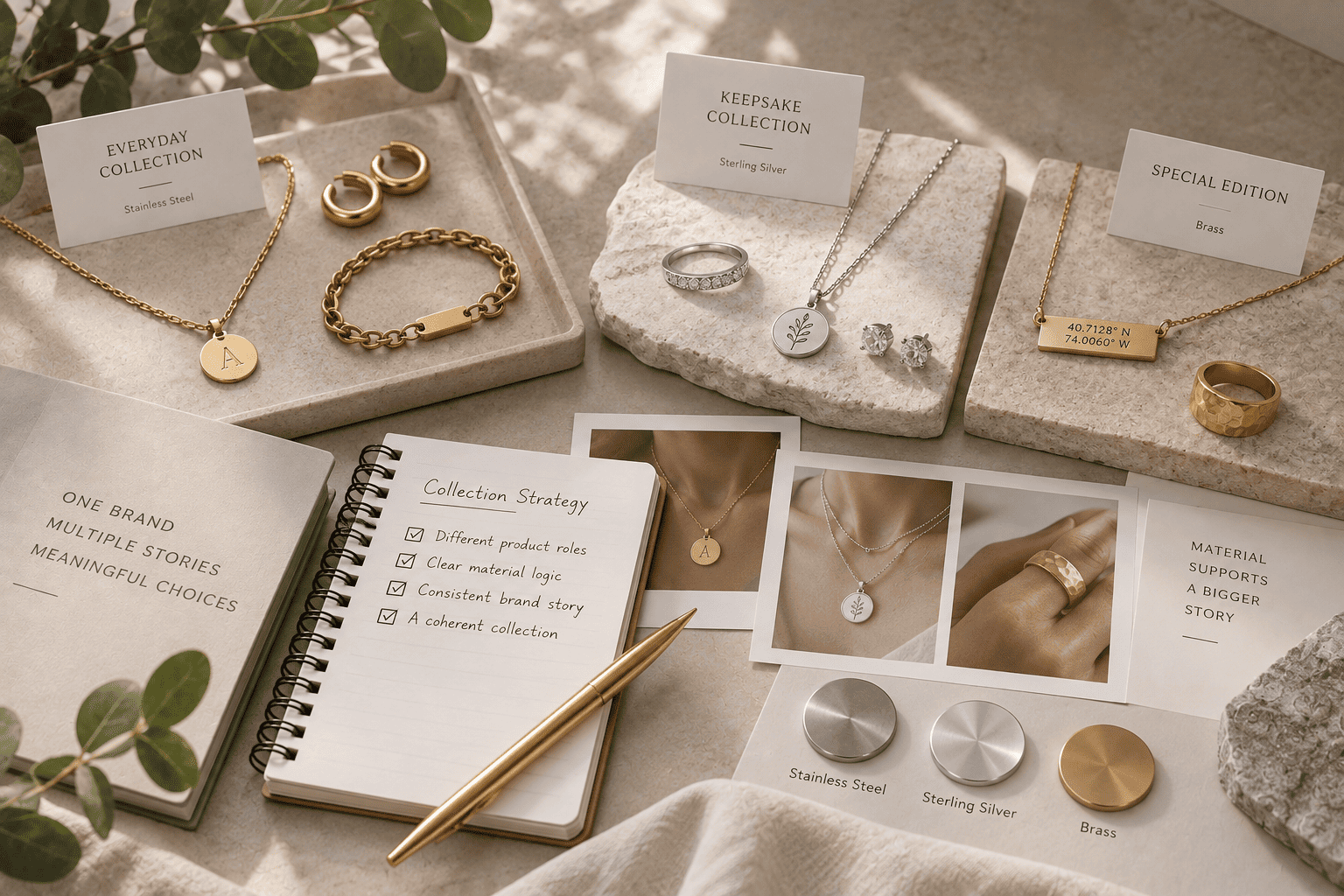
- The Sourcing Reality: A scaling brand cannot rely on a one-dimensional supplier. As your collection architecture matures, your catalog will naturally demand a mix of diverse materials to maximize margins.
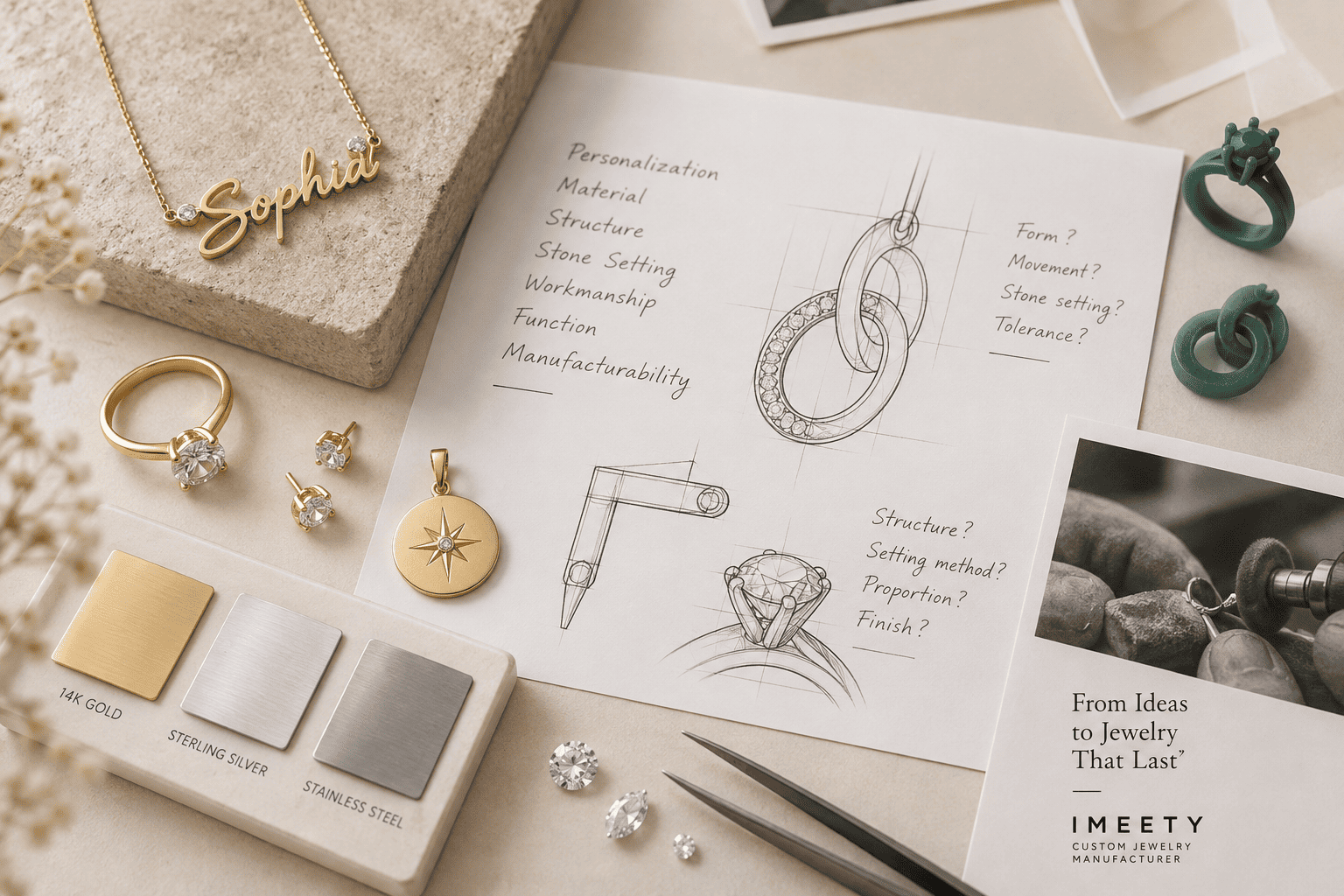
- The Standard: Ensure your manufacturing partner has proven expertise across everyday performance materials like high-grade 316L stainless steel as well as premium fine jewelry metals like 925 sterling silver. The finishing, structural polishing, and stone-setting must meet the strict standards required by independent boutiques and high-end digital labels.
3. Compressed, Reliable Turnaround Times & Logistical Agility
- The Sourcing Reality: Missing a peak holiday window or an automated email drop because a factory delayed production for a week can devastate a growing brand’s quarterly revenue.
- The Standard: A true flexible partner operates on compressed, transparent production timelines. The workflow from digital concept approval to retail-ready physical fulfillment must be tightly optimized, giving your marketing team complete predictability when scheduling product drops and influencer seeding campaigns.
4. Integrated Private Label Branding & Packaging Customization
- The Sourcing Reality: Forcing a brand to source jewelry from one factory and custom boxes from another creates a logistical nightmare, inflating shipping costs, and slowing down time-to-market.
- The Standard: Your manufacturer should provide a fully integrated private-label ecosystem. This includes seamless brand identity execution—such as precision logo engraving and custom motifs—alongside low-MOQ branded packaging customization (microfiber pouches, premium boxes). Your product and its unboxing experience should arrive as a singular, cohesive asset.
The Verdict: Sourcing for Enterprise Value
The best manufacturing partners do not operate as mere transactional order-takers. They function as a quiet, bulletproof extension of your operations team. They absorb the supply chain volatility, eliminate your warehouse liabilities, and protect your critical working capital, allowing you to focus 100% of your energy on what matters most: scaling your brand community, optimizing your conversion funnels, and driving long-term customer retention.
Explore More Custom Jewelry Manufacturing Solutions
Custom Jewelry Manufacturer
💎 Name NecklacesSpecialized Production
🎁 Branded UnboxingPackaging & Branding Support
🚀 DropshippingGlobal Fast Fulfillment
🏷️ Private LabelExclusive Brand Solutions
⚡ Fast TrackLow MOQ & Rapid Shipping
Final Thoughts: Scalability Beyond Inventory Liabilities
Exclusivity is no longer a privilege reserved for legacy, venture-backed jewelry conglomerates. The democratization of supply chain logistics means that the defining competitive metric for modern D2C labels is no longer capital volume—it is strategic adaptability.
By transitioning your supply chain architecture to an agile, low-MOQ framework, you eliminate the paralyzing weight of upfront inventory risk. Whether you are deploying an initial custom typographic nameplate line, inserting a high-margin waterproof stainless steel collection into your digital marketing funnels, or launching a branded signature drop, your sourcing strategy must move at the exact velocity of your ad account pixel.
The ultimate objective of securing a flexible production partner isn’t just about ordering fewer pieces. It is about preserving the financial liquidity, testing freedom, and operational speed required to build a resilient, long-term brand equity that scales confidently, one collection at a time.
Ready to Pressure-Test Your Next High-Margin Collection?
You have built the front-end storefront aesthetics, refined your ad creatives, and captured an active social audience. Now, it is time to build the responsive backend infrastructure your business deserves.
Whether you are validating an entry-level personalized jewelry concept or scaling an established, multi-SKU Shopify catalog, our team acts as your dedicated, flexible manufacturing partner. We help growing jewelry labels execute precision custom lines with reliable turnaround times, private-label branding, and low-MOQ unboxing customization.
Don’t let rigid factory bottlenecks freeze your working capital.
📈 [Submit Your Tech Pack or Sourcing Request Today] — Contact our production consulting team to review your design vectors, sampling workflows, and reactive fulfillment pricing models. 👇