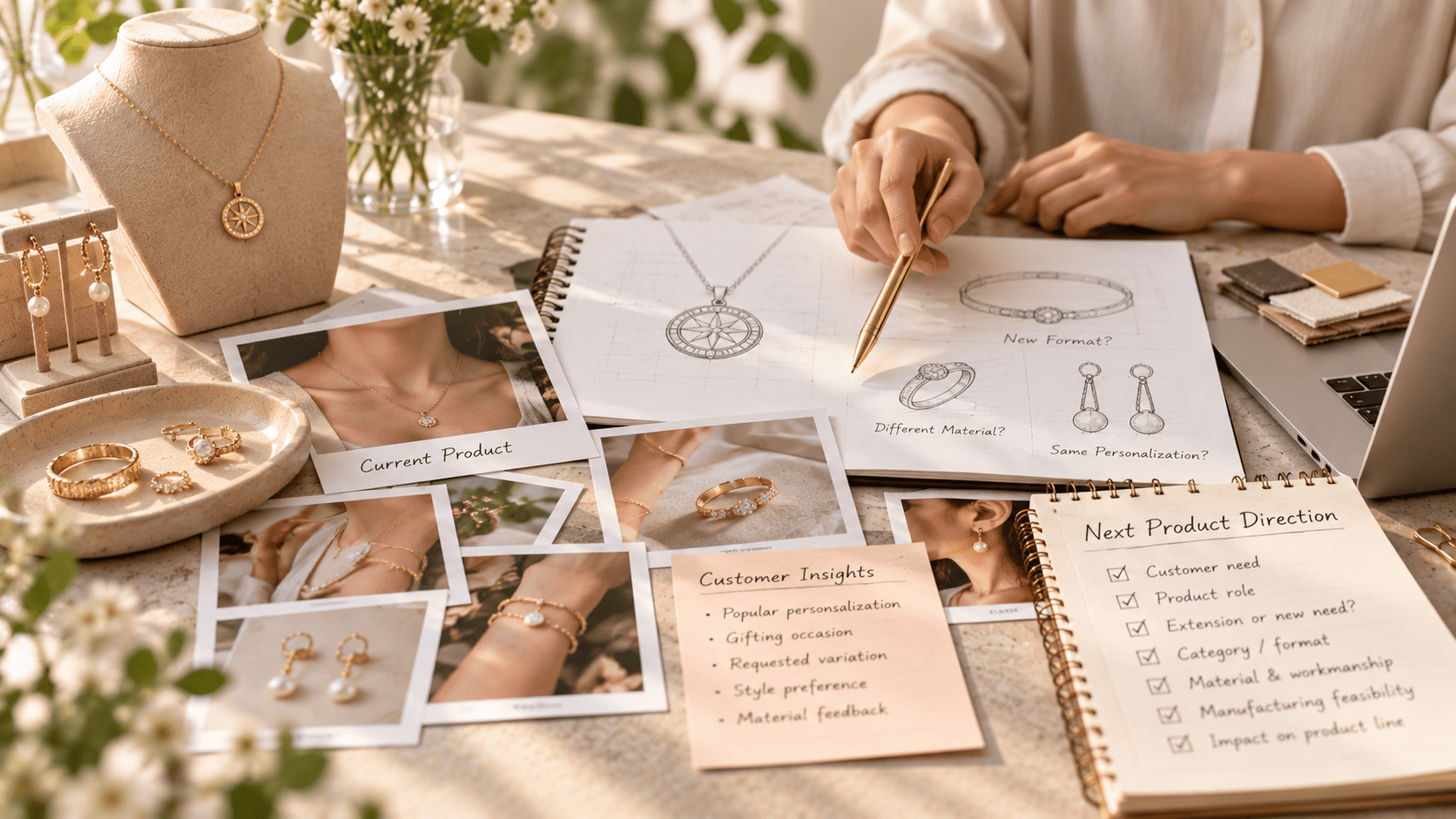

Once a jewelry brand has evidence that expanding beyond its first validated product makes sense, a different question appears:
What should the next product actually be?
There are usually many possible answers. A successful personalized necklace could lead to another necklace design, a bracelet, a ring, another personalization format, a different material, or an entirely new concept. Customers may suggest several directions, competitors may offer dozens of categories, and the manufacturer may be capable of producing many more.
Possibility, however, is not the same as product direction.
The next product does not need to be chosen because it is the obvious category that “comes after” the first one. It does not need to make the website look larger, and it does not need to demonstrate everything the manufacturer can produce.
A stronger question is:
What should the next product contribute that the existing product line does not already provide?
That contribution gives the development a role.
The next product should earn its place in the line by serving a clear customer, product, or business role—not simply by adding more variety.
Start With the Gap, Not the Product Category
When brands think about expansion, the conversation often starts with categories: Should we add bracelets? Should we make earrings? Should we launch another necklace?
But category is usually an answer that arrives too early.
Before choosing the form of the next product, it is more useful to understand what the brand wants the next development to accomplish. Perhaps customers already value the existing personalization concept but want another way to wear or gift it. Perhaps the first product serves one occasion well while another meaningful customer need remains unaddressed. Or perhaps the opportunity is to deepen the existing product idea rather than broaden the collection into another category.
Each of these situations could eventually lead to a necklace, bracelet, ring, or something else. But the category should follow the role.
Starting with the gap prevents product development from becoming a process of filling empty catalog sections.
The Next Product Can Extend What Customers Already Value
One possible role for the next product is to extend something the first product has already proven meaningful to customers.
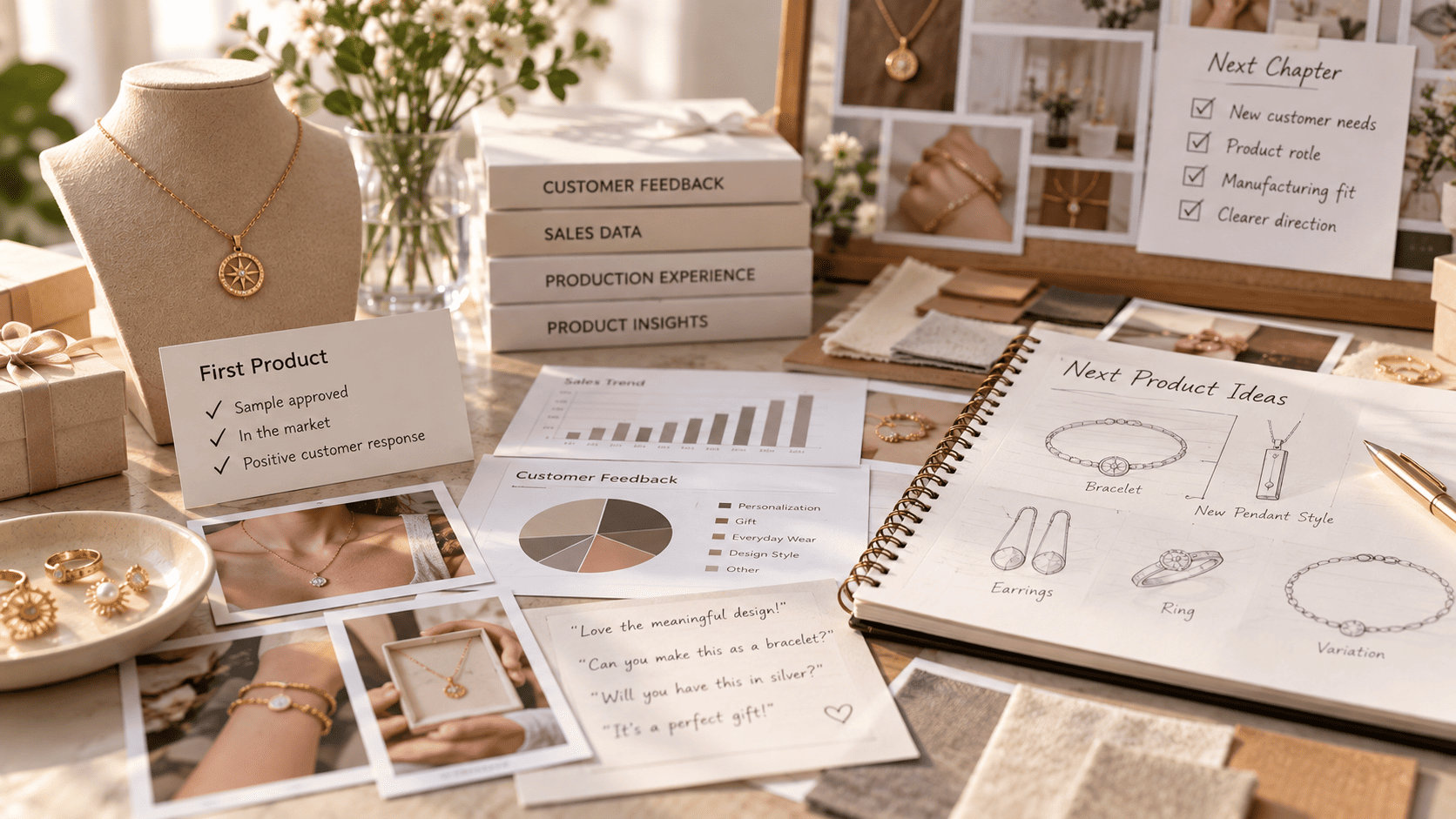
Imagine a brand whose first successful product is a personalized name necklace. Customer response may show that the important part is not simply that it is a necklace. Customers may be responding to personal identity, gifting, family meaning, a particular design language, or another element of the product experience.
That distinction changes the expansion question.
If customers value the personalization concept, there may be another useful way to express that same meaning. If they value something more specific about the existing product itself, moving into another category may not carry the same strength.
The brand therefore needs to understand what is worth extending before deciding how to extend it.
This avoids copying the surface characteristics of a successful product without understanding what actually made it relevant. A next product can strengthen the line when it carries forward something customers already value while giving that value a genuinely useful new expression.
Another Product Can Address What the First Product Leaves Open
The next product does not always need to resemble the first one closely. Sometimes its role is to address an adjacent customer need or product experience that the existing product cannot reasonably serve.
The first product may work particularly well for one type of personalization, gifting situation, wearing preference, or use case. Over time, customer behavior may reveal another legitimate need that sits close enough to the brand’s existing proposition to make sense but requires a different product solution.
This is different from reacting to every customer request.
One person asking for a bracelet is a suggestion. Repeated behavior that reveals a meaningful need is evidence worth examining.
If that pattern exists, another product can have a clear role:
Serve a relevant need that the validated product leaves open.
That is a stronger reason for development than simply assuming customers might also like another jewelry category.
“Next” Does Not Always Mean “Broader”
Expansion is often imagined horizontally: more categories, more designs, more choices.
But a product line can also develop by becoming more relevant within a direction that is already working.
A brand may have validated a product concept while discovering that different customer needs exist within it. A second product could create another meaningful option without moving into an unrelated category. In personalized jewelry, for example, that might mean finding another appropriate expression of the same core personalization need rather than applying the concept to every available jewelry type.
Products can also serve different roles without creating a hierarchy. One may suit everyday wear while another supports a particular gifting experience; one format may suit one kind of personalization while another responds better to a different design requirement.
Those distinctions do not automatically make one product more advanced or more “premium” than another.
The useful question remains:
What does this product allow the customer to do, express, wear, give, or choose that the existing product does not?
If the answer is clear, the line can gain useful variety without treating broader assortment as the goal.
Product Choices Should Follow the Role They Need to Serve
Once the role becomes clearer, decisions about design, material, format, and workmanship can be evaluated in that context.
For example, introducing a different material may make sense if it supports the intended use, product meaning, design requirements, customer expectations, or manufacturing needs of the new product. In another situation, maintaining the existing material may provide exactly the continuity the product needs.
The same principle applies beyond material. A different personalization approach, product format, stone setting, engraving direction, or other workmanship should not be introduced merely because it creates variety.
These are ways to realize a product direction. They are not substitutes for having one.
That distinction keeps product-line development connected to what the new product is supposed to accomplish rather than turning individual manufacturing choices into artificial stages of brand maturity.
Manufacturing Capability Should Support the Decision, Not Create It
Working with a flexible manufacturer can open many development possibilities. Different product formats, materials, personalization approaches, and workmanship may all be technically possible.
But the fact that something can be manufactured does not mean the brand should add it.
Manufacturer capability becomes useful after there is a product direction to evaluate. It can help answer questions such as whether the idea can be developed as intended, what manufacturing approach it requires, which material or construction direction is appropriate, and what should be validated before production.
It should not answer the strategic question:
What product does our brand need next?
That decision needs to come from the brand’s own customer, product, and business context. Otherwise, the catalog risks becoming a reflection of supplier capabilities rather than a coherent set of products for the customer.
A manufacturing partner can help evaluate and execute the next product once its role becomes clear. It should not manufacture a reason for the product to exist.
Competitors Can Provide Context, but Not a Product Roadmap
Competitors can be useful when they help a brand see possibilities or ask better questions. They become less useful when their visible assortment is treated as a ready-made expansion sequence.
If several competing brands sell necklaces, bracelets, earrings, and rings, it may appear that building the same assortment is simply what a growing jewelry brand is supposed to do. But those businesses may serve different customers, occasions, price positions, channels, or product expectations. Their current catalogs also reveal very little about the decisions and development history behind them.
Copying the assortment therefore does not reproduce the logic behind it.
A more useful way to observe competitors is to ask what need a product appears to serve, whether the brand’s own customers show evidence of the same need, and whether such a direction would strengthen what the brand has already established.
Competitors can provide context. They should not decide what the brand develops next.
More Products Should Not Be Developed Simply to Make the Collection Feel Complete
Once expansion feels justified, it can be tempting to move quickly from one successful product to a complete collection. A necklace, bracelet, earrings, and ring developed together can make the assortment feel more established.
Sometimes several products genuinely belong together. But “complete” is not the same as strategically useful.
Each additional product introduces development decisions, sampling attention, manufacturing requirements, and commercial commitments. When several products are developed before their roles are clear, it can also become harder to understand what customers are actually responding to.
This does not mean a brand must develop products one at a time forever. It means the number of products being developed should follow a real product-line rationale rather than the assumption that growth requires a large collection as quickly as possible.
A deliberate next product keeps the logic visible: the brand knows why the product exists, what it is expected to contribute, and what it may teach the business once it enters the market.
A Useful Next Product Should Strengthen the Logic of the Line
A useful way to evaluate a proposed product is to look backward as well as forward.
If this product is added, does the relationship between the products become clearer? Can the brand explain why both belong together? Does the new development extend something customers value, address a relevant need, or contribute another role that fits what the brand has already established?
A new product does not need to look identical to the first one. Coherence can come from customer need, personalization, intended use, design language, product meaning, material strategy, or another real connection.
The goal is not sameness. It is understandable product logic.
When a product has a clear role, variety can strengthen the line. When its only role is “something else to sell,” variety can just as easily make the line less coherent.
A Practical Way to Evaluate the Next Product
Before committing to another development, start with the reason rather than the design.
First ask:
What has the existing product taught us?
This grounds the decision in evidence rather than imagination alone.
Then ask:
What customer, product, or business need is not adequately served by what we already offer?
This identifies the potential role.
From there:
Would this proposed product address that need in a way that fits what the brand has already established?
This tests whether the product contributes to the line rather than merely expanding it.
Only then ask:
What manufacturing requirements does this direction introduce?
Once the product has a reason to exist, it becomes useful to evaluate its development approach, materials, structure, personalization, sampling, and other manufacturing requirements.
These questions are not a scorecard and there is no required number of positive answers. They simply preserve the order of the decision:
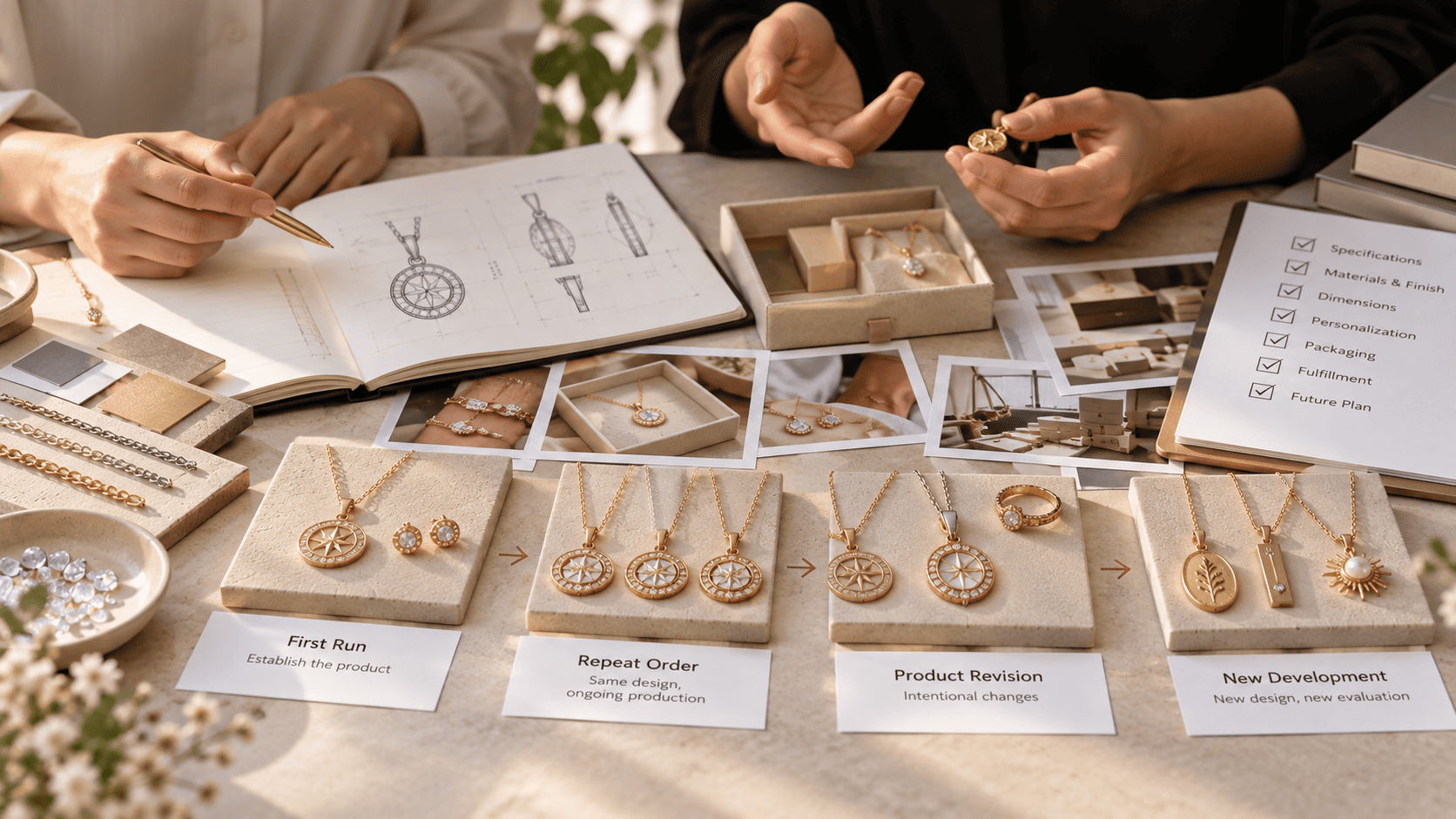
Evidence → Role → Product Direction → Manufacturing Evaluation
That sequence is more useful than beginning with a list of products the factory can make.
Know When the Decision Has Become Bigger Than the Next Product
Choosing the next product is still a relatively focused decision.
Over time, a brand may accumulate several products with different roles. At that point, the question changes. The brand is no longer deciding whether one additional product deserves development; it may need to think about how several products work together as a stable line, where overlap exists, how manufacturing supports multiple products, or whether earlier decisions still make sense as the business grows.
Those are broader product-line and growth-stage questions.
The ownership of this decision is narrower:
Make sure the next development has a reason to enter the line.
A brand does not need to design its entire future portfolio before creating product number two or three. It simply needs enough clarity that another development commitment contributes something more meaningful than catalog size.
IMEETY’s Perspective: Development Should Follow Product Direction
At IMEETY, our manufacturing capabilities can support different custom jewelry products, materials, personalization approaches, and development requirements. But capability alone is not a reason for a brand to develop a product.
For a jewelry brand moving beyond its first validated product, the more useful starting point is the role the next product should play. Once that role becomes clear, manufacturing evaluation can help determine how the product should be developed, which requirements matter, whether an established production approach is suitable, and where additional development or sampling may be needed.
This is part of IMEETY’s role as a Flexible Custom Jewelry Development & Manufacturing Partner for growing Shopify & DTC jewelry brands: supporting the transition from product direction into manufacturable execution without assuming that a larger catalog is automatically a better business.
If you are not yet sure whether the first product has created enough evidence to justify expansion, when a jewelry brand is ready to expand beyond its first validated product addresses that earlier decision.
When several products have begun to establish distinct roles and the question becomes how they should work together over time, building a stable jewelry product line addresses that broader stage. And when growth changes the assumptions behind earlier product or manufacturing choices, revisiting manufacturing decisions as your jewelry brand grows provides the wider reassessment framework.
Final Thoughts
Choosing the next jewelry product should not begin with an empty space in the catalog. It should begin with what the brand has learned from the product that already exists.
The next product may extend something customers already value, address an adjacent need, deepen an existing direction, or serve another clear role. Different brands will reach different answers because their customers, products, and business models are different.
There is no universal sequence. A necklace does not have to lead to a bracelet. Stainless steel does not have to lead to sterling silver. A successful first product does not require an immediate collection.
The relevant question is much simpler:
What will this product contribute that deserves another development commitment?
When that answer becomes clear, manufacturing can begin solving the next set of questions.
The next product should earn its place in the line by serving a clear customer, product, or business role—not simply by adding more variety.