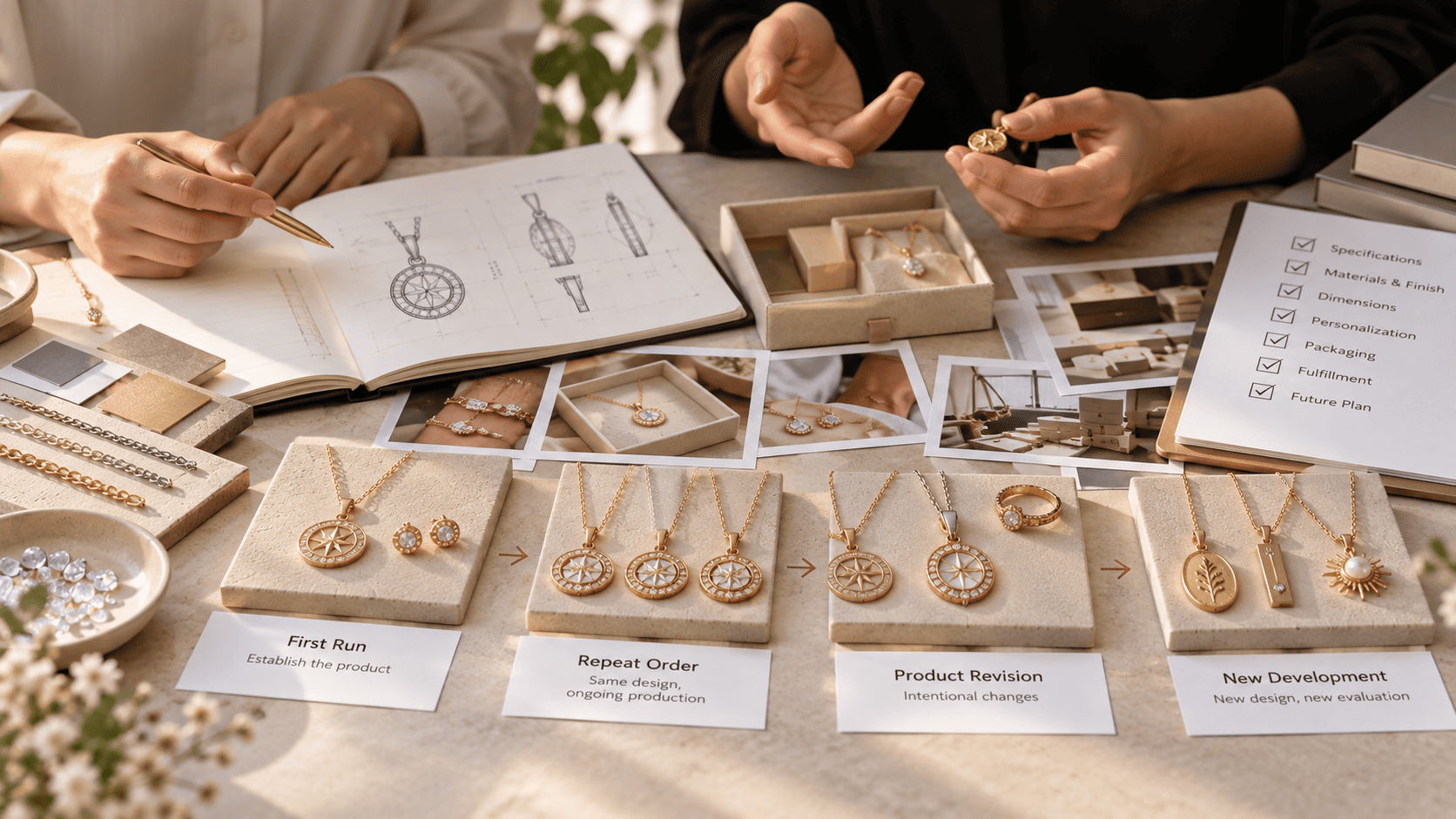

Completing the first production run changes the relationship between a jewelry brand and its manufacturer.
Before that point, much of the work is about building understanding. The manufacturer needs to understand the product, the brand needs to evaluate what is manufacturable, specifications need to be established, samples may need to be reviewed, and production decisions need to be confirmed.
After a product has actually been produced, something new exists: shared manufacturing context.
Both sides now have a history with the product. They know what was approved, what was produced, how personalization or variations were handled, what packaging or fulfillment arrangements were used, and which decisions shaped the final result.
That history can make an ongoing manufacturing relationship more useful—but not simply because the brand has stayed with the same manufacturer.
The real value comes from what happens to the knowledge created during each production cycle.
A manufacturing relationship develops when useful product and operating context carries forward, making future decisions clearer rather than forcing both sides to repeatedly start from zero.
That is a more practical way to think about a long-term manufacturing partnership.
The First Production Run Creates Shared Manufacturing Context
The obvious output of a production run is the jewelry itself, but a completed project also creates information.
The brand and manufacturer may now share an understanding of approved dimensions, materials, finishes, construction, personalization rules, packaging, order information, and other requirements specific to that product. Some of this context may have been established during development and sampling, while other knowledge becomes clearer only when the product moves through actual production.
This does not mean the first run answers every future question. It means future conversations no longer have to begin with the same level of uncertainty.
An established product now has manufacturing history. If the brand produces it again, that history can provide the starting point. If something changes, both sides can identify the change against an existing reference rather than reconstructing the entire product from memory.
Over time, this changes the role of the relationship.
Instead of repeatedly explaining what the product is, more attention can go toward what is new, what is uncertain, and what requires a new decision.
Shared Context Should Make Communication More Precise
When a brand has already produced a product with a manufacturer, it should not need to describe that product as though the manufacturer has never seen it.
An established personalized necklace, for example, may already have approved material, finish, chain specifications, proportions, personalization logic, and packaging arrangements. If those requirements remain current, they already have a shared meaning.
But there is an important difference between not starting from zero and not confirming anything.
An ongoing relationship should not depend on:
They already know what we want.
Instead, accumulated context should make confirmation more focused.
The brand and manufacturer can spend less time reconstructing established information and more time identifying the current requirement. If a personalization model remains unchanged, there is no need to explain the whole system again. If a new variation falls outside that established model, the conversation can focus specifically on the new case.
The same principle applies to packaging, finishes, order information, and other recurring requirements.
Good communication continuity is therefore not simply about sending fewer messages. It means more of the conversation can focus on what is new or uncertain because established information already has a shared meaning.
The Relationship Should Develop a Clearer Way to Handle Change
As manufacturing history accumulates, one of the most useful developments is a clearer distinction between continuation, revision, and genuinely new development.
A brand might want another production run of an established necklace with the same approved requirements. It might want the same necklace with a revised chain length and an additional finish option. Or it might want a new necklace inspired by the successful product but built around a different structure and design direction.
All three requests come from the same brand, but they are not the same manufacturing task.
An ongoing relationship becomes more useful when both sides can recognize those differences without either extreme: treating every request as a completely new project or assuming previous approval covers every future variation.
Previous production history provides context. It does not remove the need to identify where continuity ends and a new decision begins.
This distinction also helps protect the usefulness of the product history itself. Established decisions remain meaningful because intentional changes are made visible rather than casually absorbed into the idea of “same as before.”
Product History Needs a Clear Current Baseline
As a brand continues producing a product, its history can become more complicated.
There may have been an original sample, a revised sample, a first production run, a later adjustment, and then another production order. Packaging, personalization rules, or fulfillment arrangements may also have changed along the way.
If all of that history is treated as equally current, familiarity can create confusion rather than clarity.
One person may be referring to an earlier version while another assumes the latest revision is the active baseline. A requirement that was tested but not adopted may be remembered as though it became part of the final product.
An effective ongoing manufacturing relationship therefore needs more than memory. Both sides need a clear understanding of which decisions currently define the product.
The value of product history is not that every past detail remains active forever. It is that previous decisions provide context for understanding how the product reached its current state.
As that history grows, it becomes increasingly useful to distinguish:
what was explored, what was approved, what was intentionally changed, and what is current now.
That turns manufacturing history into usable context rather than background noise.
Previous Production Experience Should Inform Decisions, Not Create Assumptions
Once a product has been manufactured, both sides have something they did not have at the beginning: actual production experience with that product.
That experience can become useful later.
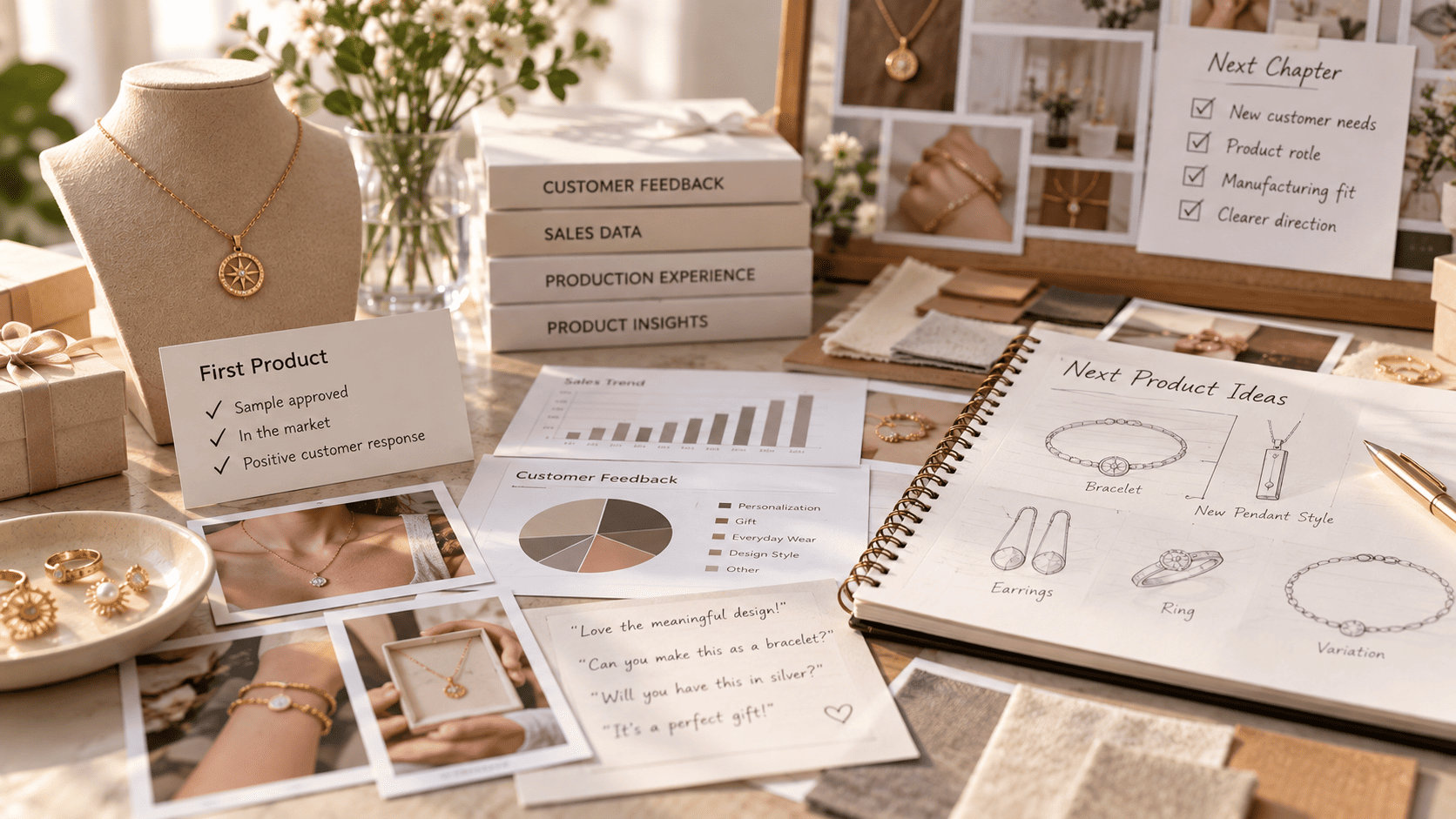
Perhaps a particular personalization pattern appears frequently. Perhaps a packaging arrangement becomes part of the normal order flow. Perhaps customer feedback reveals that one variation deserves attention. Or perhaps an operational detail that seemed minor during the first run becomes more relevant as orders repeat.
None of this means every production cycle automatically makes the next one better.
Experience only becomes useful when relevant information is recognized and applied to the decision at hand.
Sometimes previous experience supports keeping an established product exactly as it is. Sometimes it provides evidence for an intentional revision. In other cases, it simply prevents a question from being approached as though no previous production history exists.
The value is not repetition itself.
It is usable production knowledge.
This is an important distinction because familiarity alone does not guarantee better quality, faster production, lower costs, or better outcomes. Accumulated context can support more informed decisions, but those decisions still depend on what the current product or order actually requires.
A Manufacturer Can Learn the Product Without Owning the Brand’s Decisions
As shared context grows, another boundary becomes important.
A manufacturer may become familiar with how a product is made, which specifications have been approved, how recurring orders are usually organized, and which manufacturing questions have appeared before.
But that does not mean the manufacturer should decide what the brand ought to sell, how its collection should evolve, or which customer feedback should define the product.
The brand still owns the product direction. It understands its customers, positioning, commercial priorities, and intended experience.
The manufacturer’s accumulated context has a different role. It can help identify the manufacturing implications of a proposed change, clarify what has already been established, and evaluate new requirements when they appear.
That distinction matters in a useful manufacturing partnership.
The brand does not need the manufacturer to replace its product judgment. It needs relevant manufacturing knowledge to remain connected to the product decisions the brand is making.
As the relationship develops, both sides should become clearer about that division of responsibility rather than blurring it.
New Products Still Need Their Own Evaluation
A successful relationship can create confidence.
A manufacturer may already understand the brand’s general preferences, materials it has used before, packaging direction, personalization model, or quality expectations. That context can make the beginning of another product conversation more informed.
But it should not become a shortcut around evaluating the new product itself.
A new design may involve different structure, workmanship, material relationships, personalization behavior, intended use, or production requirements. Previous experience with the brand can provide context, but it does not automatically provide the manufacturing answer.
This is one of the clearest tests of whether accumulated context is being used appropriately.
A useful long-term relationship does not make new products automatic. It helps both sides ask better questions sooner while still evaluating each product according to what it actually requires.
The relationship carries knowledge forward without forcing every future product into the logic of the previous one.
What Should Become Clearer Over Time?
A growing manufacturing relationship does not need to become more complicated. Ideally, it becomes clearer.
Both sides should increasingly understand the current baseline of established products, how intentional changes are communicated, which requirements need reconfirmation, how recurring order information is handled, and when a request has moved beyond an existing product into a new development question.
These are not benefits that appear automatically after a certain number of orders. They become useful only when previous manufacturing context is retained, understood, and applied appropriately.
Over time, the manufacturer can know more about the relevant product history while the brand becomes clearer about how its manufacturing requirements need to be communicated. Both sides gain a better reference point for distinguishing established decisions from new ones.
The result is not that every future project becomes simpler.
It is that future conversations can begin from a more informed position.
The Value of an Ongoing Relationship Is Context, Not Loyalty
Brands sometimes hear that they should build a “long-term relationship” with a manufacturer.
That advice can sound as though staying with the same manufacturer is inherently valuable. It is not.
A brand should not continue a manufacturing relationship simply because the relationship has existed for a long time. If the manufacturer no longer supports the brand’s actual needs, history alone is not a reason to stay.
The practical value of continuity comes from what that history allows both sides to do.
Can established product decisions carry forward without being repeatedly reconstructed? Can intentional changes be identified clearly against a known baseline? Can previous production experience provide useful context for relevant future questions? Does communication become more precise because both sides share a clearer understanding of the product?
If so, accumulated manufacturing history has operational value.
This is why a useful manufacturing partnership is better understood through the quality of the context it builds than through duration alone.
A relationship that has existed for years but repeatedly loses product knowledge may provide less continuity than a relationship in which established information is clearly retained and used.
Longevity and relationship value are not the same thing.
An Ongoing Manufacturing Relationship Should Leave Better Context for the Next Decision
For a growing jewelry brand, the relationship with a manufacturer can gradually develop from a single completed project into an accumulating body of useful working context.
The first production run establishes real product history. Later production cycles can add relevant information about recurring requirements, intentional revisions, personalization patterns, packaging, fulfillment, or other aspects of how the product is actually produced and managed.
The purpose is not to accumulate information for its own sake.
Useful context should help the next manufacturing decision begin from the right place.
For an established product, that may mean carrying forward what is already known while making a new requirement explicit. For a revision, it may mean understanding exactly what part of the existing product is changing. For a new product, it may mean using relevant brand context without assuming the previous product provides the manufacturing solution.
The manufacturer does not simply “know the customer better.” Both sides develop a clearer reference point for deciding what previous knowledge is relevant and where fresh evaluation is still needed.
That is how an ongoing manufacturing relationship becomes more useful without becoming dependent on assumption.
IMEETY’s Perspective: A Partnership Should Accumulate Useful Manufacturing Context
At IMEETY, we see long-term manufacturing support as more than repeatedly producing orders for the same customer.
For a growing Shopify or DTC jewelry brand, the useful part of an ongoing relationship is the context that develops around real products and real production decisions.
Once a product has been developed and produced, its approved requirements can provide a starting point for future production. When the brand intentionally changes something, the new requirement can be evaluated against what has already been established rather than forcing the entire product to restart from zero. When a genuinely new product is introduced, previous brand context can support the conversation while the new design is still evaluated according to its own requirements.
This is part of IMEETY’s role as a custom jewelry development and manufacturing partner: supporting continuity where previous manufacturing knowledge remains useful while helping brands evaluate the decisions that genuinely require new attention.
The objective is not to make a brand dependent on one manufacturer. It is to make the relationship useful enough that relevant manufacturing knowledge does not disappear between production cycles.
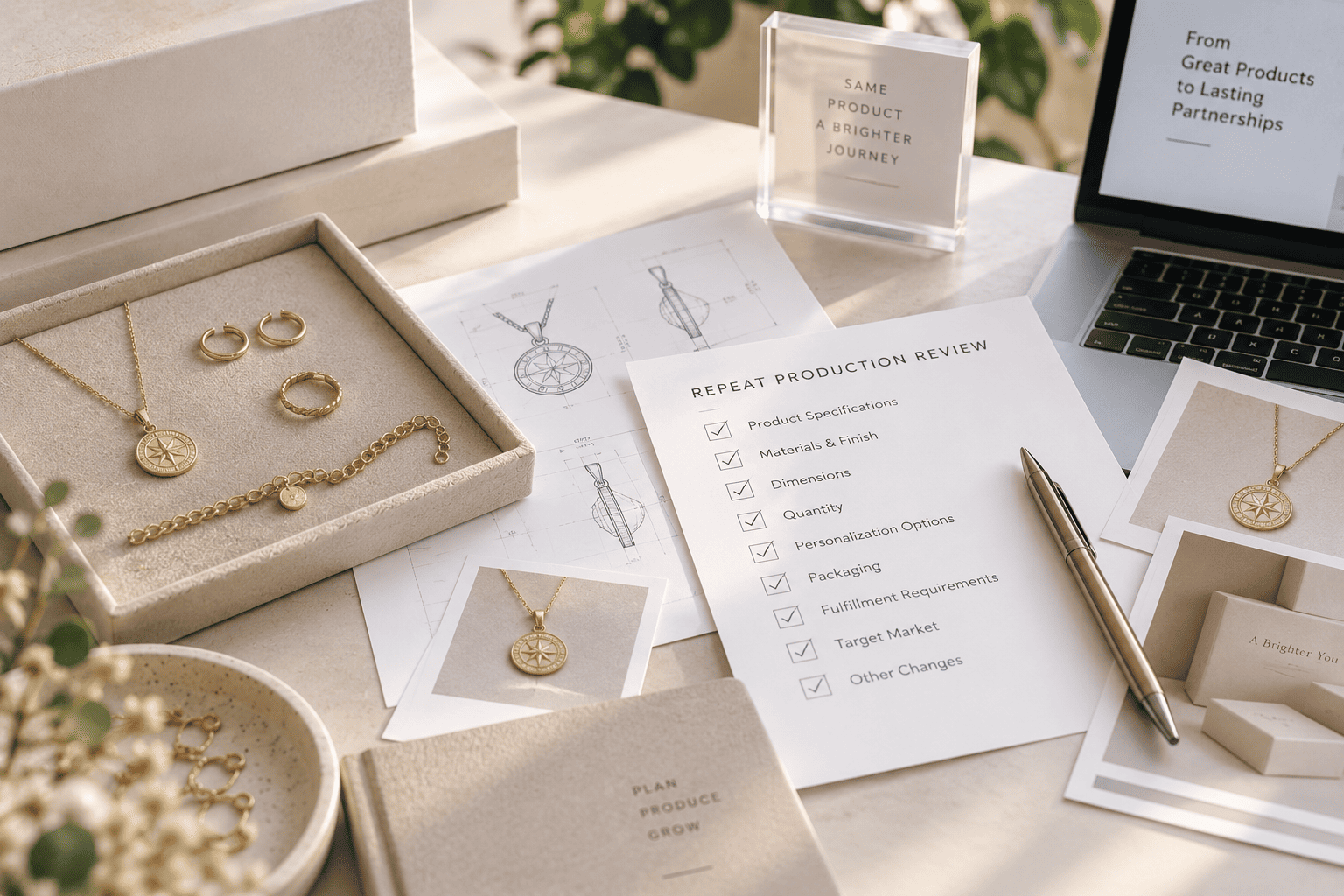
If an established product is moving into another production run, what jewelry brands should review before repeat production provides a more focused framework for separating the existing product baseline from genuine changes in the next order. For brands moving beyond individual projects toward a broader operating structure, building a structured jewelry manufacturing system addresses that wider organizational question. And when growth has changed the assumptions behind several earlier product or manufacturing decisions, revisiting manufacturing decisions as the brand grows provides a framework for that broader reassessment.
Final Thoughts
A long-term manufacturing relationship is not valuable simply because it is long-term.
Its value comes from what the brand and manufacturer are able to carry forward and use.
An established product should not need to be rediscovered with every order. Intentional changes should be visible against a known baseline. Previous production experience should provide context when it is relevant, and communication should become more precise because shared terminology and product history already exist.
At the same time, familiarity should never replace evaluation. Changed requirements still need attention, the brand still owns its product decisions, and new products still need to be understood on their own terms.
The strongest manufacturing relationships therefore develop through accumulated context rather than assumption.
Each production cycle should leave the next one with more useful product and operating knowledge—not simply another completed order.