
Sourcing open-market wholesale jewelry is an undeniably practical gateway for launching an e-commerce brand. For early-stage labels, curating existing factory catalogs provides a low-barrier method to test front-end marketing channels, understand consumer aesthetics, and validate baseline demand without heavy financial exposure.
However, as a Shopify brand or independent designer begins to scale, legacy wholesale models inevitably hit a hard operational ceiling.
There comes a distinct inflection point where scaling your ad spend while selling identical catalog pieces as dozens of competitors turns into a losing battle. You find your gross margins squeezed by copycat pricing wars, your conversion rates compromised by reverse-image shopping, and your brand equity capped because you don’t own your product IP.
The strategic dilemma shifts from how to sell to a critical milestone: When is the exact right time to transition from wholesale supply layers to custom manufacturing?
In this guide, we will unpack the structural indicators that signal your business has outgrown the wholesale catalog. More importantly, we will demonstrate how aligning with an agile, low-MOQ manufacturing infrastructure allows you to execute this high-margin transition seamlessly, protecting your working capital while establishing permanent product exclusivity.
The Sourcing Baseline: Why Wholesale works for Startups
Sourcing open-market wholesale jewelry is an effective foundational strategy because it serves as a low-barrier capital wedge for early-stage operations. For startups operating with restricted seed funding, generic wholesaling satisfies immediate operational requirements:
- Minimized Time-to-Market: Bypassing the weeks required for custom prototyping and design vector tooling, allowing for an immediate storefront launch.
- Low Initial Capital Saturation: Buying existing shelf stock reduces the financial entry barrier, freeing up liquidity for early customer acquisition.
- Market Demand Exploration: Treating open-market catalogs as an outsourced testing ground to observe raw consumer buying patterns and gather baseline metric data.
Ultimately, wholesale jewelry provides a practical, low-risk springboard to build an initial audience. However, the exact operational model that helps a digital storefront validate its first 100 orders is rarely the same infrastructure required to scale into a sustainable, multi-six-figure brand matrix.
The Scale Ceiling: The Invisible Costs of Generic Sourcing
While wholesaling works for initial validation, scaling ad spend against an open-market catalog inevitably triggers a sharp decline in operational efficiency. When your storefront relies on the same regional supply sheets as hundreds of other digital retailers, your business hits four systemic bottlenecks:
The Price-Comparison Red Ocean
If a shopper can screenshot your product and find an identical match on an app or a competitor’s site within seconds, your pricing power evaporates. Marketing turns into a margin-killing race to the bottom.
Ad-Spend Leaking (Weak Attribution)
When your product photography and design scripts lack proprietary differentiation, your paid traffic fails to stick. You end up spending ad dollars to educate the market on a design, only for consumers to buy it cheaper elsewhere.
The Retention Black Hole
True brand equity relies on repeat purchases. If your catalog offers no exclusive signature elements or custom brand jewelry motifs, customers remember the aesthetic but forget your storefront, destroying your Customer Lifetime Value (LTV).
Margin Compression Under Ad Inflation
As CPMs rise across Meta and TikTok, relying on low-margin, unbranded generic stock makes it mathematically impossible to maintain a healthy Return on Ad Spend (ROAS).
5 Signs Your Jewelry Brand Is Ready for Custom Manufacturing
1. Core Winning SKUs Show Permanent Traction (Consistent Velocity)
- The Operational Signal: You have a handful of baseline wholesale catalog designs that consistently clear your weekly sales forecasts, proving that your front-end customer acquisition funnel is solid and your audience definition is correct.
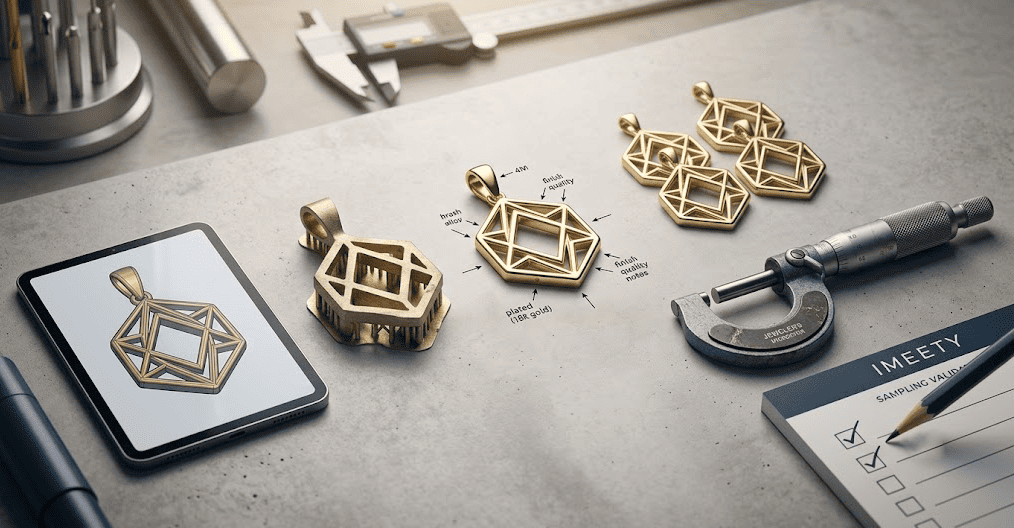
- The Custom Shift: Continuing to source these exact winners from generic wholesale sheets is leaving money on the table. This is the exact moment to develop an upgraded, proprietary version of that winning silhouette. By tweaking the geometries, refining the plating thickness, and securing design exclusivity, you instantly insulate your top revenue-generating products from copycat stores.
2. Inbound Requests for Bespoke Customization Are Surging
- The Operational Signal: Your customer service inbox, social media comments, and post-purchase surveys are flooded with variations of the same question: “Can I get this with my initials?” or “Do you offer this nameplate in a custom font?”
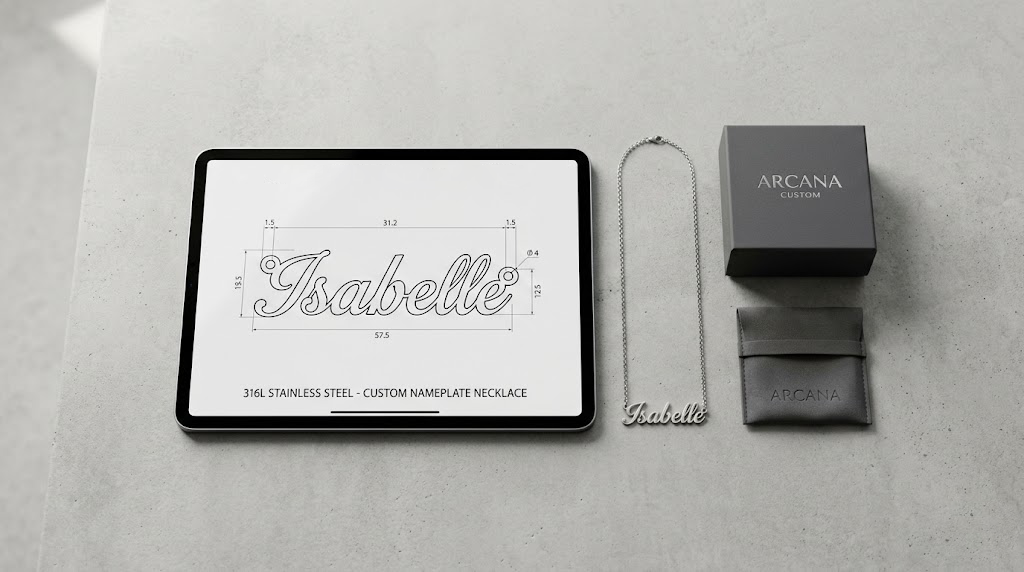
- The Custom Shift: High-frequency demand for personalization is the loudest signal that your audience wants emotional ownership over their jewelry. Instead of losing these high-intent shoppers, partner with an agile custom name necklace manufacturing partner to launch an exclusive custom letter, initial, or dimensional nameplate capsule. Running a lean, reactive production setup lets you capture these high-margin transactions without pre-purchasing the entire alphabet upfront.
3. Your Brand Equity is Capped by a Lack of Proprietary Assets
- The Operational Signal: Your traffic is healthy, but your Customer Lifetime Value (LTV) is stagnant. Buyers view your store as a transactional marketplace rather than a premium lifestyle brand because your jewelry lacks cohesive, recognizable identity elements.
- The Custom Shift: Moving into custom manufacturing allows you to inject proprietary signature elements across your entire catalog. This means executing custom-molded brand tags, laser-engraved luxury motifs, and dropping limited-edition signature series. Paired with low-MOQ branded packaging, you transform an unboxing moment from a standard delivery into a high-end brand experience that commands premium retail markups.
4. Margin Compression Has Turned Your Funnels into a Price War
- The Operational Signal: You find yourself constantly adjusting your store’s retail prices downward or running aggressive, margin-slashing discount codes just to maintain your baseline conversion rates against identical Google Shopping results.
- The Custom Shift: When you compete solely on price, you are running a generic logistics company, not a jewelry brand. Launching an exclusive, custom-manufactured collection breaks you out of this commodity trap. It shifts your marketing narrative away from discount-chasing and repositions it onto proprietary design storytelling, unique material performance, and genuine product scarcity.
5. Scaling Ad Spend Calls for Strategic Supply Chain Control
- The Operational Signal: You are ready to scale your daily Meta or TikTok ad budgets, but you are held back by supply chain anxiety. You cannot trust your current wholesale supplier to keep items in stock, maintain consistent electroplating quality, or provide predictable turnaround times during peak Q4 holiday rushes.
- The Custom Shift: Enterprise value requires complete operational control. Transitioning to an agile custom manufacturing infrastructure grants you the exact flexibility you need to scale responsibly. It gives you the power to plan precise seasonal collection rollouts, run rapid micro-batch testing on fresh aesthetics, and instantly ramp up production velocity the moment your ad creatives go viral—all while protecting your cash flow from heavy storage liabilities.
The Risk Mitigation Blueprint: Scaling Without Capital Strain
Historically, transitioning from bulk wholesale sourcing into proprietary custom manufacturing required an immense, often prohibitive upfront capital deployment. Legacy jewelry factories were built exclusively for mass-production runs, demanding thousands of units per SKU just to open a single molding line.
Today, aligning with a dedicated low moq custom jewelry manufacturer completely dismantles this financial barrier, turning a high-risk operational leap into a controlled, incremental transition.
An agile, low-minimum production framework reshapes your product deployment roadmap across four critical vectors:
- Phased Collection Dropping (The Micro-Batch Beta): Instead of committing your quarter’s entire budget to an unverified custom design, you run a tight capsule drop of 10 to 30 units. This introduces fresh, proprietary intellectual property (IP) onto your Shopify storefront, generating high-end creative marketing assets without draining your cash reserves.
- Algorithmic Demand Validation: You let actual consumer behavior—not predictive guesswork—steer your growth. By pairing a micro-batch with your active Facebook or TikTok ad creatives, you track hard backend indicators like Add-to-Cart (ATC) velocity and conversion rates to verify true market appetite before scaling.
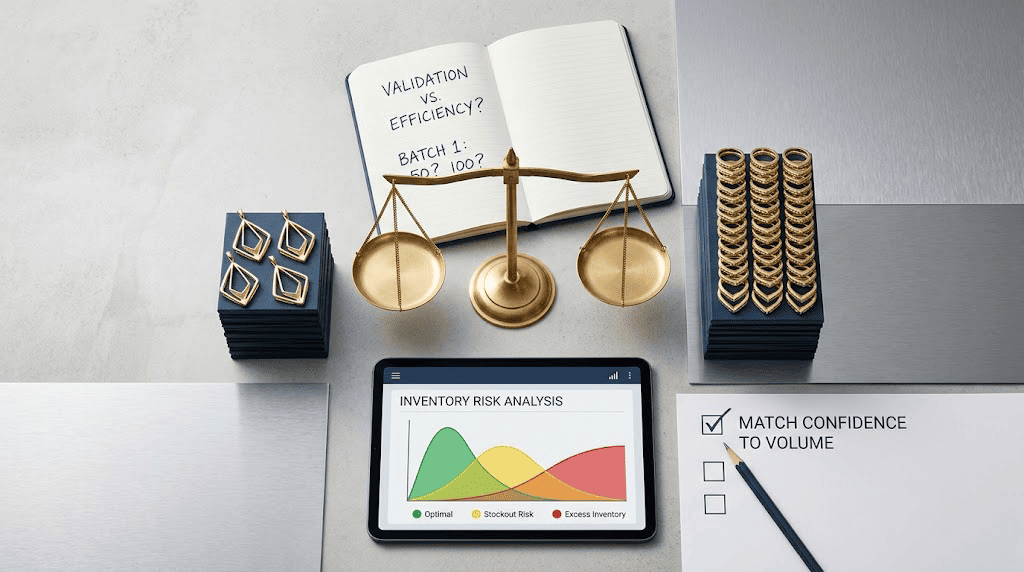
- Decoupling Capital from Warehouse Deadstock: In bulk manufacturing, a single design failure can freeze thousands of dollars in unsold storage boxes. With low-MOQ agility, if a design variant underperforms against your pixel data, you simply sunset the listing or let the initial handful of units sell out. Your downside risk is near zero, protecting your net margins.
- A Frictionless Hybrid Evolution: You don’t have to overhaul your entire business model overnight. A responsive supply chain allows you to scale gradually. You keep your reliable wholesale baseline products running to maintain steady cash flow while systematically replacing your highest-traffic pages with exclusive, custom-engineered private-label lines.
Ultimately, flexible manufacturing ensures that your capital stays exactly where it belongs: in your liquid working capital, feeding your high-converting ad funnels and driving brand acquisition, rather than buried in stagnant warehouse shelves.
Explore Custom Jewelry Manufacturing Solutions:
Custom Jewelry Manufacturer
💎 Name NecklacesSpecialized Production
🎁 Branded UnboxingPackaging & Branding Support
🚀 DropshippingGlobal Fast Fulfillment
🏷️ Private LabelExclusive Brand Solutions
⚡ Fast TrackLow MOQ & Rapid Shipping
The Dual-Track Blueprint: A Phased Custom Migration Strategy
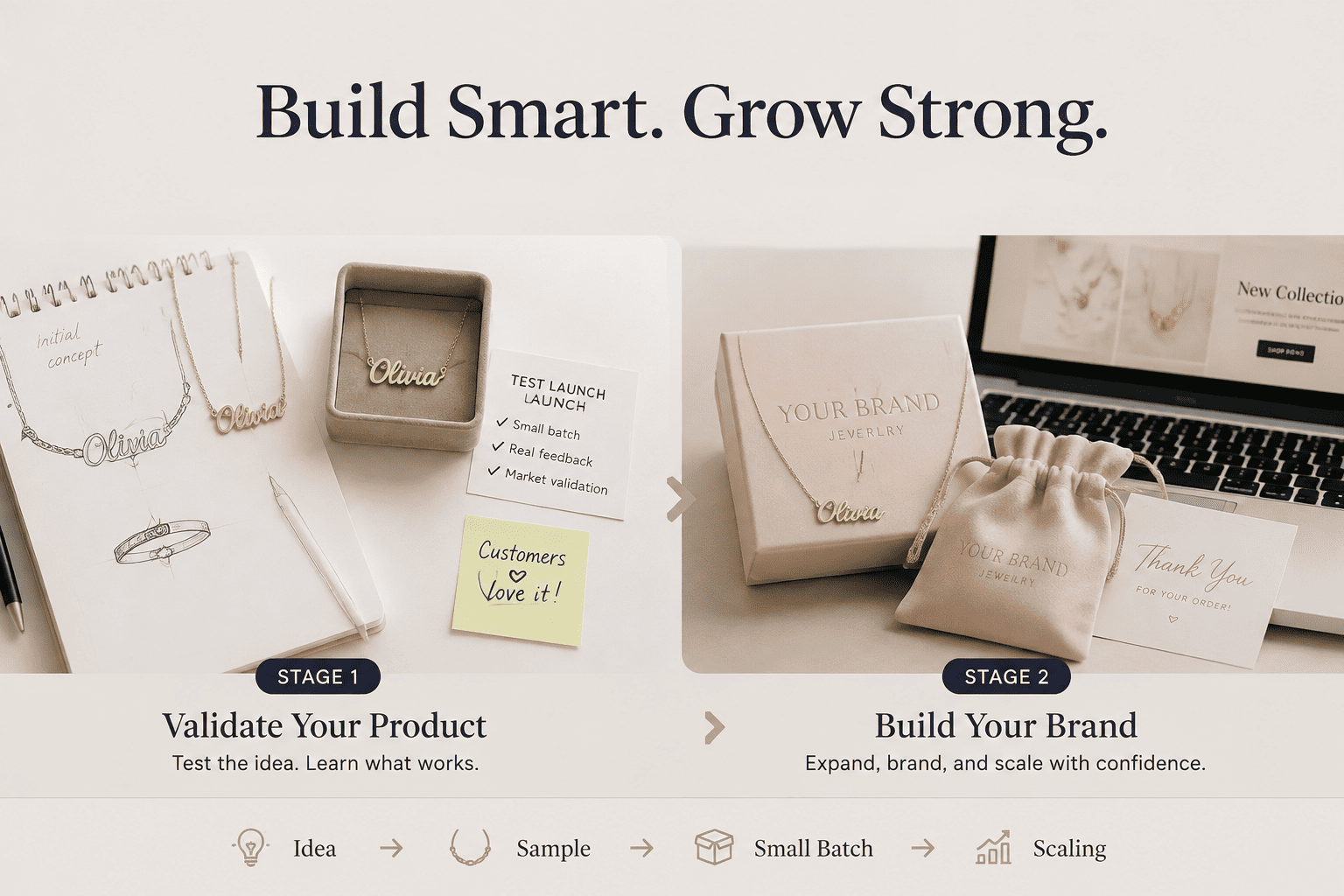
Migrating away from an open-market catalog does not require a risky, overnight overhaul of your entire logistics chain. The most resilient e-commerce labels scale through a dual-track architecture—maintaining a baseline wholesale cash-flow engine while systematically deploying high-margin, proprietary assets.
A tactical, 5-phase transition model looks like this:
Phase 1: Secure the Wholesale Cash-Flow Engine
Do not kill your active revenue streams. Maintain your proven, baseline wholesale listings to keep your pixel warmed up, cover your daily ad account overhead, and provide operational stability. Treat this segment of your catalog as your foundational financial substrate.
Phase 2: The Wedge Drop (The 10% Rule)
Introduce your first proprietary collection as a strategic, low-MOQ capsule line (such as a curated custom nameplate or initial series) that represents roughly 10% of your active SKUs. This allows you to test your front-end storytelling, content creation, and custom fulfillment workflows without straining your balance sheet.
Phase 3: Hard Metric Auditing
Bypass all emotional bias and analyze the hard backend data after a 14-day tracking window. Benchmark your new custom collection against your historic wholesale performance, specifically measuring:
- Add-to-Cart (ATC) velocity and Checkout Initiation rates.
- Average Order Value (AOV) expansion driven by premium personalization pricing.
- Customer feedback regarding your upgraded material finishing and custom unboxing.
Phase 4: Targeted Scaling Injection
The moment the data highlights a clear custom winner, redirect a portion of your scaling Meta or TikTok ad budgets away from generic catalog ads and push it into your winning proprietary creatives. Work with your flexible manufacturing backend to ramp up production volumes dynamically, matching inventory to real-time ad performance.
Phase 5: Catalog Substitution (Building Permanent IP)
Gradually increase the ratio of custom products within your storefront. As your proprietary collections scale, retire your low-margin wholesale listings one by one. Over time, you transform your catalog from a generic, price-sensitive retail store into a highly differentiated, private-label enterprise with completely protected product IP.
The Entry Framework: High-Margin Products for Your First Custom Launch
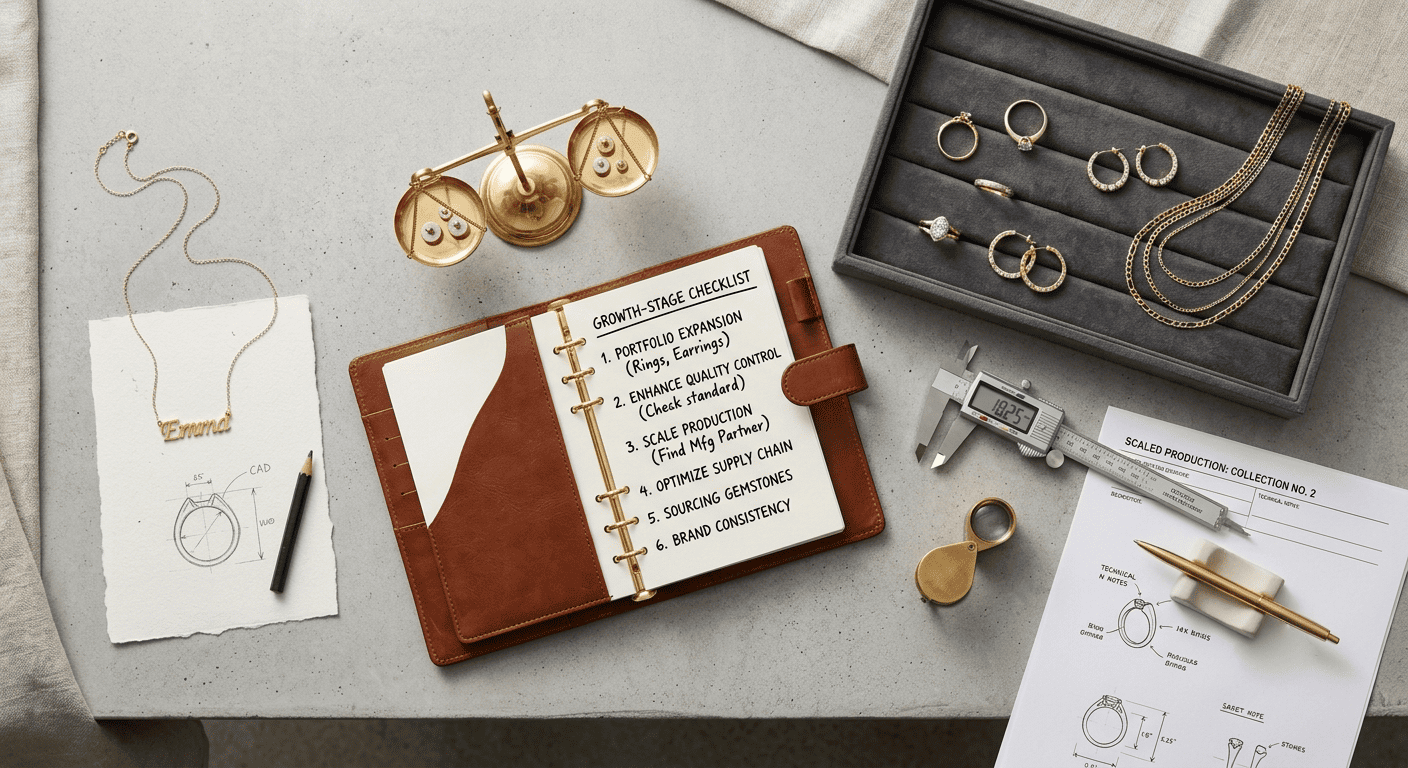
When deploying your initial proprietary capsule drop, you should avoid overly complex, multi-component fine jewelry designs that require heavy upfront engineering. Instead, focus on high-velocity, emotionally driven categories that command massive retail markups while keeping manufacturing complexity minimal.
The top-performing entry sectors for a brand’s first custom manufacturing run include:
1. Personalized Name Necklaces (High Emotional Resonance)
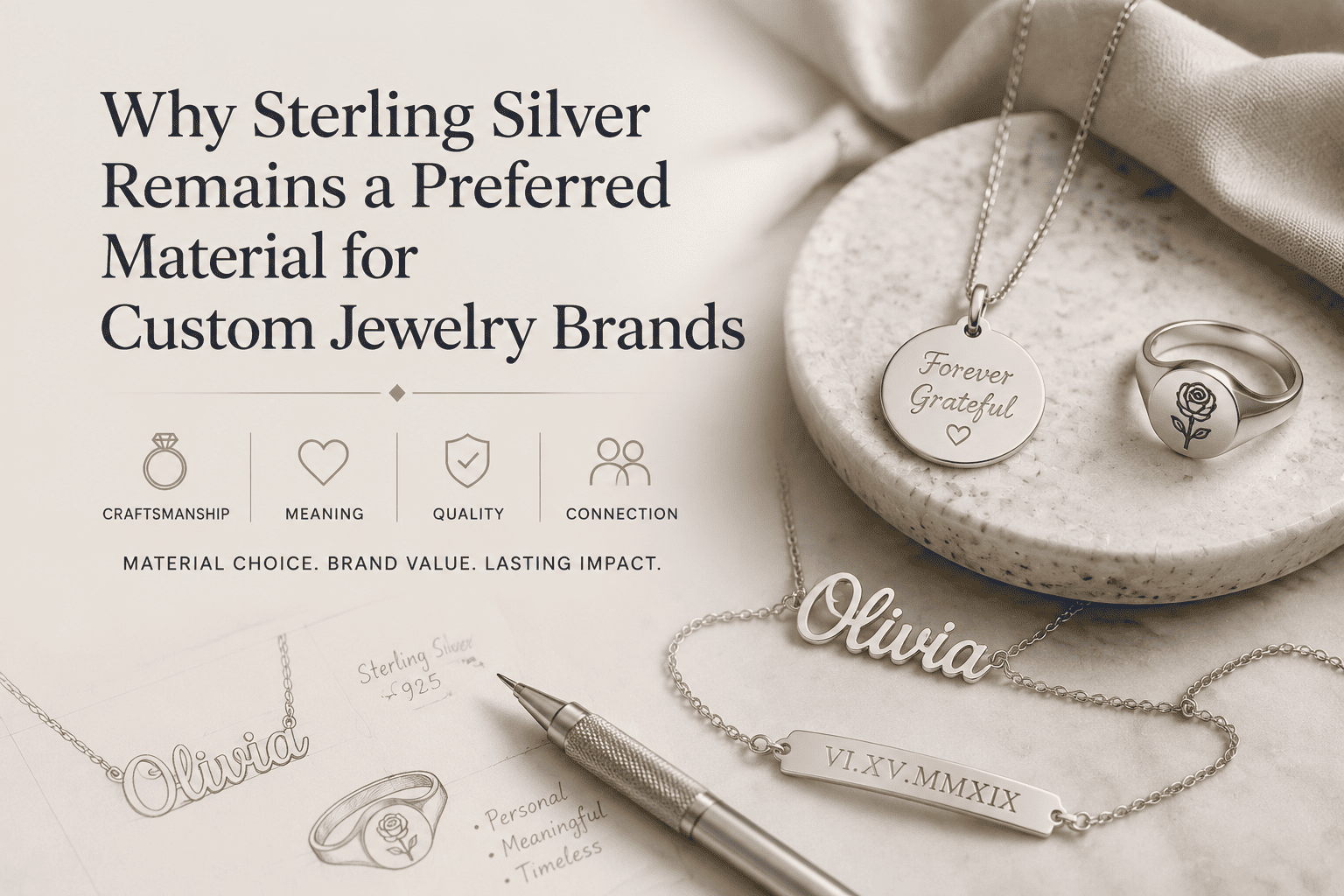
Custom typographic scripts and nameplates are the ultimate vehicle for social commerce. Because they are inherently unique to the end consumer, they bypass traditional price comparisons entirely, allowing you to command premium 5x to 8x retail markups. They possess massive, year-round gifting velocity—making them a bulletproof anchor for Q4 holiday campaigns, Mother’s Day, and Valentine’s Day drops.
2. Initial & Monogram Jewelry (The Low-Friction Custom Entry)
If you want to offer personalization but want to keep fulfillment tracking as simple as possible, initials are the perfect operational compromise. They feature broad consumer demand and high Add-to-Cart (ATC) impulse buying patterns, yet they fit into highly streamlined production workflows that allow for ultra-fast custom turnarounds.
3. Birthstone & Heritage Collections (Horizontal Stacking)
Birthstones allow you to introduce customized color and personal identity elements into your catalog without creating complex manufacturing bottlenecks. These lines are exceptional for building complementary multi-SKU variations, encouraging customers to cross-purchase matching rings, charms, or bracelets to maximize your storefront’s Average Order Value (AOV).
4. Performance Stainless Steel Lines (The High-Margin Everyday Wear)
If your marketing strategy centers on sustainable, everyday luxury, transitioning into custom stainless steel jewelry supplier runs is your highest-leverage move. Utilizing medical-grade 316L stainless steel allows you to market tarnish-free, waterproof, and hypoallergenic jewelry. This material profile significantly lowers your post-purchase customer return rates, eliminates customer service complaints about skin discoloration, and secures the healthy gross margins required to scale paid traffic confidently.
The Strategic Premium: Transforming Products into Brand Equity
Ultimately, migrating toward custom manufacturing is not a tactical experiment to simply expand your storefront’s SKU count. It is a deliberate, long-term positioning strategy designed to manufacture defensible market scarcity.
Once your business has successfully proven product-market fit utilizing basic wholesale merchandise, custom manufacturing becomes the compounding engine that elevates your brand out of the generic retail layer across four critical vectors:
- Asymmetric Margin Expansion: By bypassing the standard middleman wholesale markups and designing proprietary, exclusive silhouettes, you drastically increase the perceived value of your items. This unlocks premium pricing models that easily absorb rising ad account traffic costs.
- Insulated Competitive Advantage: When you own the custom tooling and digital assets of your collection, you completely eliminate the threat of direct storefront copycats. Your products cannot be cross-shopped on third-party marketplaces or reverse-engineered by competing Shopify stores overnight.
- Organic Retention & Community Velocity: Consumers don’t build emotional loyalty toward generic bulk stock. By dropping signature, private-label designs paired with high-end, customized unboxing experiences, you create a cohesive identity that transforms first-time buyers into lifetime collectors, organically stabilizing your customer retention curves.
- Sustainable Enterprise Value: Relying on a flexible manufacturing backend ensures that your growth is scalable, asset-light, and systematically de-risked. You build a lean, modern jewelry label capable of adjusting its catalog velocity in real time, transforming your storefront into a highly valuable, independent brand asset.
Final Thoughts: Transitioning Your Supply Chain for Long-Term Scale
Sourcing open-market wholesale jewelry remains a fantastic, low-friction gateway to launch a digital storefront and validate market interest. But when your brand reaches its growth inflection point, survival and profitability require strategic differentiation.
If your core SKUs are delivering consistent sales velocity, if your inbox is filling up with personalization requests, and if you are ready to break free from margin-slashing price wars, the market is telling you exactly what to do: it is time to transition into custom manufacturing.
With modern, low-MOQ reactive production, you no longer have to risk your critical working capital on massive upfront warehouse liabilities. You can scale your proprietary catalog gradually, intelligently, and at the exact velocity of your ad account performance. The world’s most enduring jewelry labels don’t just curate factory sheets—they manufacture exclusive product assets that their community permanently associates with their brand name.
Ready to Develop Your First Custom Collection?
You have proven your product-market fit, mastered your customer acquisition funnels, and captured an engaged audience. Now, align your backend infrastructure with your scaling ambitions.
Whether you are executing your first personalized nameplate line, dropping a high-margin waterproof stainless steel collection, or scaling an established multi-SKU catalog, IMEETY operates as your premier Private Label Jewelry Manufacturer, we specialize in helping growing jewelry brands transition smoothly away from wholesale bottlenecks through micro-batch low MOQs, transparent prototyping workflows, and integrated private-label brand customization.
Stop letting rigid, legacy supplier limitations cap your enterprise value.
📊 [Submit Your Design Concept or Sourcing Request Today] — Contact our supply chain consulting team to review your vector files, sampling timelines, and flexible, low-MOQ fulfillment pricing models.👇