Starting a custom name necklace business can be an appealing way to enter the jewelry market. A name necklace is personal by nature, and a relatively simple design can become meaningful through the name, initials, or other details a customer chooses.
For a new jewelry brand, however, selling personalized jewelry involves more than finding attractive designs and adding them to an online store. Every order may contain different customer information, and those variations need to be translated into jewelry that can be manufactured accurately and delivered as expected.
The opportunity is to build a product offering around personalization without necessarily developing a large collection at the beginning. The challenge is deciding what to sell first, how the jewelry will be made, and which production arrangement fits the business while demand is still uncertain.
A successful starting point is not the largest catalog or the lowest possible manufacturing cost. It is a product that customers understand, a customization process the brand can manage, and a manufacturing approach that supports the way the business intends to operate.
Understand What Makes a Name Necklace Business Different
Unlike conventional jewelry, a custom name necklace is not always a finished product waiting to be selected from inventory. The customer may choose a name, font, metal color, chain length, or other personalization details, and those choices become part of the manufacturing requirements.
This creates a different relationship between the online store and the manufacturer. The brand needs to collect accurate customization information, communicate the relevant specifications, and make sure the finished product reflects what the customer ordered.
It also creates opportunities for product differentiation. Two brands may offer name necklaces, but their products can differ in lettering style, proportions, material, chain design, decorative details, and the overall experience they provide.
Customers may purchase name jewelry for self-expression, gifts, family connections, or personal milestones. These are useful starting points for understanding the market, but they do not guarantee demand for a particular design. A new brand still needs to determine which product direction is relevant to its intended customers and whether those customers are willing to buy it at a sustainable price.
Before investing in a collection, it helps to define what the business will offer beyond the ability to add a name to a necklace.
Choose a Focused Product Direction
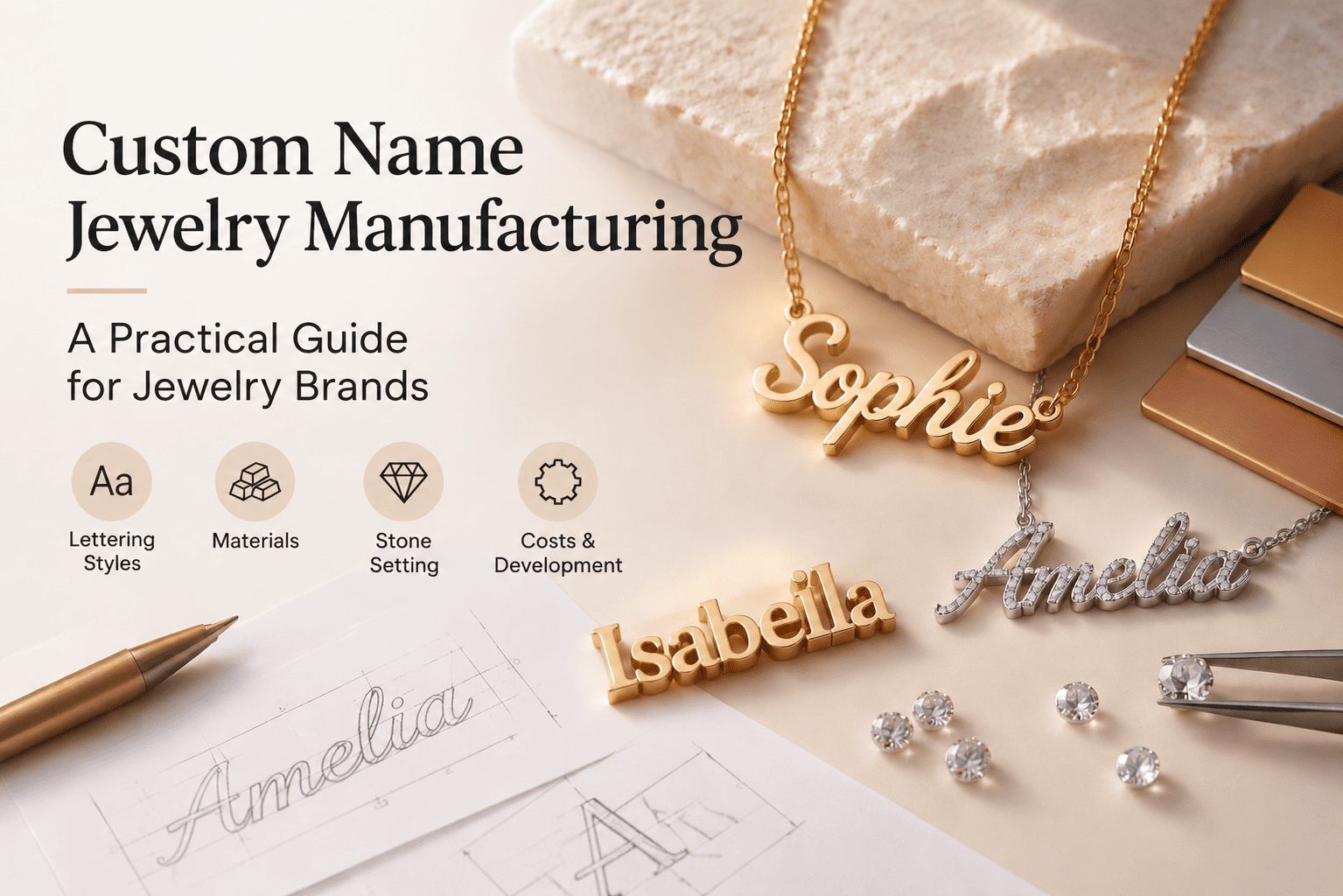
One of the first decisions is what type of custom name necklace to sell. A brand might begin with a classic script nameplate, a minimalist block-letter design, an initial necklace, or a style incorporating birthstones or other decorative elements. Each direction creates a different visual identity and may involve different manufacturing considerations.
A delicate script necklace, for example, needs lettering that looks attractive while maintaining practical connections between letters. A bold nameplate may allow a different visual treatment, while a stone-set design introduces additional questions about stone placement, setting methods, and the structure supporting the stones.
The best starting design is not necessarily the simplest or most elaborate. It should suit the customers the brand wants to serve and be practical to produce in the variations the business plans to offer.
For a new brand, a focused initial offering can make these decisions easier to manage. Rather than launching several unrelated styles, the business can begin with a recognizable product direction and learn how customers respond to it.
That does not require a fixed number of designs. A single well-defined product may be a reasonable starting point, while another brand may need a small selection to represent its intended collection.
The important consideration is whether each product serves a clear purpose and whether the brand can support the customization choices it offers.
Turn the Design Into a Manufacturable Product
Once the product direction is clear, the next step is understanding how the necklace will actually be made.
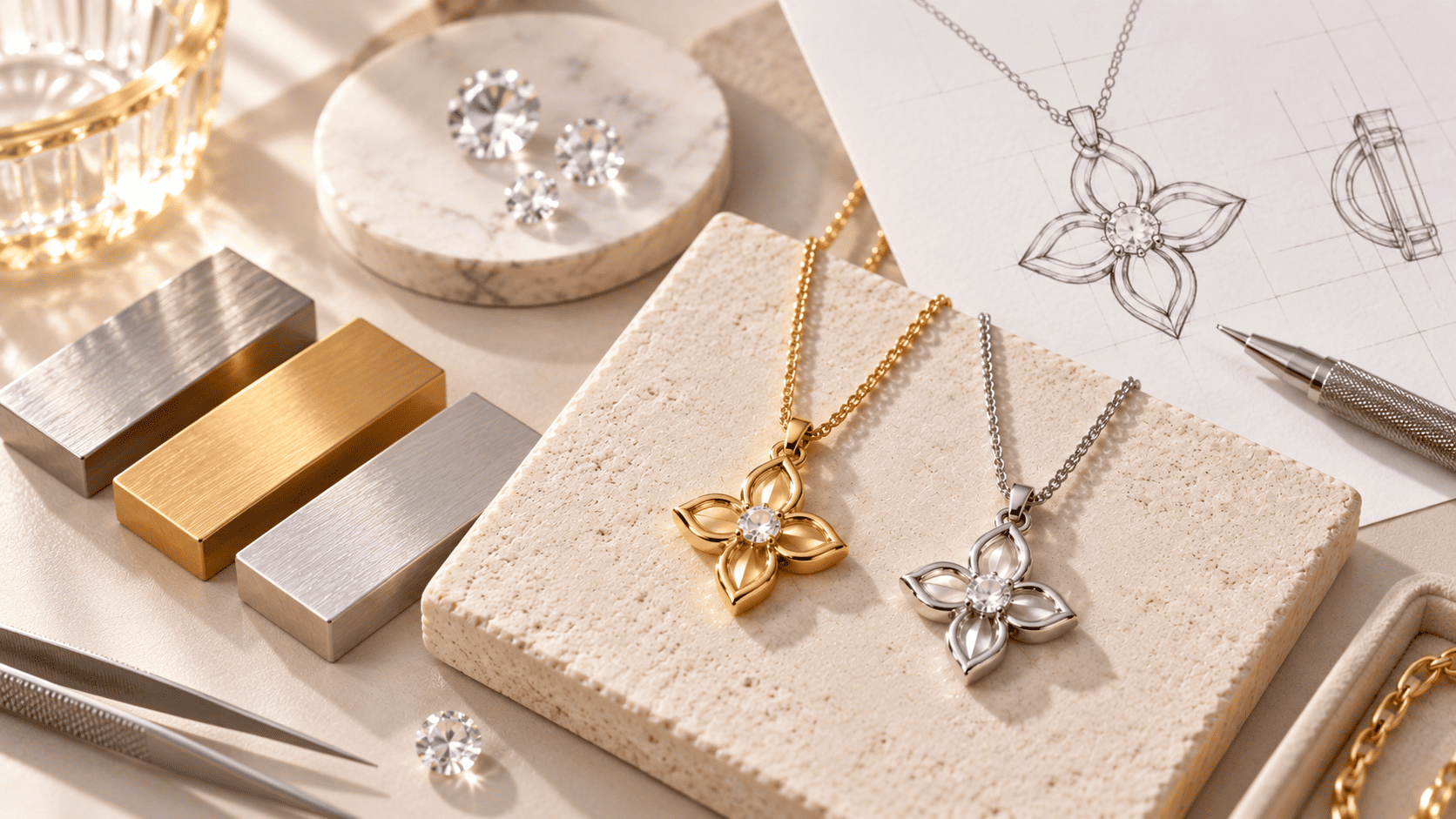
A reference image can communicate the intended appearance, but it may not establish the dimensions, material, lettering construction, chain attachment, or other details required for manufacturing. These need to be clarified before the brand can confidently evaluate samples and production quotations.
For name necklaces, typography deserves particular attention. A font that looks attractive on a screen may contain very thin strokes, disconnected letters, or narrow areas that need adjustment when translated into metal.
Different names can also create different proportions. A short name and a longer name may not produce the same visual balance at an identical overall size, so the brand should understand how the manufacturer handles variation in letter combinations and name lengths.
If you are still developing your first design, our guide on [ how to design a custom name necklace ] explains the practical considerations involved in turning a name concept into a jewelry product.
Not every custom name necklace requires an entirely new development process. Some familiar nameplate styles can be produced through established manufacturing approaches, while designs with unusual structures or decorative requirements may need additional evaluation.
A manufacturer should be able to help clarify which details are already sufficient for production and which require further development.
Select Materials and Finishes Based on the Product You Want to Sell
Material choice affects the finished product, the available manufacturing methods, and how the brand describes its jewelry to customers.
925 sterling silver, stainless steel and eco-friendly brass, even solid gold, all are the relevant options for custom name necklaces, but they should not be treated as interchangeable materials or as automatic steps in a quality hierarchy.
A brand may choose stainless steel because it suits its intended product requirements, finishing options, and commercial approach. Another may select sterling silver because the precious-metal composition is part of the product it wants to offer.
The appropriate choice depends on the actual design, intended use, customer expectations, and manufacturing requirements.
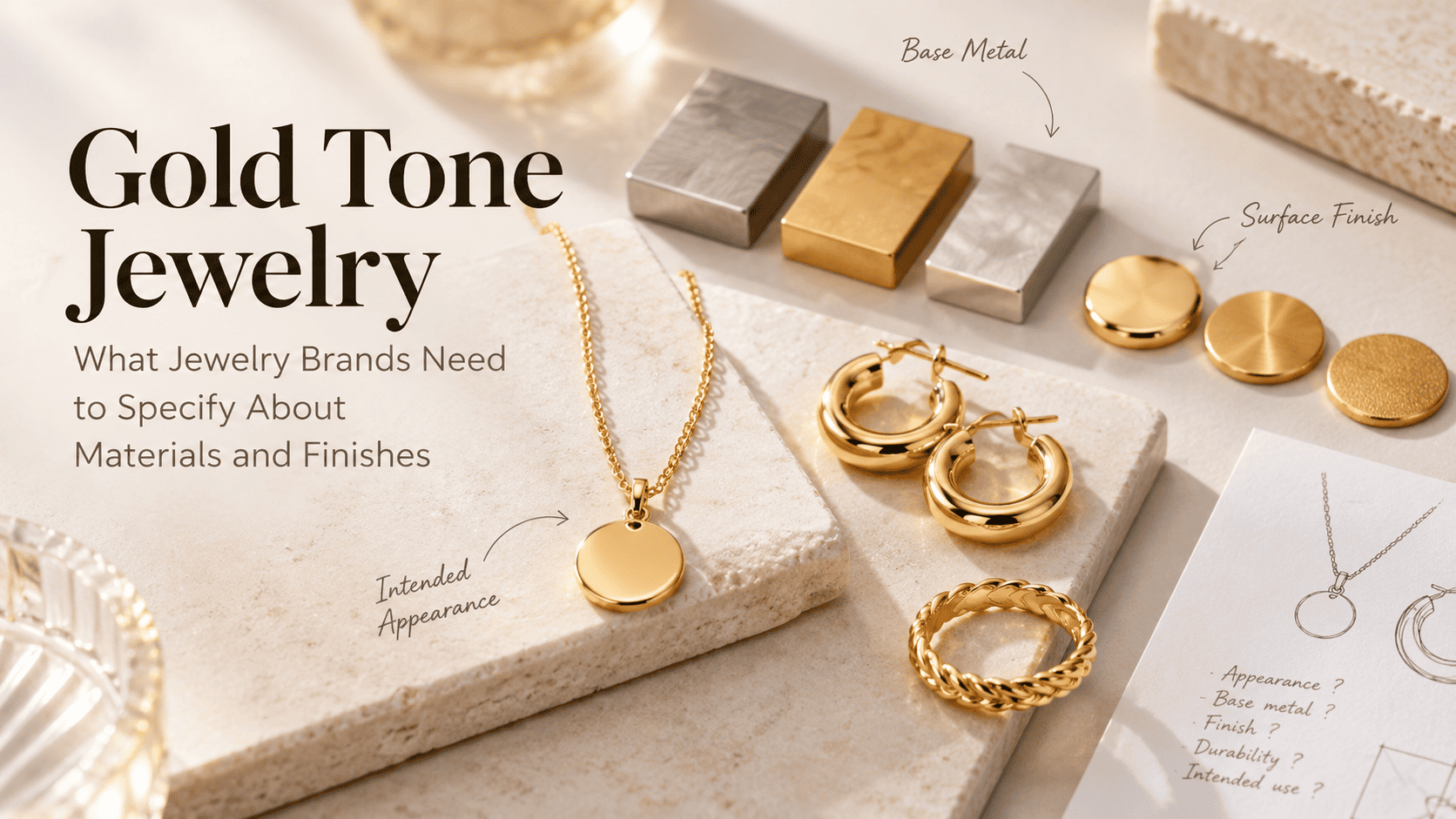
Surface finish also needs to be distinguished from base metal. For example, gold-colored stainless steel may use a PVD finish, while sterling silver jewelry may use gold plating. Similar-looking products can therefore have different material compositions and finishing processes.
A new brand should be able to explain what its products are made from rather than relying on appearance alone. This is especially important when writing Shopify product descriptions, communicating care information, or comparing quotations from different manufacturers.
If the brand has not yet decided on a material, it can discuss the intended appearance and product requirements with the manufacturer before selecting a suitable option.
Find a Manufacturing Partner That Fits Your Business Model
Finding a manufacturer is not simply a matter of locating the lowest unit price. for a custom name necklace business, the manufacturer also needs to support the product’s personalization requirements and the way orders will be managed. A supplier that is suitable for producing a fixed collection in batches may not necessarily offer the same arrangement for individual personalized orders.
Before committing, the brand should understand how the manufacturer handles different names and design variations, what information is required for each order, and which production quantities or fulfillment arrangements are available.
It is also useful to clarify how samples are evaluated, how approved product specifications are maintained, and what happens when a customization request falls outside the agreed options.
These questions matter because the business is not purchasing only a finished necklace, It is establishing a repeatable way to turn customer-selected details into physical products.
A flexible custom name necklace manufacturer can help a brand evaluate its product requirements and determine an appropriate manufacturing approach. The level of development, production flexibility, and fulfillment support should be confirmed for the specific project rather than assumed from a general service description.
For a new business, a manufacturer that communicates clearly about what is possible, what requires confirmation, and how orders will be handled may be more useful than one offering an attractive price without sufficient product detail.
Decide Between Small-Batch and Order-by-Order Production
A custom name necklace business does not necessarily need to begin with a large inventory of finished products. However, the right production model depends on how much of the product can be standardized and which details vary from one customer order to another.
With small-batch production, a brand may produce an agreed quantity of a particular product or component in advance. This can be appropriate when demand is reasonably understood or when certain production requirements favor batching.
Order-by-order manufacturing takes a different approach. Individual personalized pieces are produced according to customer information received by the brand, reducing the need to hold finished inventory for every possible name.
That flexibility can be valuable when demand is uncertain, but it does not eliminate business risk. Each order still has a manufacturing cost, production lead time, and potential for customization errors or customer-service issues.
A brand also needs to understand whether individual orders are economically practical for its chosen design. Some products can be manufactured through established processes with relatively flexible quantities, while others may involve development, tooling, or setup requirements that change the economics.
Working with a low-MOQ custom jewelry manufacturer may help a new brand avoid committing to more finished inventory than it needs. But low MOQ is useful only when the resulting unit costs, production arrangements, and delivery expectations fit the business.
The right decision is not always to produce the smallest possible quantity. It is to choose a level of commitment that reflects what the brand knows about demand and how the product will be fulfilled.
Build a Reliable Personalization and Order Workflow
For a Shopify or DTC brand, personalization needs to work on both sides of the purchase. The customer-facing store should make the available choices understandable, and the manufacturing side needs to receive the same information in a form that can be used to produce the jewelry accurately.
A customer may enter a name, choose a font, select a finish, and specify a chain length. The brand then needs to make sure those details are recorded correctly and communicated to the manufacturer without ambiguity.
This becomes particularly important when the business offers different capitalization styles, special characters, multiple names, or language-specific lettering. The brand should confirm which options the manufacturer can support before presenting them as available choices on the website.
It is also worth considering how corrections will be handled. If a customer submits the wrong spelling or requests a change after ordering, the brand needs to know when production begins and whether an adjustment is still possible.
A clear workflow reduces avoidable misunderstandings, but it does not require every new business to build a complex technical system. The appropriate arrangement depends on order volume, available customization options, and the production model.
For some brands, a straightforward process for reviewing and transmitting customer information may be sufficient at the beginning. As orders become more frequent, the brand can evaluate whether additional workflow integration would make the process more reliable.
Understand Your Costs Before Setting Retail Prices
A custom name necklace may appear simple, but the retail price needs to cover more than the basic manufacturing cost.
Depending on the product and business model, the brand may need to account for development or sampling, materials, production, packaging, shipping, payment processing, customer acquisition, and customer-service costs.
Personalized products can also create expenses associated with incorrect order information, replacement requests, or manufacturing changes.
These costs do not affect every brand in the same way. A business selling a straightforward nameplate through an established manufacturing process may have a different cost structure from one developing a distinctive design with additional tooling or decorative details.
Production quantity can also affect pricing. A quotation for individual personalized orders may differ from one based on a batch of the same design.
Before deciding on a retail price, the brand should understand what the manufacturing quotation includes and which costs remain its own responsibility.
For example, a necklace quotation may include the pendant and chain but exclude individual branded packaging or delivery to the final customer. Another quotation may be based on a different material or finishing specification. Comparing those prices without understanding the differences can lead to unrealistic margin expectations.
A sustainable pricing decision requires the brand to consider the complete cost of delivering the product and the price its intended customers are willing to pay. Personalized jewelry may offer opportunities for differentiation, but personalization alone does not guarantee a particular markup or profit margin.
Test the Product and Customer Response Before Expanding
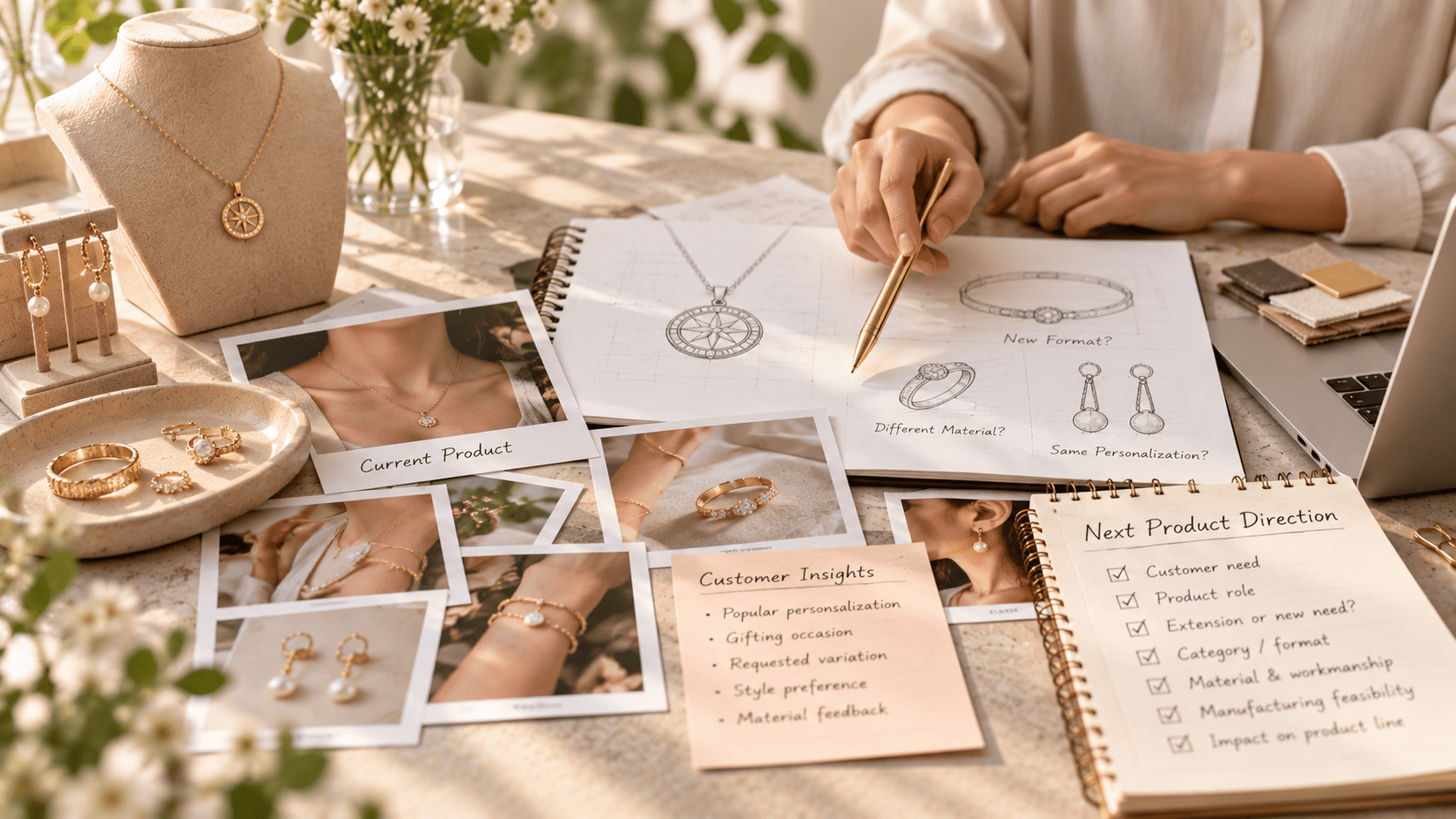
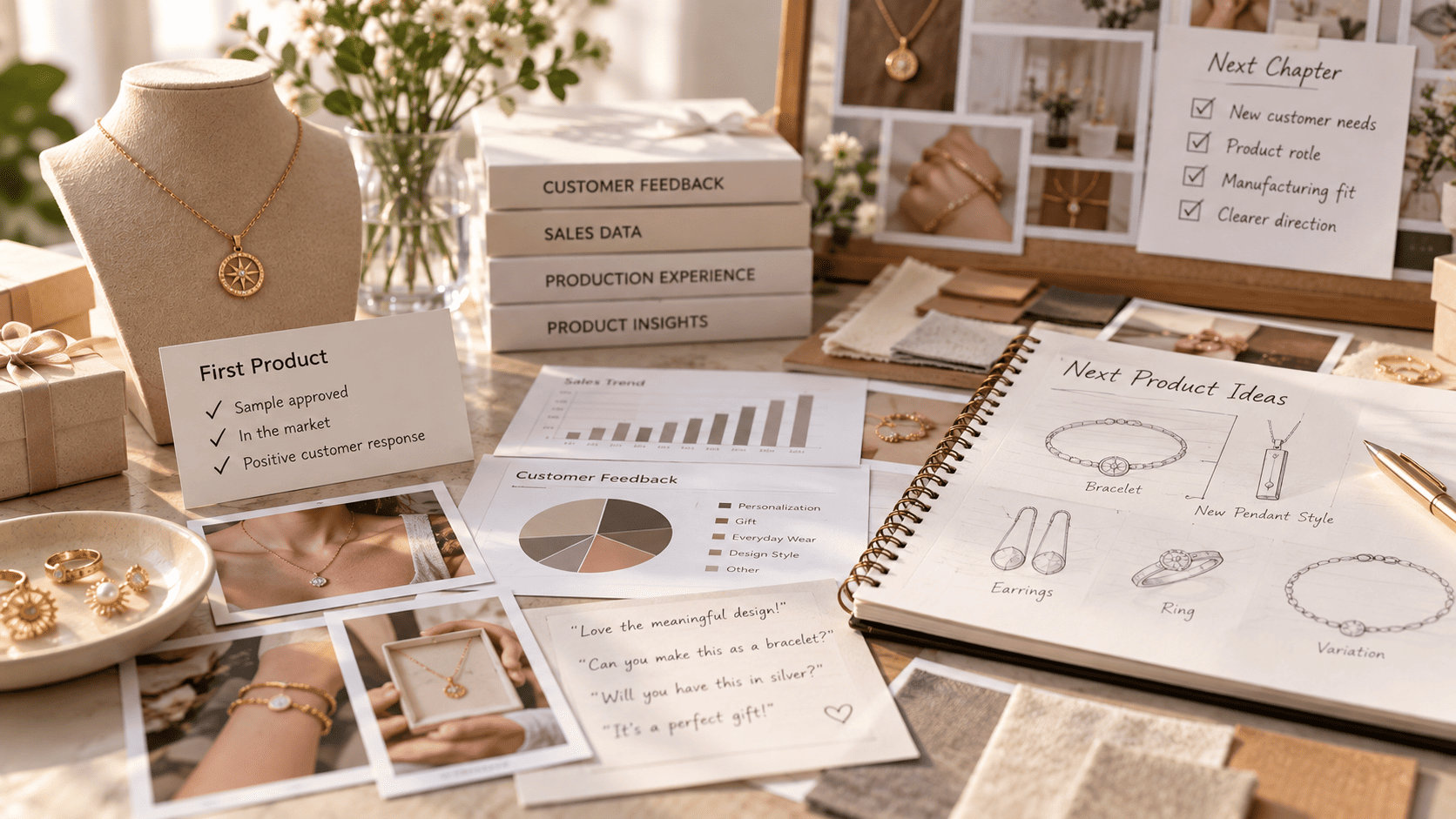
Once the first product is ready, the brand can begin learning from actual customer interest and orders. Early feedback can help identify whether customers understand the design, which customization options they prefer, and whether the product meets their expectations after delivery.
The manufacturing experience provides another source of information. The brand can observe whether order details are transferred accurately, whether the approved design works across the offered variations, and whether production and delivery arrangements are practical.
These observations are more useful when considered together. Strong interest in a product does not automatically mean the business is ready to expand its collection. Equally, a smooth first production run does not establish that demand will continue or that every future variation will be equally straightforward.
The brand may discover that its original design is working well and deserves further attention. It may also find that customers prefer a different chain length, that a particular font is difficult to manufacture consistently, or that the delivery experience needs improvement.
Those findings can guide the next decision without requiring the brand to launch more products immediately.
For a new custom name necklace business, the first product is an opportunity to learn whether the customer offer and manufacturing arrangement work together—not simply a test of how quickly the brand can increase its catalog.
Make Packaging and Fulfillment Part of the Product Experience
Packaging and delivery influence how customers experience personalized jewelry, particularly when the necklace is purchased as a gift. A new brand does not necessarily need elaborate packaging to create a thoughtful presentation. A suitable jewelry box or pouch, clear care information, and consistent brand details may be enough to support the intended product experience.
The choice should reflect the brand’s positioning, the practical needs of the jewelry, and the cost of fulfilling each order. Branded packaging can become more relevant as the brand establishes its identity, but it should not be assumed to create higher margins or repeat purchases on its own.
Fulfillment arrangements also need to be considered early. Some brands prefer to receive completed products, inspect them, and ship orders to customers themselves. Others may want the manufacturer to support direct fulfillment, including neutral or branded shipping arrangements where available.
These approaches involve different responsibilities for order accuracy, packaging, shipping coordination, and customer communication. If a brand intends to use direct fulfillment, it should confirm the available arrangement before promising customers particular delivery times or packaging experiences.
The purpose of packaging and fulfillment planning is to make sure the experience promised on the storefront can be delivered consistently through the chosen operating model.
How IMEETY Supports Custom Name Necklace Brands
IMEETY works with jewelry brands developing their own personalized products, including custom name necklaces, nameplate bracelets, initials, engraved jewelry, and other relevant name-based designs.
We support custom jewelry development and manufacturing according to the customer’s design and product requirements, with material options including 925 sterling silver, stainless steel, eco-friendly brass, solid gold.
For brands beginning with a familiar nameplate style, the manufacturing approach may be relatively straightforward. More distinctive designs or additional decorative features may require further evaluation before the production method and quotation can be confirmed.
We also support flexible production arrangements, including small-batch and order-by-order manufacturing where appropriate, along with private-label packaging coordination and fulfillment support based on the agreed project requirements.
We do not provide a public catalog of ready-made designs. Our work begins with the product direction and specifications the brand wants to develop.
If you are preparing to launch a custom name necklace business, you can share your design references, preferred materials, intended customization options, and expected order arrangement with IMEETY. We can help evaluate the relevant manufacturing approach and clarify the next steps before you commit to production.
Final Thoughts
Starting a custom name necklace business does not require a large collection or a substantial inventory of finished jewelry. It does require a clear product direction and an understanding of how personalized orders will be manufactured and delivered.
The early decisions are connected. Design affects manufacturing feasibility, material choice helps define the product’s positioning, and the production model influences costs, delivery expectations, and how customer orders are managed.
A focused product offering gives a new brand room to learn without making unnecessary commitments. As customer demand and manufacturing experience develop, the business can make more informed decisions about refining its products, adjusting its operations, or expanding its collection.
The most useful starting point is a custom name necklace that meets a real customer need, can be produced as intended, and fits a business model the brand can realistically manage.