
For modern e-commerce founders, launching a signature jewelry brand is no longer a challenge of creative marketing; it is a challenge of capital allocation.
The traditional supply chain playbook dictates a brutal barrier to entry: committing thousands of dollars of seed capital into heavy, unverified bulk inventory before your Shopify storefront even processes its first checkout. For emerging labels, digital creators with active social media leverage, and corporate professionals transitioning into brand ownership, this legacy framework introduces an unacceptable financial liability—stifling liquidity before the brand can even validate its product-market fit.
But the architecture of jewelry manufacturing has shifted.
Building a distinctive, high-margin brand asset no longer mandates tying up your working capital in depreciating warehouse stock. By leveraging a responsive, low-MOQ manufacturing infrastructure, scaling founders can now launch highly curated collections with minimal downside risk. You can systematically test design concepts, protect your liquid cash reserves for front-end traffic acquisition, and scale your production velocity in direct response to real-time consumer data.
In this operational blueprint, we will dissect the strategic framework for launching a defensible jewelry brand with zero deadstock liability. We will analyze the financial mechanics of capital rotation, sample prototyping protocols, and how to position your supply chain as a flexible growth lever rather than a massive upfront expense.
The Legacy Burden: Why Upfront Stocking Is a Sinking Strategy
The traditional jewelry supply chain was engineered for analog retail, forcing founders to purchase massive production runs months in advance to secure viable unit economics. Under that outdated framework, early-stage capital is immediately strangled by four systemic vulnerabilities:
- Sunk Capital Stagnation: Sinking your entire launch budget into bulk purchase orders leaves you with zero financial runway to fund front-end customer acquisition on Shopify.
- The Deadstock Trap: Warehousing hundreds of identical, unverified SKUs introduces massive write-off risks if the initial market reception underperforms your forecast.
- Trend Paralysis: Committing heavily to a single design catalog locks your brand out of the market when consumer aesthetics or social media trends shift overnight.
- Compounded Pricing Pressure: High upfront storage and capital liabilities force frantic, margin-slashing discount loops just to recoup liquidity.
Today, advanced, responsive manufacturing networks have completely decoupled professional brand positioning from inventory volume. Emerging luxury labels can now operate on a highly efficient cash-flow matrix, utilizing lean agile supply chains to rotate capital faster and scale strictly on real-time market pull.
Strategic Curation: Build a Defensible Brand Asset, Not a Commodity Storefront
The fatal error for 90% of scaling startups is treating an e-commerce brand as a high-volume product clearinghouse. Launching with dozens of un-coordinated, mass-market SKUs signals zero brand identity and immediately flags your storefront as a generic dropshipping operation.
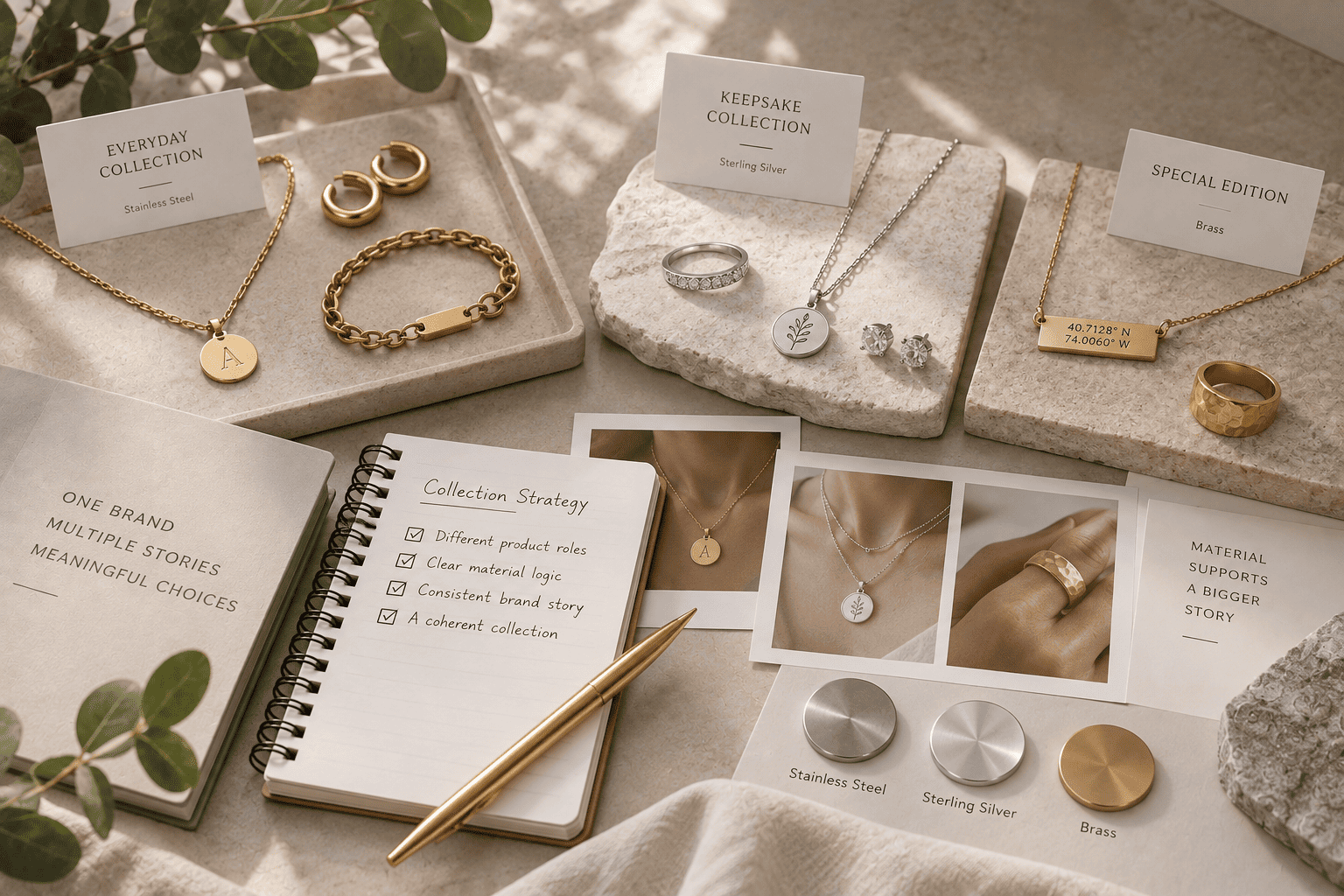
High-equity independent labels capture market share by doing the exact opposite: prioritizing structural curation over catalog volume. For founders looking to scale sustainably on Shopify, your initial entry phase must anchor on three strategic pillars:
- A Uniform Aesthetic Architecture: Establish an uncompromised, cohesive design language—whether it is raw industrial minimalism, customized typography, or targeted demi-fine luxury. Your catalog must feel like an intentional gallery collection, not a random wholesale directory.
- Hyper-Focused Audience Mapping: Direct your initial collections toward a hyper-specific buyer persona whose lifestyle, social media consumption habits, and value metrics align with your premium brand positioning.
- The Lean Capsule Approach: Launch with a highly concentrated, single-digit SKU capsule. A compact product lineup allows you to obsess over structural quality, control your early supply chain metrics, and maintain extreme capital liquidity.
Starting small isn’t a sign of restricted budget; it is a clinical operational filter. It allows your brand to gather critical, real-time pixel and conversion data, learning exactly what resonates with your audience before deploying heavy capital to scale your manufacturing pipeline.
The Blueprint: Executing the Low-Inventory Agile Launch Strategy
Transitioning a jewelry startup from a capital-heavy risk into a lean, data-driven brand asset requires an explicit operational framework. By moving away from massive bulk commitments and adopting a flexible manufacturing pipeline, scaling founders can structure their launch into four tactical execution phases:
Phase 1: Deploy a Hyper-Focused Minimum Viable Collection (MVC)
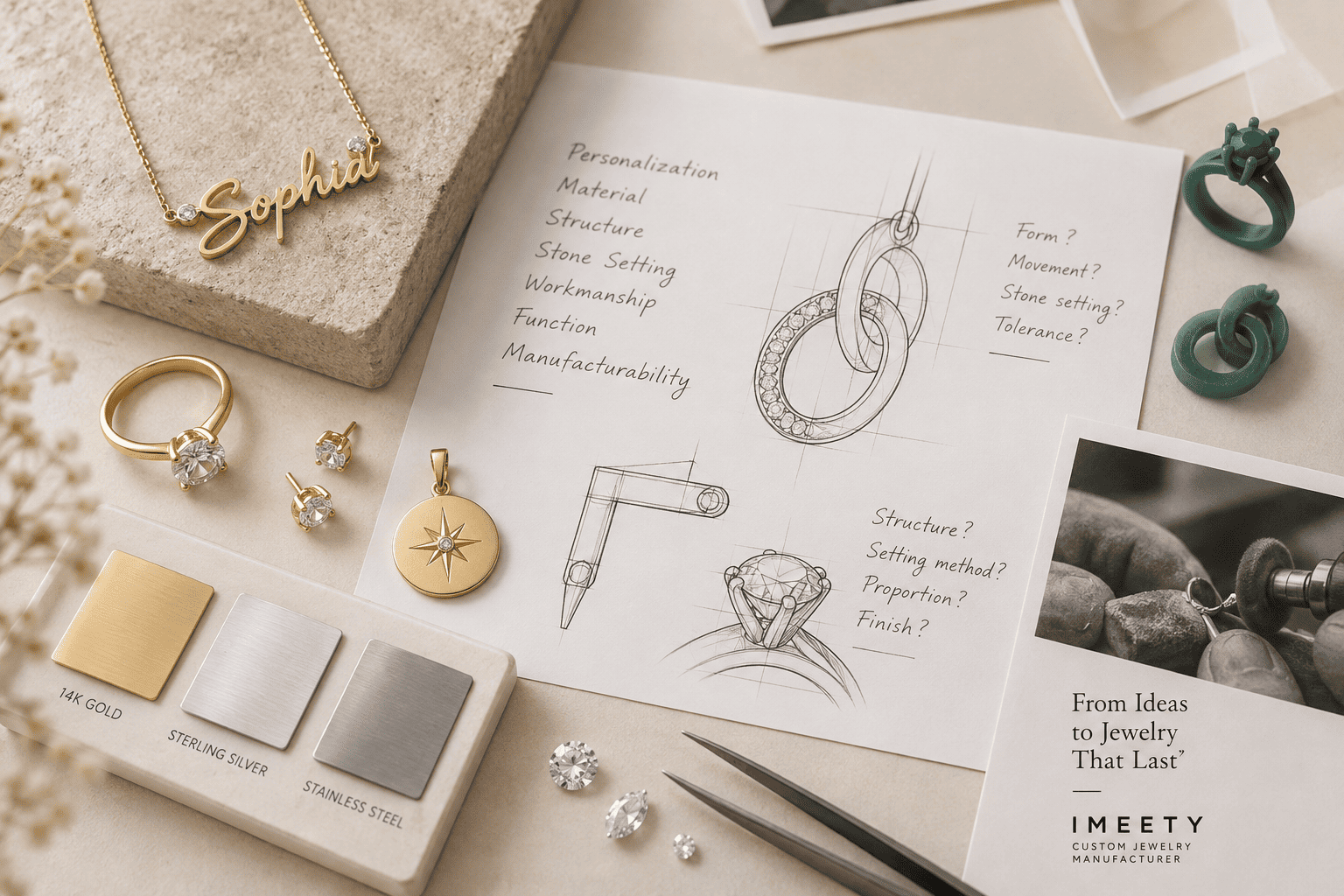
Instead of diluting your marketing capital across an un-coordinated 50-SKU directory, launch with an intentional, single-digit capsule (5–10 items max). High-converting, emotionally-driven categories—such as personalized name necklaces, monogram scripts, personalized anniversary pieces, and custom birthstone combinations—offer the highest immediate return on ad spend (ROAS). Partnering with a specialized custom name necklace manufacturer allows you to tap into this massive premium personalization sector natively, securing high retail margins with near-zero front-end inventory drag.
Phase 2: Establish an Agile Supply Chain Foundation
The linchpin of a low-inventory model is your upstream infrastructure. Emerging labels must bypass legacy mass-production factories and align explicitly with a verified low moq custom jewelry manufacturer. This flexible partnership unlocks institutional-grade custom fabrication with micro-batch agility. It completely lowers your upfront financial exposure, insulates your balance sheet against deadstock liability, and gives your brand the operational flexibility to test, pivot, and iterate designs in direct response to live traffic data.
📊 Scale Your Concept with a Responsive Small-Batch Infrastructure — Accelerate your Shopify market entry by deploying high-margin collections via an elite custom name necklace and personalized jewelry production pipeline. Fully backed by turnkey custom manufacturing, premium packaging support, and compressed turnaround timelines, this agile framework is engineered strictly to eliminate upfront inventory drag and protect your launch liquidity.
Phase 3: Engineer a High-Perceived-Value Brand Experience
Operating with a lean warehouse inventory does not mean sacrificing premium positioning. In modern B2C commerce, customers buy the narrative and the unboxing ritual just as much as the metal. Ensure your lean product drops are reinforced by high-tier brand collateral. By leveraging end-to-end custom packaging support, you can deploy custom-molded luxury box sets, signature microfiber pouches, and bespoke inserts right from the initial factory production run—instantly justifying a 4x retail markup and driving explosive repeat-purchase loyalty.
Phase 4: Execute Evidence-Based Scaling (The Feedback Loop)
Once your storefront pixel data gathers active customer interaction, shift from survival mode to systematic market expansion. Stop scaling your supply chain based on creative intuition; scale strictly on concrete data validation:
[Phase 1: Seed Lean MVC Capsule] -> [Phase 2: Analyze Retention & ROAS] ->
[Phase 3: Trigger Rapid Reorders on Winners] -> [Phase 4: Deploy Complementary SKU Extensions]
By rotating your working capital through this data-driven loop, you can continuously scale your successful core lines and fund strategic seasonal launches, ensuring your brand equity scales exponentially while your upfront inventory overhead remains completely flat.
The Risk Matrix: Fatal Sourcing Blunders Emerging Labels Must Avoid
When executing a low-inventory strategy, your defensive operational boundaries are just as critical as your growth metrics. High-potential startups frequently compromise their runway by falling into four common scaling traps:
- Over-Indexation Pre-Validation (Ordering Too Early): Committing to bulk volume based on early localized feedback or social media likes—rather than cold, hard Shopify checkout pixels—is the fastest way to paralyze your cash flow.
- Catalog Dilution (The Variety Illusion): Flooding your early storefront with an un-coordinated mix of 30+ generic items to “see what sticks” destroys your niche positioning and leaves your audience confused, tanking your conversion rate.
- Micro-Trend Whiplash (Chasing Every Fad): Sinking design capital into fleeting, hyper-viral social media gimmicks that evaporate in 30 days leaves you with a warehouse full of irrelevant deadstock. Focus on long-lifecycle, premium essentials.
- The Low-Margin Race to the Bottom (Price Dependence): Competing purely on being the cheapest alternative is a suicidal strategy for an independent brand. If your only market advantage is a low price tag, you are running a vulnerable distribution funnel, not a high-equity brand asset.
Final Thoughts: Velocity Over Volume in Modern Jewelry Commerce
The legacy era of commerce dictated that market entry required heavy upfront risk. Today, the brands that successfully scale on Shopify recognize that a warehouse full of stagnant, unverified inventory isn’t an asset—it is an anchor on your cash flow.
Launching a distinctive, sustainable jewelry brand is an exercise in strategic agility. By anchoring your launch phase on highly curated capsule lines, low-MOQ manufacturing execution, and an uncompromised brand identity, you establish a lean operational foundation built for long-term survival and high-margin compounding.
The elite independent labels dominating the market today did not begin with massive capital-intensive stock runs. They validated their niche with a few thoughtfully engineered products, protected their working capital to fund front-end traffic, and scaled their manufacturing velocity strictly as their real-time customer data responded.
Ready to Engineer Your Lean Brand Launch?
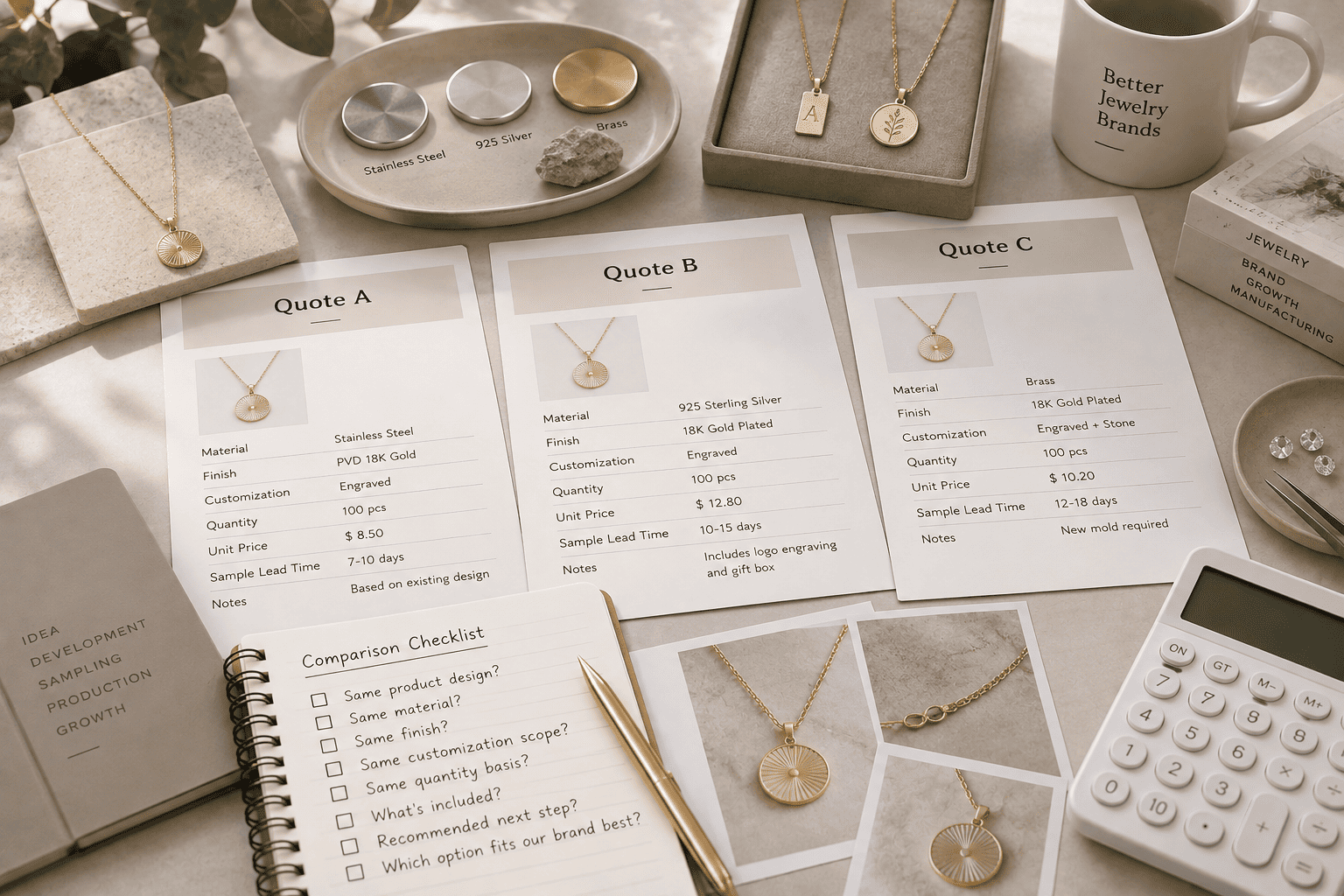
You do not need a massive capital deployment to build a defensible jewelry asset. You need a responsive, institutional supply chain engineered to support your growth pace without squeezing your balance sheet.
Whether you are looking to design your first premium personalized monogram capsule, launch a minimalist tarnish-free everyday line, or secure a reliable Low MOQ Custom Jewelry Manufacturer that delivers end-to-end support straight from the initial micro-batch run, our infrastructure is optimized specifically for scaling founders. We eliminate the friction of traditional manufacturing limits, putting elite fabrication, rapid response prototyping, and capital efficiency in your hands.
Stop waiting for massive budgets. Start building your proprietary brand asset today.
📊 [Initiate Your Lean Brand Consultation Now] — Connect directly with our rapid-response supply chain team today to upload your initial design specs, map out your bespoke packaging footprint, and secure a lean, precision contract manufacturing quote tailored for your Shopify ecosystem. 👇