
For early-stage e-commerce stores, open-market wholesale sourcing is the default path to market validation. It requires minimal upfront capital, zero product development overhead, and offers a frictionless setup. You buy what is already manufactured, list it on your Shopify storefront, and run your traffic.
However, as a jewelry brand hits its growth phase, this low-risk convenience invariably transforms into a growth ceiling.
When your entire catalog consists of generic wholesale items, you do not own a brand—you own a temporary marketing arbitrage funnel. The moment your Meta or TikTok ad creative goes viral, copycat competitors can reverse-image search your product, source the exact same SKU from public wholesale directories, and undercut your margins within 48 hours. You bleed your ad spend to validate a market, only to watch your high-intent traffic disperse across cheaper commodity resellers.
Transitioning to private label jewelry manufacturing is no longer just a creative design preference; it is a defensive capital strategy. By moving away from public catalogs and building proprietary, branded collections, scaling labels can finally manufacture defensible market scarcity, dictate luxury-tier retail markups, and cultivate genuine customer lifetime value (LTV).
In this operational guide, we will bypass the surface-level definitions and analyze the structural trade-offs between wholesale reselling and private label manufacturing. We will map out the exact financial inflection points, supply chain risks, and branding levers that growing Shopify jewelry brands must evaluate to transition from a vulnerable stock-reseller into a high-equity, sustainable brand asset.
Wholesale Sourcing: Accelerated Market Entry with a Expiry Date
Wholesale sourcing defines the traditional reselling model: purchasing ready-made, mass-produced jewelry assets from public manufacturer catalogs to liquidate via your storefront with zero structural product modification.
The Immediate Advantages:
- Instant Market Deployment: Zero product development timelines; go from catalog selection to storefront launch within days.
- Capital Liquidity: Minimal upfront R&D overhead, allowing you to reallocate initial funds into front-end traffic acquisition.
- Operational Simplicity: Total elimination of engineering, mold prototyping, and raw material sourcing liabilities.
The Structural Bottlenecks:
- Commoditizer Vulnerability: Zero product differentiation makes your store instantly vulnerable to reverse-image price comparison.
- Margin Compression: Open competition on identical factory SKUs forces a race to the bottom, shrinking net margins against rising ad costs.
- Eroded Brand Equity: Customer retention sinks because buyers develop affinity for the generic product design, not your proprietary storefront.
While wholesale acquisition serves as an excellent sandbox for low-risk market validation, it functions on a ticking clock—it lacks the structural defensibility required to sustain a growth-stage e-commerce enterprise.
Private Label Jewelry: Manufacturing Proprietary Intellectual Property
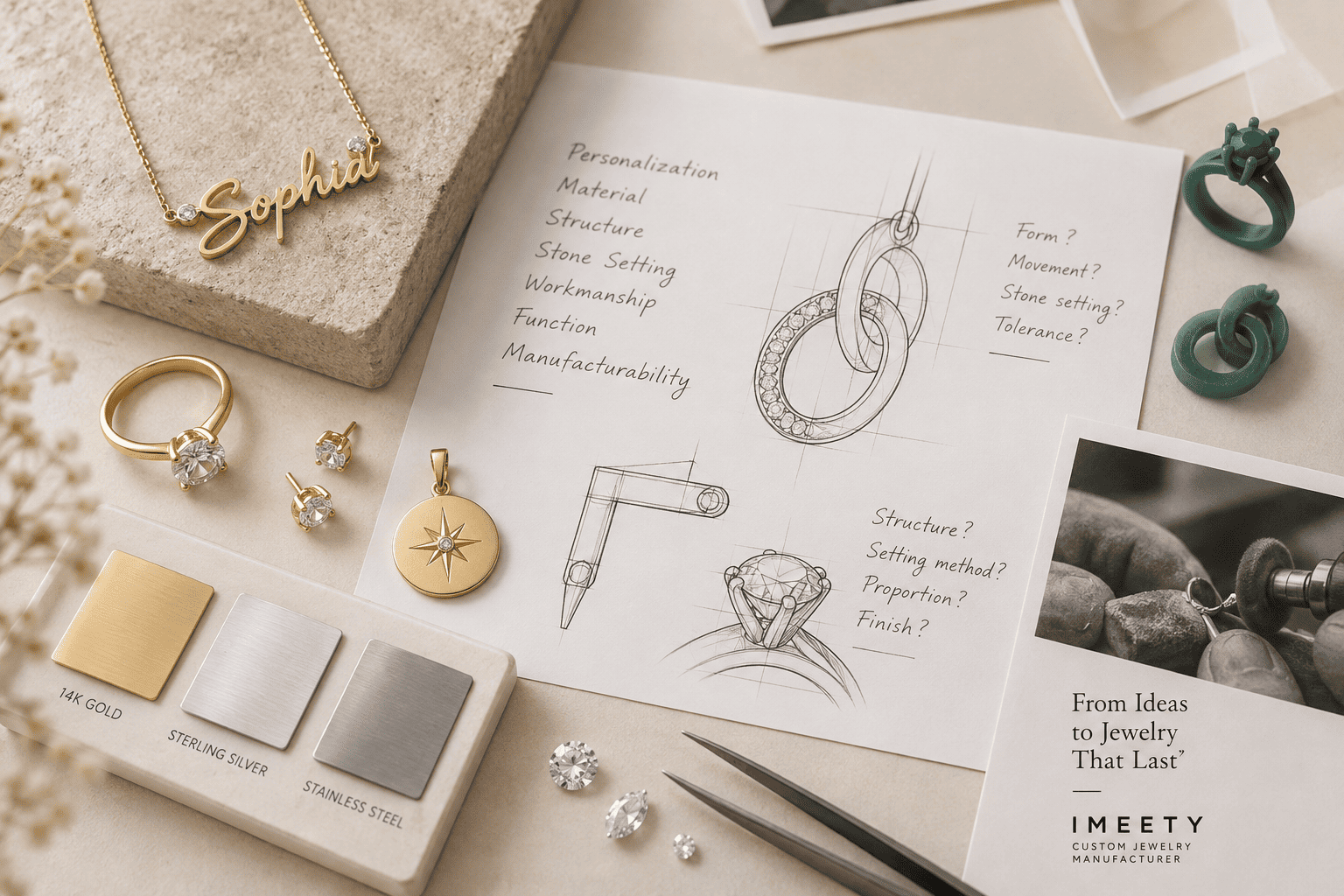
Private label manufacturing is the shift from distribution to ownership. It involves contracting an upstream production infrastructure to engineer proprietary designs or tailored catalog modifications executed exclusively under your brand’s trademark, complete with bespoke brand collateral.
The Strategic Advantages:
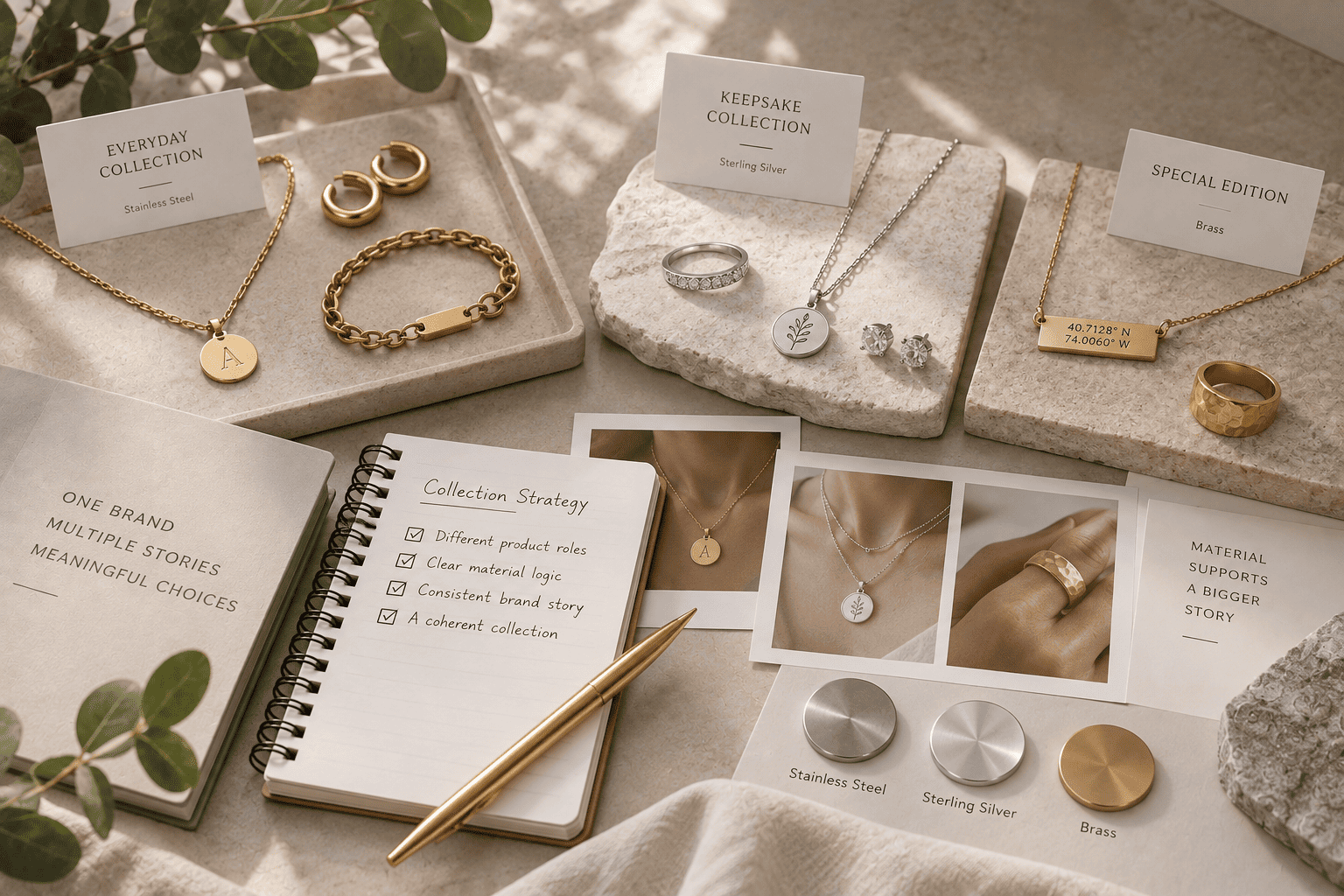
- Defensible Scarcity: Build high-margin capsule collections entirely exclusive to your storefront, neutralizing competitor reverse-image matching.
- Premium Markups: Elevate your brand identity and perceived value, justifying 3x to 5x retail pricing models over generic commodities.
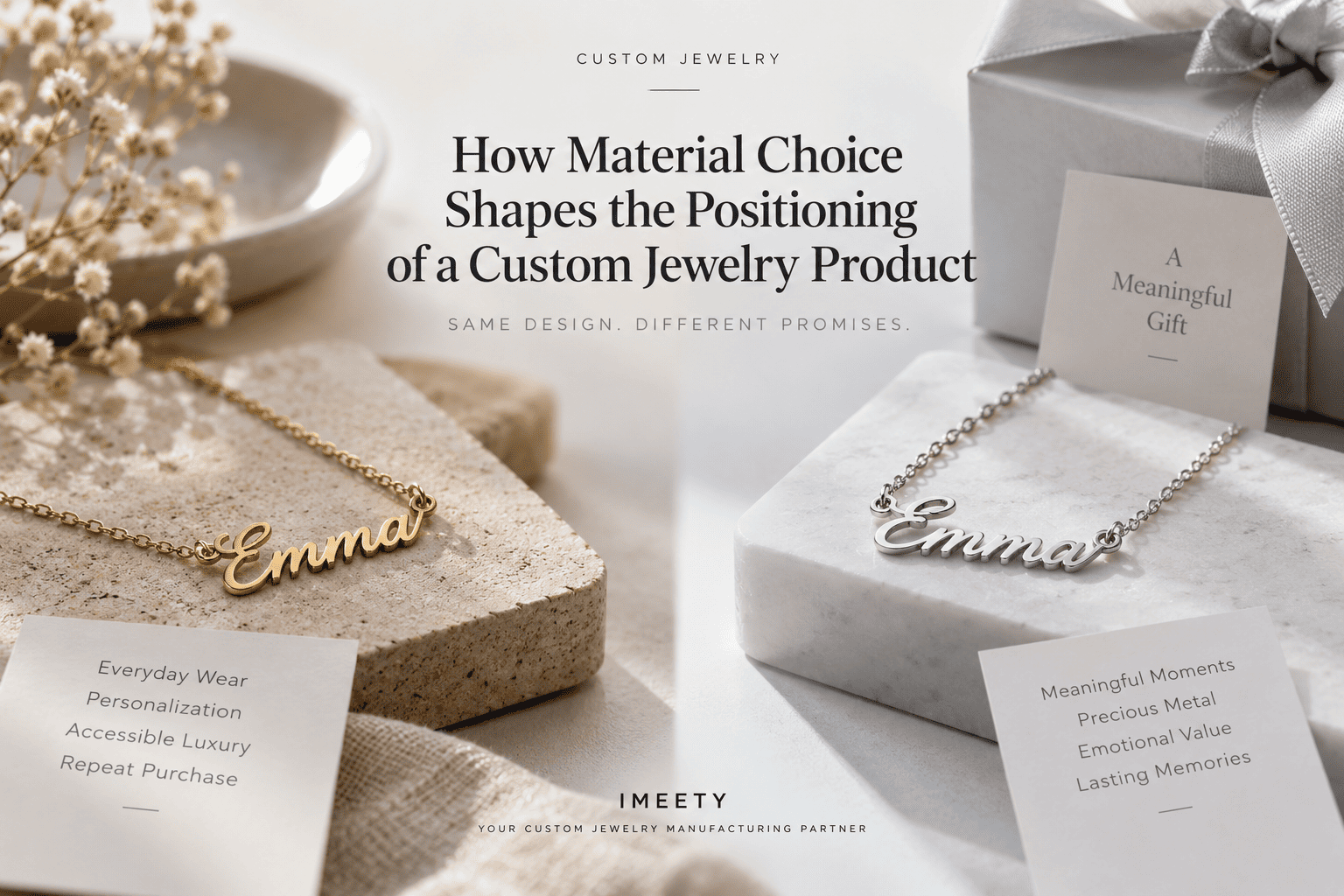
- Granular Quality Sovereignty: Maintain total control over raw material composition (e.g., surgical-grade 316L stainless steel, hypoallergenic eco-plating) and finishing standards.
- Agile Scalability: Leverage a specialized Low MOQ Custom Jewelry Manufacturer to run low-risk prototyping iterations, ensuring capital protection during new SKU validation phase.
- Turnkey Brand Ecosystem: Integrate an end-to-end packaging solution protocol off the production assembly line, delivering an uncompromised unboxing experience that drives immediate customer loyalty.
The Required Investments:
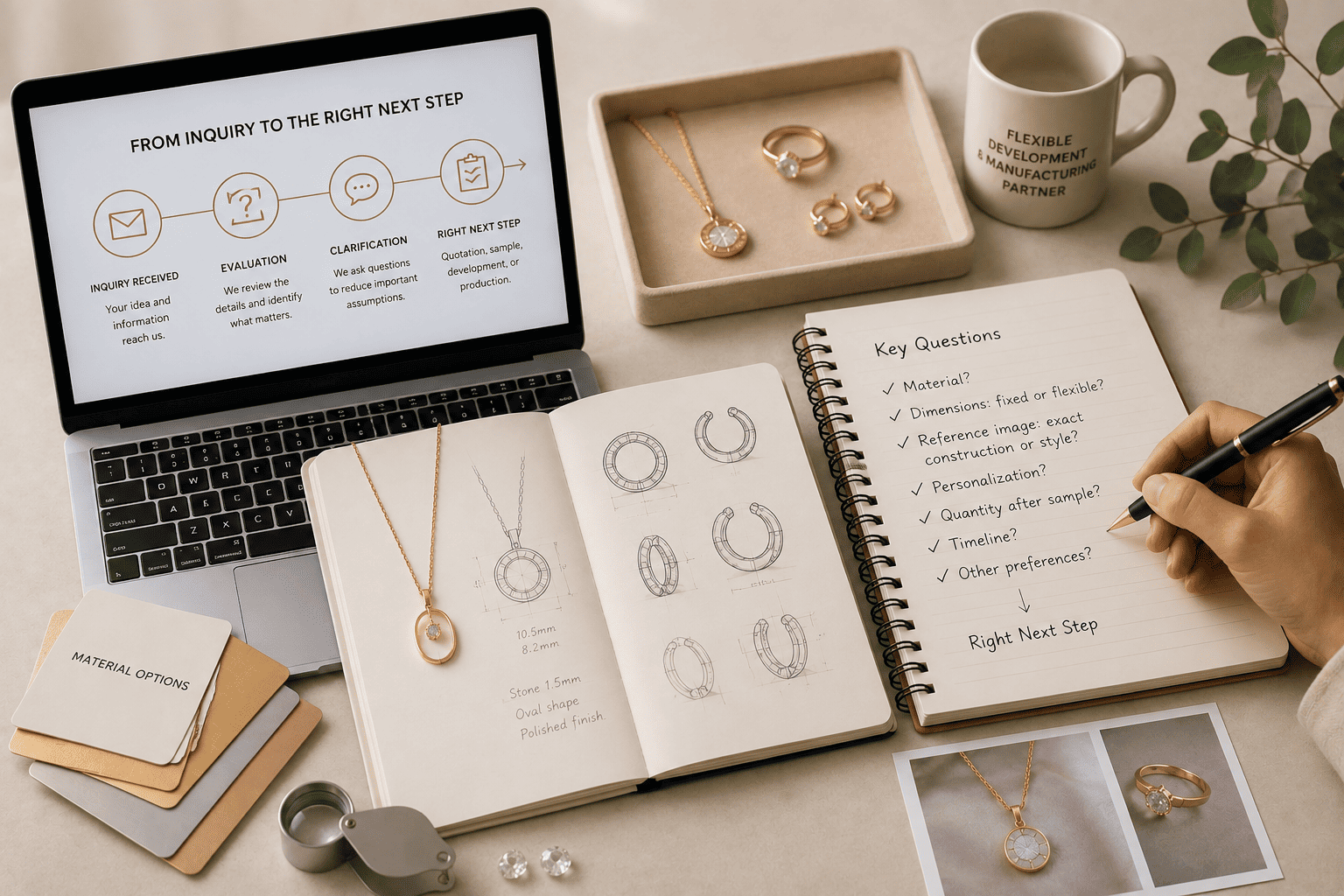
- Development Input: Requires initial design alignment, vector technical blueprints, or clear reference specifications.
- Marginal Capital Upfront: Slightly higher initial capital allocation than clicking “buy” on a bulk public catalog.
- Turnaround Windows: Introduces a manufacturing lead time, though a flexible fast-response partner can compress this to match active ad velocity.
The Strategic Inflection: Why Scaling Brands Mandate Private Label Execution
When a Shopify storefront transitions out of the early survival sandbox into a scalable e-commerce asset, the reliance on un-differentiated wholesale catalogs becomes its greatest vulnerability. Scaling brands aggressively migrate to private label infrastructures to solve four systemic growth bottlenecks:
1.Capturing the High-Margin Personalization Trend
Modern fashion consumers demand bespoke curation over copycat catalogs. High-converting sectors—such as script nameplates, monogram pieces, and heritage initials—require zero manual warehousing friction. Aligning with an agile Custom Name Necklace Manufacturer allows growing labels to capture this high-intent premium traffic natively, running zero-inventory personalized collections with compressed fulfillment timelines that drive exceptional word-of-mouth growth.
2. Breaking the Meta Ad Account ROAS Ceiling
Reselling generic wholesale items limits your storefront to a brutal price-driven race to the bottom. Private label positioning neutralizes this margin compression. By developing proprietary designs via a specialized Custom Stainless Steel Jewelry Manufacturer, you create waterproof, tarnish-free collections exclusive to your brand. This structural product moat allows you to insulate your retail margins against rising CPMs, giving your ad account the necessary financial buffer to scale daily ad spends profitably.
3. Maximizing Customer Lifetime Value (LTV) via Unboxing
In B2C commerce, retention is where the actual net profit is generated. Wholesale sourcing forces you to ship items in generic, unbranded plastic wrap, instantly destroying your repeat-purchase potential. A private label ecosystem integrates custom-molded branded box sets, microfiber utility pouches, and premium collateral right at the production source. This elevated unboxing experience transforms a single transaction into a long-term brand relationship.
4.Risk-Insulated Product Line Expansion
Scaling an enterprise requires launching consistent seasonal drops and capsule collections without suffocating your balance sheet. Modern private label execution utilizes data-driven micro-batches. You can confidently drop targeted seasonal motifs or trend-responsive charms, leveraging your manufacturing partner’s flexible production scheduling to scale only what the live market pixel data validates, entirely bypassing the risk of heavy upfront deadstock write-offs.
The Decision Matrix: When to Pull the Trigger on Private Label Migration
Transitioning from wholesale reselling to private label manufacturing isn’t a matter of emotional timing; it is a clinical calculation driven by front-end data. To understand the broader operational shift and high-level milestones before diving into raw numbers, see our comprehensive guide on [ When Should a Jewelry Brand Move from Wholesale to Custom Manufacturing? ].
However, if your active Shopify analytics and balance sheets are already flashing any of the following three operational triggers, the time to execute your private label pivot is right now:
- Predictable Meta/TikTok Scaling Data: When specific generic SKUs achieve predictable, consistent monthly conversion volumes, keeping them on a wholesale pipeline is an active financial leakage. Migrating those winners to private label isolates your supply chain and instantly claws back 30% to 50% of your product margins.
- The Customization Inbound Spike: When your customer support logs or Instagram DM channels are heavily flooded with inquiries for personalized typography, unique birthstones, or signature custom branded packaging, your audience is begging to buy your brand equity—not just your product.
- The ROAS vs. COGS Squeeze: When rising advertising costs (CPMs) begin eating your net margins, and your generic wholesale Cost of Goods Sold (COGS) leaves you with zero room to lower your break-even ROAS, you must move upstream to private label to unlock the necessary retail pricing leverage.
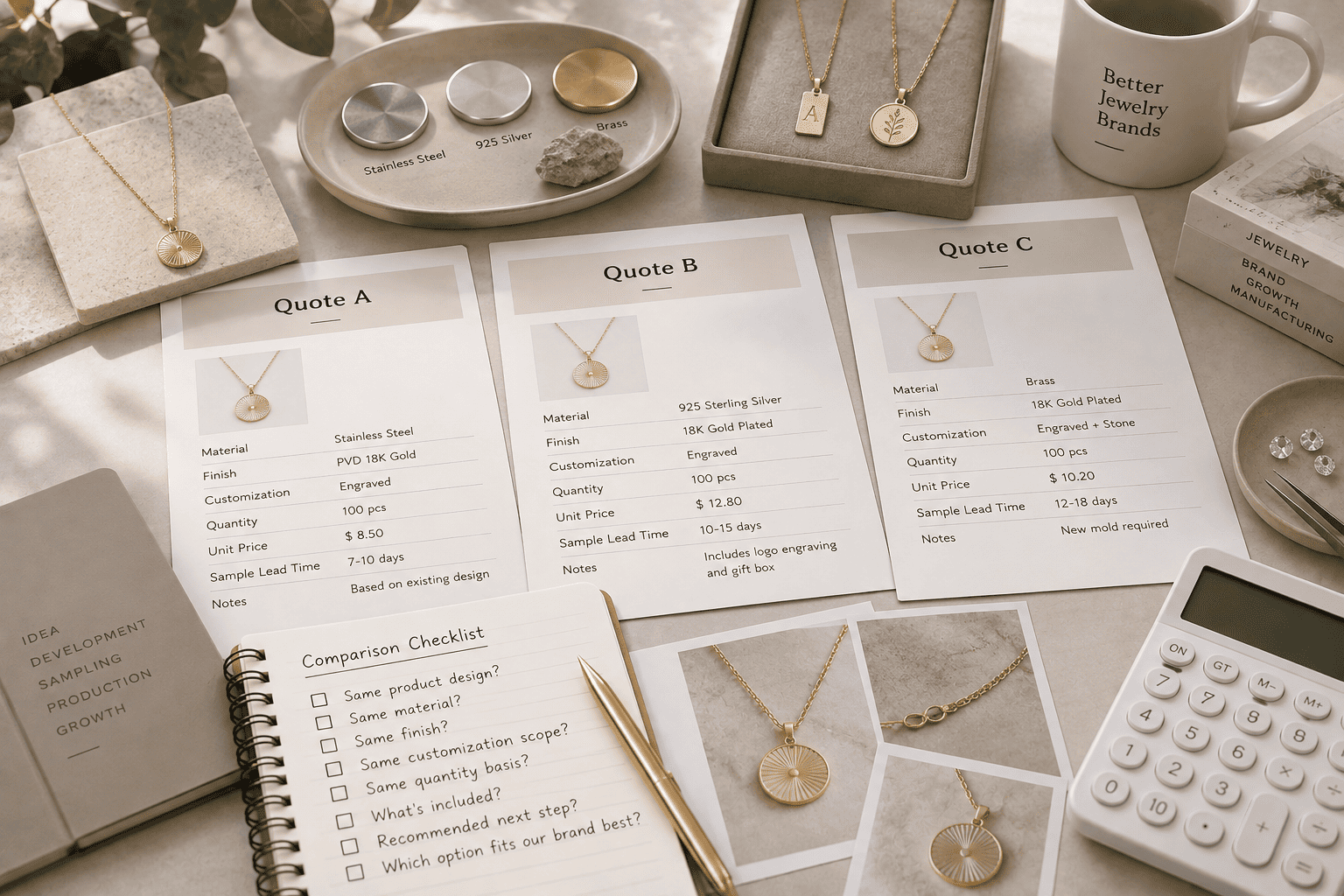
Modern flexible manufacturing entirely lowers the barrier to this strategic migration. By partnering with an agile infrastructure designed for low-MOQ, rapid-response execution, growing labels no longer have to risk substantial upfront capital. You can start with compact, targeted testing runs and organically scale your production velocity in lockstep with your actual storefront checkout demand.
The Growth Engine: How Private Label Directly Fuels Your Scaling Matrix
Transitioning upstream to private label manufacturing isn’t a cost center; it is an aggressive optimization of your business’s growth metrics. When backed by an agile, low-MOQ partner, a private label model directly transforms four critical operational vectors:
1. De-risked Market Validation (Safe Design Prototyping)
Legacy manufacturing models force you to predict consumer appetite months in advance, locking significant capital into unverified stock. A responsive private label setup utilizes compact micro-batch production to function as a low-risk testing ground. You can confidently drop experimental silhouettes or avant-garde materials, monitor early conversion velocity, and let real-time market behavior dictate your production volume—completely eliminating the threat of deadstock write-offs.
2. Cultivating Monopolistic Brand Loyalty (Exclusive Drops)
When you resell generic wholesale designs, you face a permanent churn risk; your customers can substitute your store the moment another reseller drops their ad price. Transitioning to a proprietary inventory model allows you to curate exclusive signature capsules that can only be purchased on your URL. By aligning your scaling strategy with a verified Private Label Jewelry Manufacturer, you shift the consumer’s decision matrix from a simple price comparison to genuine brand affinity, boosting your organic search volume, stabilizing your pricing power, and maximizing customer retention metrics.
3. End-to-End Perceived Value Sovereign (Controlled Unboxing)
In high-margin B2C commerce, premium markups are justified through perceived value, not raw production costs. Moving to a private label ecosystem allows you to claim total control over the physical customer touchpoint. From precision laser-engraved signature insignias on the metal clasps to tailored structural jewelry box packaging and velvet travel inserts, you transform a simple asset delivery into a premium branded ritual that commands exponential word-of-mouth growth.
4. Asymmetric Scaling Agility (Strategic Capital Rotation)
Scaling a jewelry enterprise requires supreme capital liquidity to continuously feed your paid social acquisition funnels. Private label execution allows you to run an extremely lean balance sheet. Instead of sinking thousands of dollars into massive inventory bulk lots upfront, you can reallocate that critical working capital directly into your Meta or TikTok ad accounts, scaling your backend manufacturing velocity strictly in lockstep with the proven traction of your winning SKUs.
Final Thoughts: Transitioning from a Volume Reseller to an Equity Asset
Open-market wholesale sourcing will always remain a friction-free sandbox for day-one storefront market validation. However, scaling an independent Shopify jewelry brand requires transition out of this defensive loop.
Migrating to private label manufacturing isn’t merely about changing your logistics pipeline; it is a fundamental shift in how your business captures market value. By manufacturing proprietary scarcity, you instantly insulate your storefront against competitor reverse-image copying, capture sustainable luxury-tier retail markups, and build a highly recognizable product portfolio that transforms single-transaction traffic into long-term customer lifetime value (LTV).
The brands that survive and dominate the digital landscape today don’t rent their catalogs from public supplier directories. They leverage flexible, responsive manufacturing infrastructures to own their brand identity, control their margins, and build permanent enterprise value.
Ready to Launch Your First Private Label Collection?
Your pixel data is active, your scaling bottlenecks are clear, and your audience is ready for brand exclusivity. Do not let generic wholesale catalogs and copycat competitors cap your conversion velocity and bleed your ad spend.
Whether you are designing high-velocity personalized nameplate lines, launching durable, tarnish-free stainless steel everyday luxury collections, or introducing unique custom motifs tailored for your niche, our production ecosystem operates as your dedicated, flexible private label partner. We are purpose-built to compress the barrier to brand ownership, delivering institutional low MOQs, rapid automated prototyping, and turnkey branded packaging logistics right off the assembly line.
Stop running a vulnerable reselling funnel. Start manufacturing a defensible jewelry brand.
📊 [Initiate Your Private Label Engineering Consultation Now] — Connect directly with a flexible private label jewelry manufacturer partner today to upload your vector design specs, review custom branding collateral options, and secure a lean, high-velocity contract manufacturing quote tailored for your Shopify ecosystem.