
Building a successful jewelry brand is not only about creating beautiful designs. While many emerging brands can launch their first collection successfully, the real challenge begins when market demand increases and operational bottlenecks appear:
- Quality Risk: Can your production maintain consistent consistent quality across repeat batches?
- Development Pace: Can your suppliers support new collections without compromising current timelines?
- Operational Control: Can delivery timelines remain predictable during peak selling seasons?
- Capital Efficiency: Can the brand scale without creating unnecessary inventory pressure?
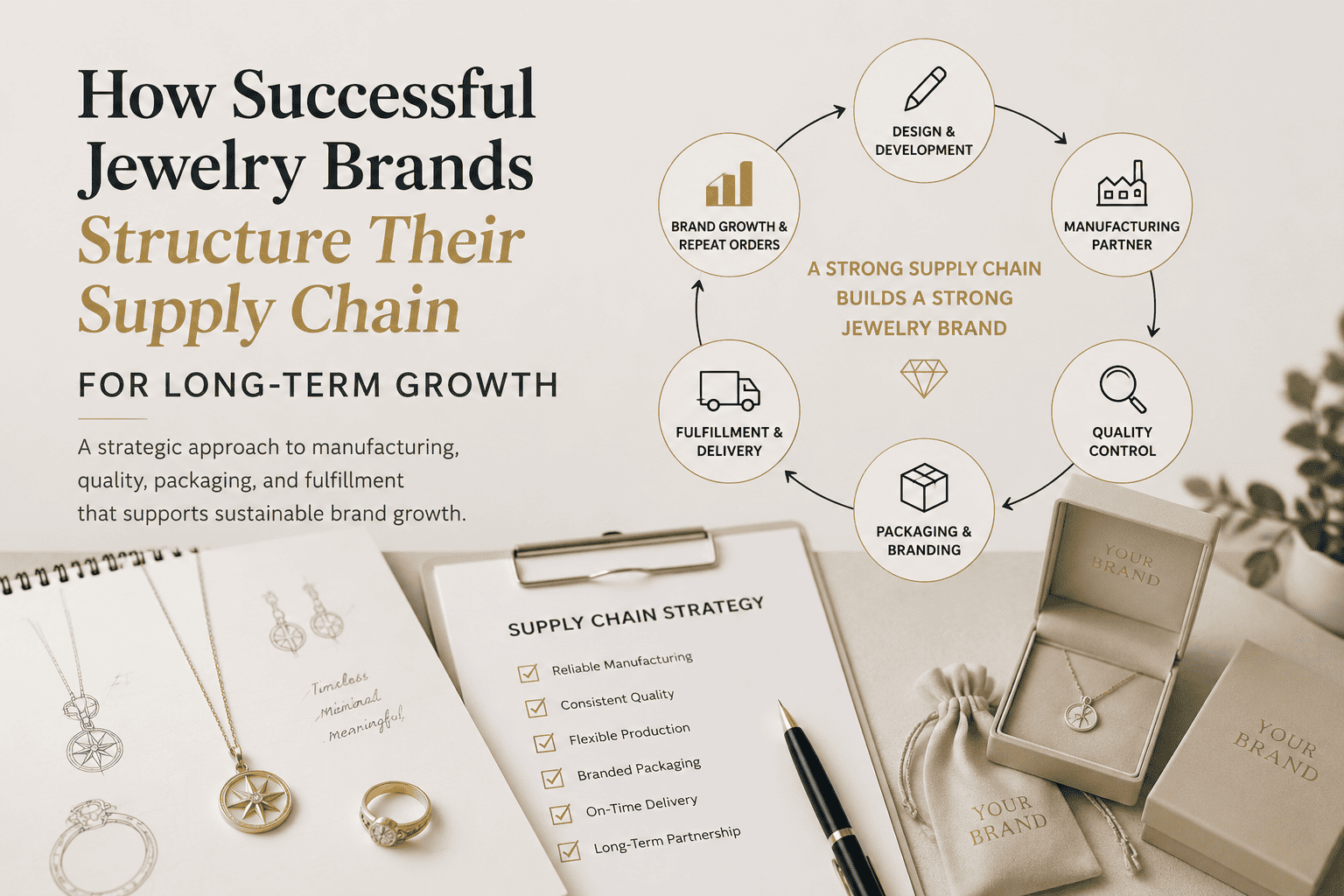
Successful jewelry brands understand that long-term growth requires more than finding a transactional vendor. They build a structured supply chain that supports every stage of brand growth—from initial product testing to repeat production and larger collections.
Why Supply Chain Structure Matters for Growing Jewelry Brands
At the beginning, many jewelry businesses rely on fragmented sourcing methods: finding individual suppliers for specific products, placing small trial orders, and managing all partner communication manually. While this approach works during the early proof-of-concept stage, it inevitably hits a bottleneck as order volumes increase.
Without a structured manufacturing system, growing brands frequently encounter critical operational friction:
- Batch Inconsistency: Noticeable variations in product finish, weights, and quality between repeat orders.
- Timeline Friction: Unpredictable production lead times that disrupt marketing calendars and launch dates.
- Stagnant Catalogs: Difficulty expanding collections smoothly due to a supplier’s limited technical capabilities.
- Rigid Scale: A lack of flexibility from manufacturers when adjusting batch sizes or development priorities.
A scalable jewelry brand requires an adaptable manufacturing system. By establishing a structured, reliable supply chain, brand owners can safely delegate production operations and refocus their internal resources on core growth drivers: product development, customer experience, and marketing strategy.
1. Start With Flexible Production for Product Validation
Successful brands rarely begin by producing large quantities immediately. Instead, they validate product ideas through controlled, agile production runs. This lean approach allows brands to test customer demand, gather real market feedback, and refine designs before risking significant capital.
Partnering with a Low MOQ Custom Jewelry Manufacturer allows growing brands to introduce new collections without committing to excessive, unproven inventory. This flexibility is critical for emerging Shopify stores, seasonal launches, and new product concepts. The goal is not simply producing fewer pieces—it is creating a smarter, safer path from creative concept to a proven commercial product.
2. Build Consistent Manufacturing Standards
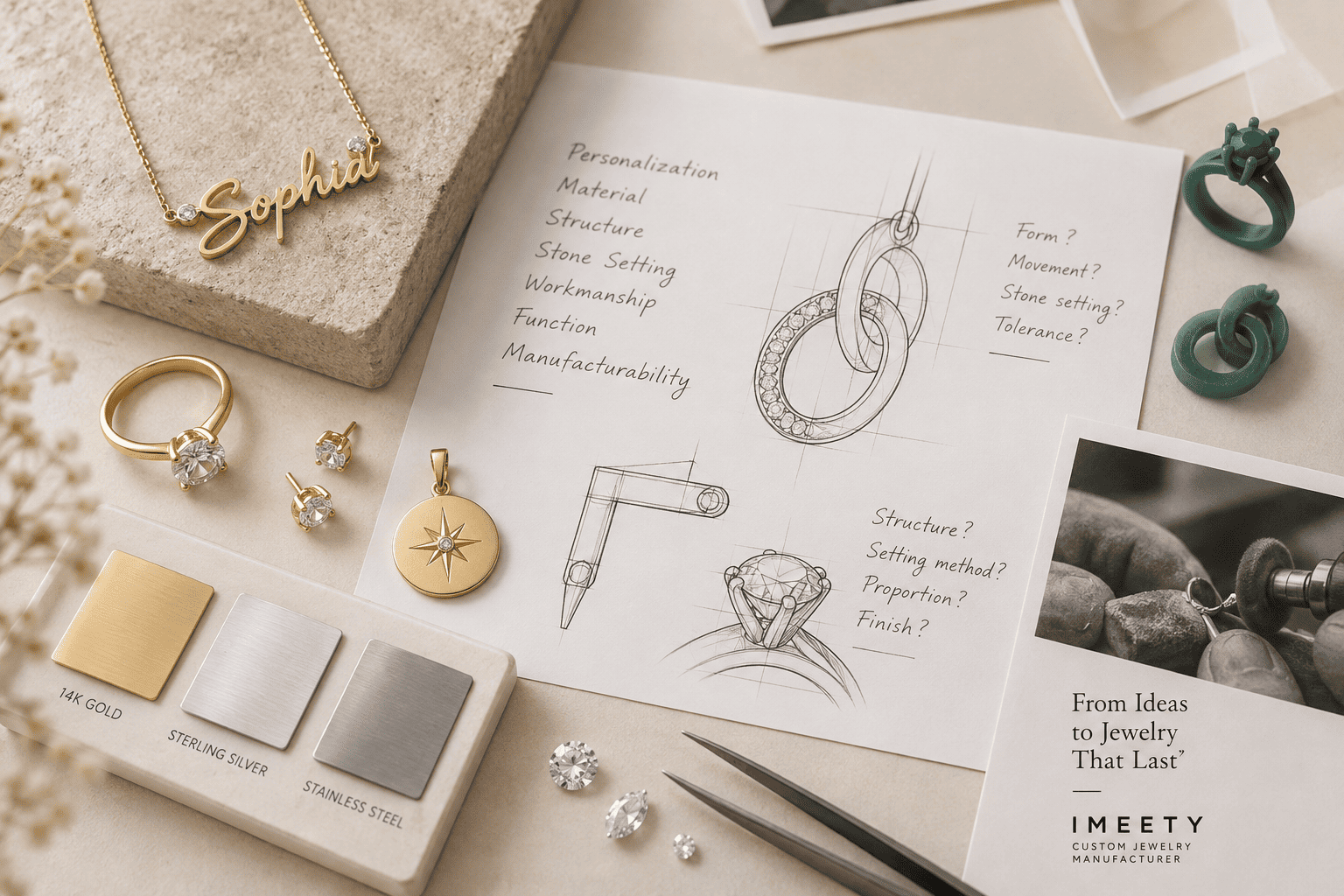
As order volume increases, consistency becomes one of the biggest bottlenecks. A design that looks flawless in the first sample must maintain the exact same technical precision across repeated production runs, different sizes, and future collections.
Successful brands eliminate variability by establishing clear manufacturing standards—including rigorous material specifications, plating tolerances, and strict quality inspection processes. Partnering with an experienced Custom Jewelry Manufacturer helps brands build highly repeatable production systems. This technical consistency is what ultimately transforms an individual product into a reliable, long-term brand asset.
3. Develop a Long-Term Manufacturing Partnership
Constantly shifting between transactional vendors creates operational chaos and unpredictable quality. A structured supply chain relies on a dedicated manufacturing partnership to unlock compound efficiency over time, leading to smoother product development and clearer communication.
Over time, an integrated partner becomes intimately familiar with your specific design language, quality expectations, and future collection roadmaps. This deep alignment reduces friction, speeds up time-to-market, and creates a stable foundation for sustainable operational growth.
4. Create a Product Expansion Strategy
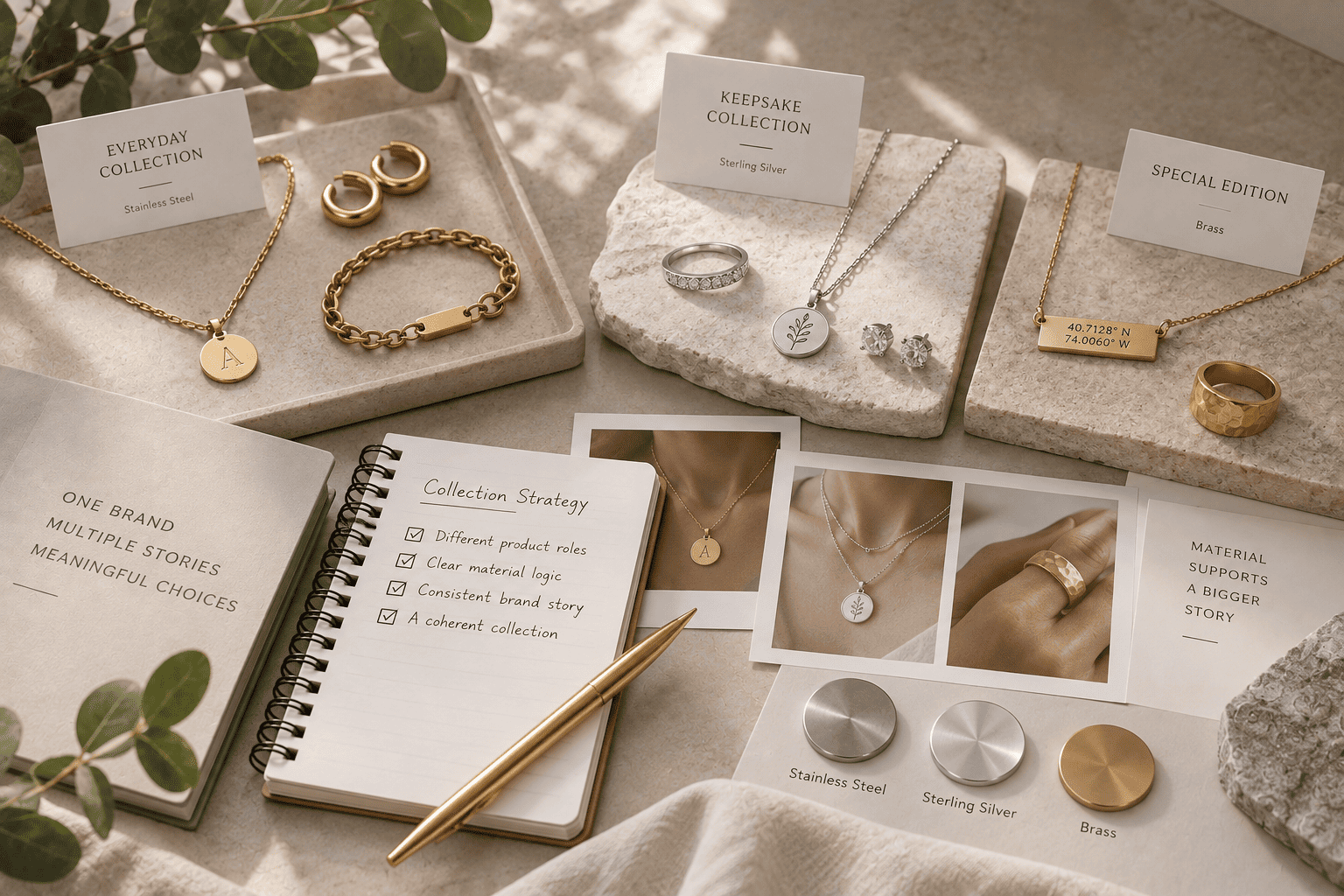
Successful jewelry brands do not just launch individual products; they architect cohesive collections. A best-selling signature piece should seamlessly expand into matching bracelets, personalized rings, custom earrings or broader gift collections.
A structured supply chain makes collection expansion efficient because the underlying production capabilities already exist. Brands utilizing Private Label Jewelry Manufacturing can gradually develop their own distinctive product identity while maintaining reliable manufacturing support, allowing them to scale from selling individual items to building a highly recognizable jewelry brand.
5. Integrate Packaging and Fulfillment Into the Process
As a brand scales, the customer experience becomes just as important as the asset itself. The physical jewelry is only one component of the journey; the modern consumer also judges the brand by its custom packaging presentation and unboxing aesthetics.
Growing storefronts must coordinate jewelry production with box dimensions and fulfillment logistics to prevent presentation errors. For brands requiring comprehensive support, leveraging custom jewelry packaging coordination ensures that physical products, branded boxes, and fulfillment requirements link together seamlessly before leaving the facility.
6. Build Flexibility Into the Supply Chain
Market demand changes quickly, and a rigid supply chain can paralyze a growing business. Independent jewelry brands require an adaptable backend that balances manufacturing stability with the flexibility to launch limited drops, adjust batch sizes, and respond immediately to customer trends.
The ultimate goal of a modern jewelry supply chain is scalability. By choosing a partner that understands both agile small-batch development and high-volume scaling, growing brands can protect their cash flow while maintaining the capacity to expand.
The Difference Between Buying Products and Building a Supply Chain
A product supplier simply provides items; a reliable manufacturing partner helps you build a practical production system. The difference between these two approaches becomes clear as your brand grows.
While a traditional supplier may only complete individual orders on a transactional basis, a structured manufacturing partner works closely with you to support your long-term operational growth. We help ensure your new product development goes smoothly, your production quality remains consistent batch after batch, and your collection expansion doesn’t bottleneck. Successful jewelry brands look beyond the immediate order—they choose a manufacturing partner built to support where their business wants to go.
Final Thoughts
Long-term jewelry brand growth depends on far more than creative designs. Behind every successful collection is a reliable supply chain built around practical foundations: flexible small-batch production, consistent manufacturing standards, clear communication, and repeatable processes.
By establishing the right manufacturing foundation early on, growing jewelry brands can significantly reduce operational risks. This stability allows you to step away from daily production headaches and focus on what truly builds value: stronger customer relationships and your brand identity.
Ready to Build a More Scalable Jewelry Supply Chain?
At IMEETY, we support growing jewelry brands with flexible custom jewelry manufacturing, practical low-MOQ production, private label development, and brand-focused production solutions tailored to your actual scale.
Start your next jewelry collection with a manufacturing partner built for long-term growth.
Start Your Custom Jewelry Project 👇