
Introduction
A jewelry concept can look complete long before it is ready for manufacturing.
A brand may already have:
- detailed reference images;
- a finished sketch or vector file;
- clear visual proportions;
- preferred materials and finishes;
- or even a realistic digital rendering.
From a design perspective, the product may feel decided.
But when the concept enters a real manufacturing conversation, a different set of questions begins to appear:
- What are the actual dimensions?
- How thick should the piece be?
- Which material and material grade are intended?
- How are separate elements connected?
- Does the design need to move, open, close, hang, or sit in a particular way?
- Are important decorative details achievable at the intended scale?
- Does the current construction make sense as a physical piece of jewelry?
These questions do not necessarily mean the design is poor or incomplete creatively.
They reveal a different stage of development.
Design-ready means the product idea is visually and conceptually clear. Production-ready means there is enough product information to evaluate how that idea should become a manufacturable physical piece.
The gap between those two stages is where many growing jewelry brands encounter unexpected uncertainty.
Understanding that gap helps brands enter manufacturing conversations with better expectations—and without assuming that every project needs the same development process.
rands need to understand whether they have a design concept or a production-ready product direction.
Design-Ready vs. Production-Ready: What Is the Difference?
The distinction is easier to understand if we separate design intent from manufacturing definition.
A Design-Ready Concept Communicates What the Product Should Be
A design-ready concept may communicate:
- the overall shape;
- visual style;
- typography;
- decorative elements;
- intended meaning;
- approximate proportions;
- color direction;
- and how the finished jewelry should look.
That can be enough for someone to understand the creative idea very clearly.
But manufacturing requires another layer of information.
A Production-Ready Concept Gives Enough Clarity to Evaluate the Physical Product
Production readiness means the important characteristics of the jewelry are sufficiently defined—or can be identified through manufacturing evaluation—so the product can move toward physical development without relying on critical assumptions.
Depending on the project, that may include:
- dimensions;
- thickness;
- material;
- finish;
- connection methods;
- component relationships;
- personalization requirements;
- stone or decorative details;
- functional requirements;
- and other construction information relevant to the design.
The important word here is relevant.
Not every jewelry product needs the same level of technical definition.
A relatively straightforward name necklace and a dimensional multi-part pendant should not be forced through an identical development process.
Production readiness is not about creating the maximum amount of technical documentation. It is about having enough clarity for the product that is actually being made.
Why a Detailed Jewelry Design Can Still Have Manufacturing Gaps
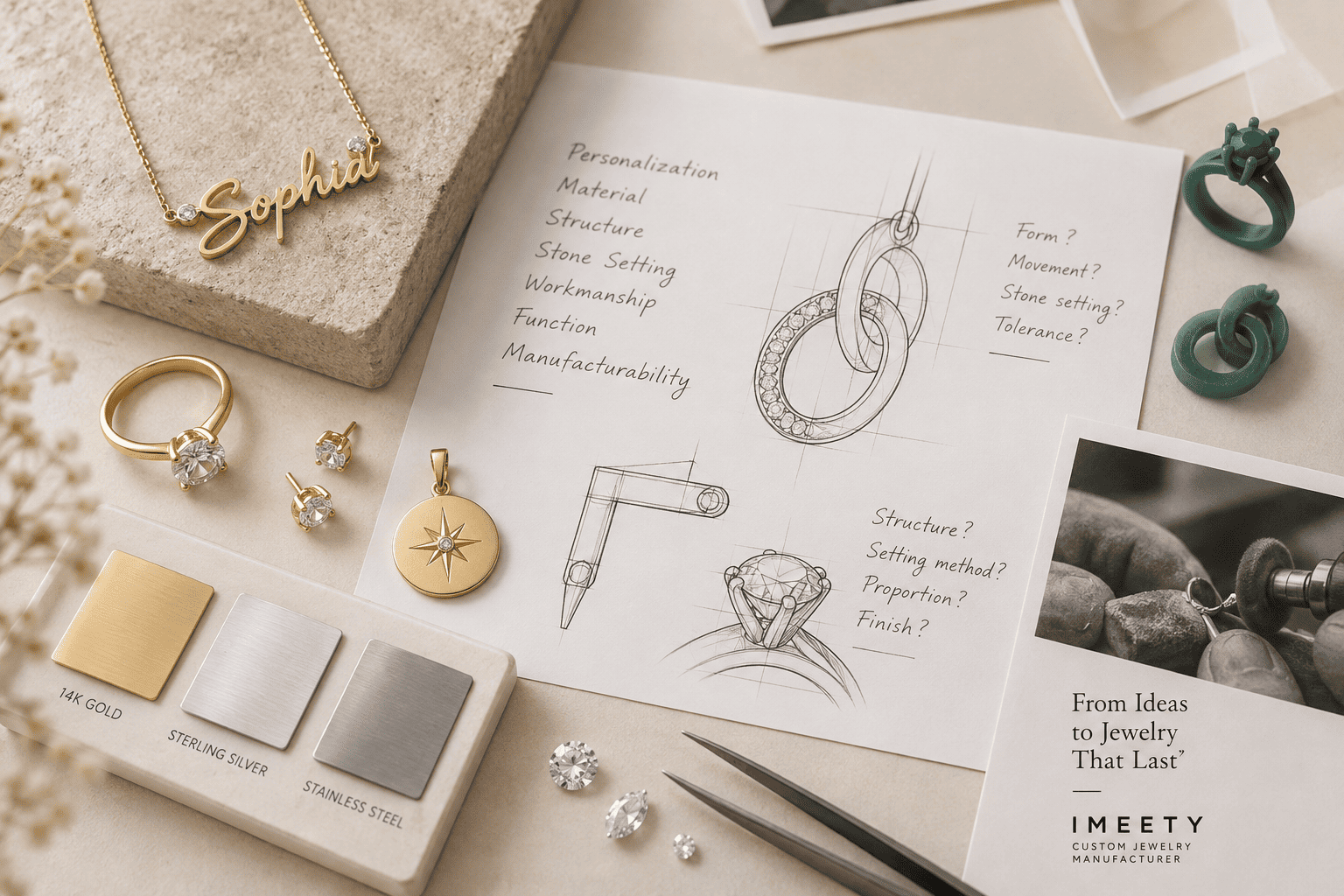
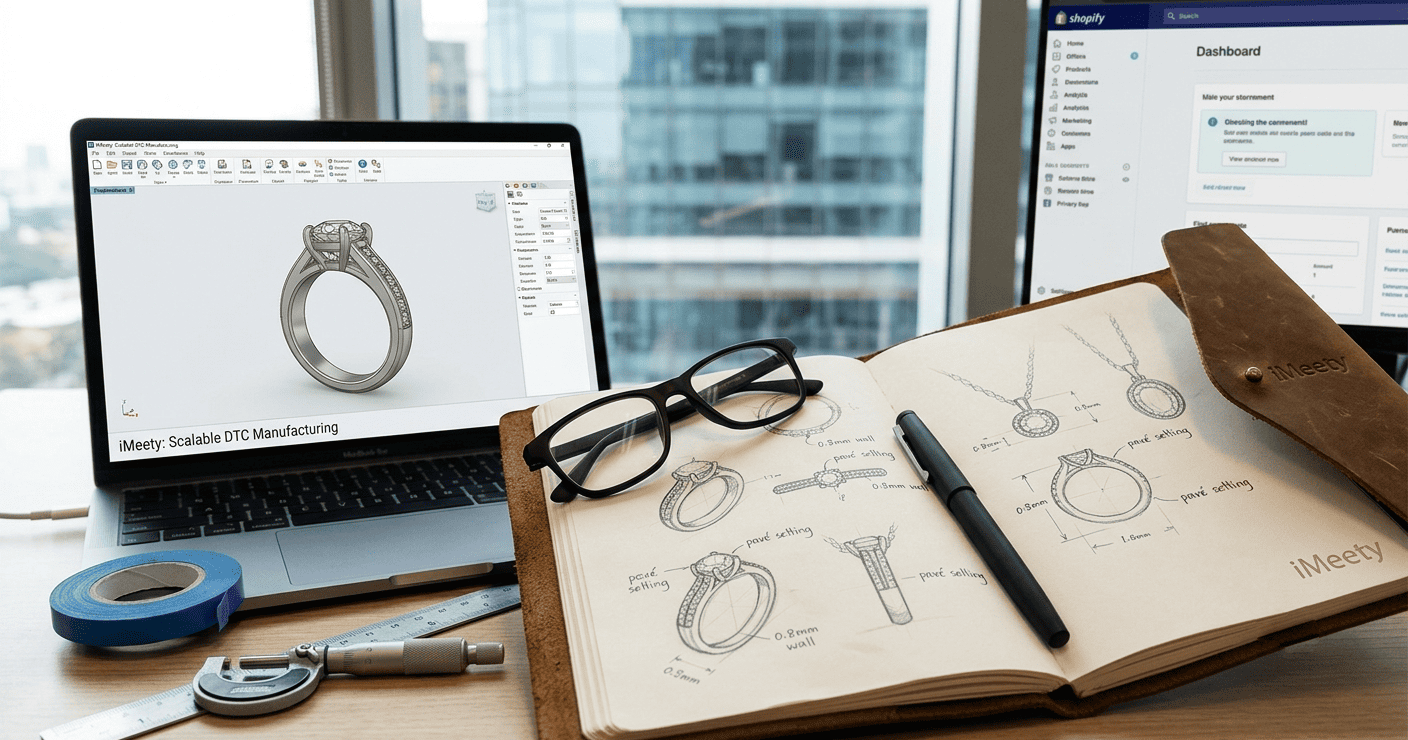
Digital designs are very good at communicating appearance.
They do not always communicate how the product should exist physically.
A rendering can show a beautiful pendant without defining its actual thickness.
A reference image can show two connected elements without explaining whether they should move independently or remain fixed.
A font can look elegant at large scale on a screen but create very different proportions once reduced to the size of a name necklace.
A stone arrangement may look balanced visually while still requiring decisions about stone size, spacing, setting, and the surrounding structure.
This is why a detailed concept can still leave important questions unanswered.
The issue is not:
“Is the design detailed?”
It is:
“Does the information we currently have tell us enough about the physical product to determine how it should be made?”
That is a manufacturing-readiness question.
Four Areas That Determine Production Readiness
Rather than treating production readiness as a long technical checklist, brands can evaluate the concept through four broader areas.
1. Product Structure and Design Intent
Start with what the physical product is supposed to do.
Ask:
- What are the intended dimensions and proportions?
- Which elements are fixed and which need movement?
- How should the piece hang, sit, open, close, or connect?
- Are there separate layers or components?
- Is the front view enough to understand the product, or do the side and back matter?
- Are important details decorative, structural, or both?
This matters because two products can look very similar from the front while requiring very different physical construction.
For example, a raised visual effect might be achieved through different structural approaches depending on the intended depth, appearance, material, and how the piece should feel.
The brand does not necessarily need to arrive with the manufacturing solution already decided.
But the intended result needs to be clear enough for the manufacturing approach to be evaluated.
The brand should define what the product needs to become. The development process helps determine how that result can be manufactured appropriately.
2. Material and Finish Direction
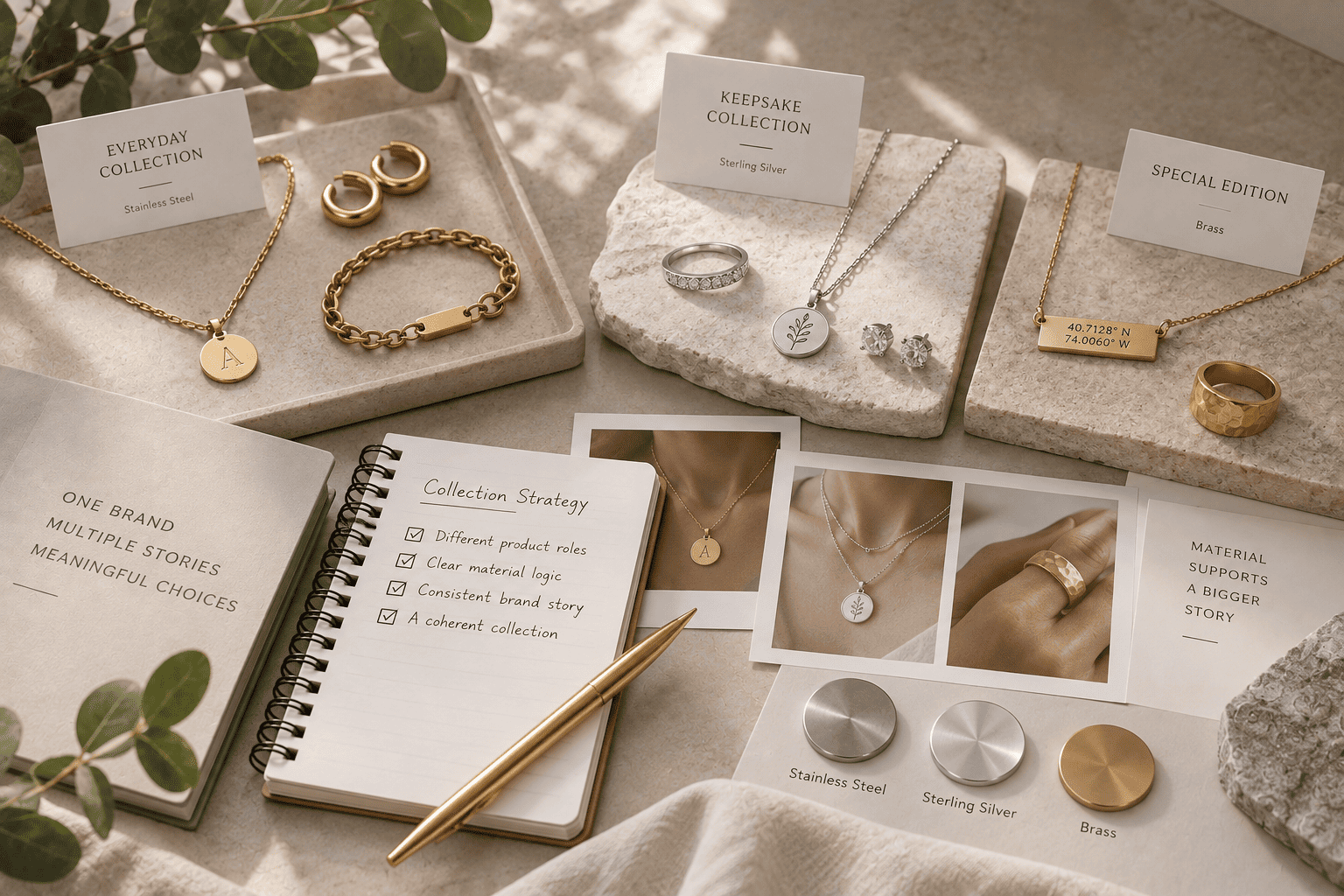
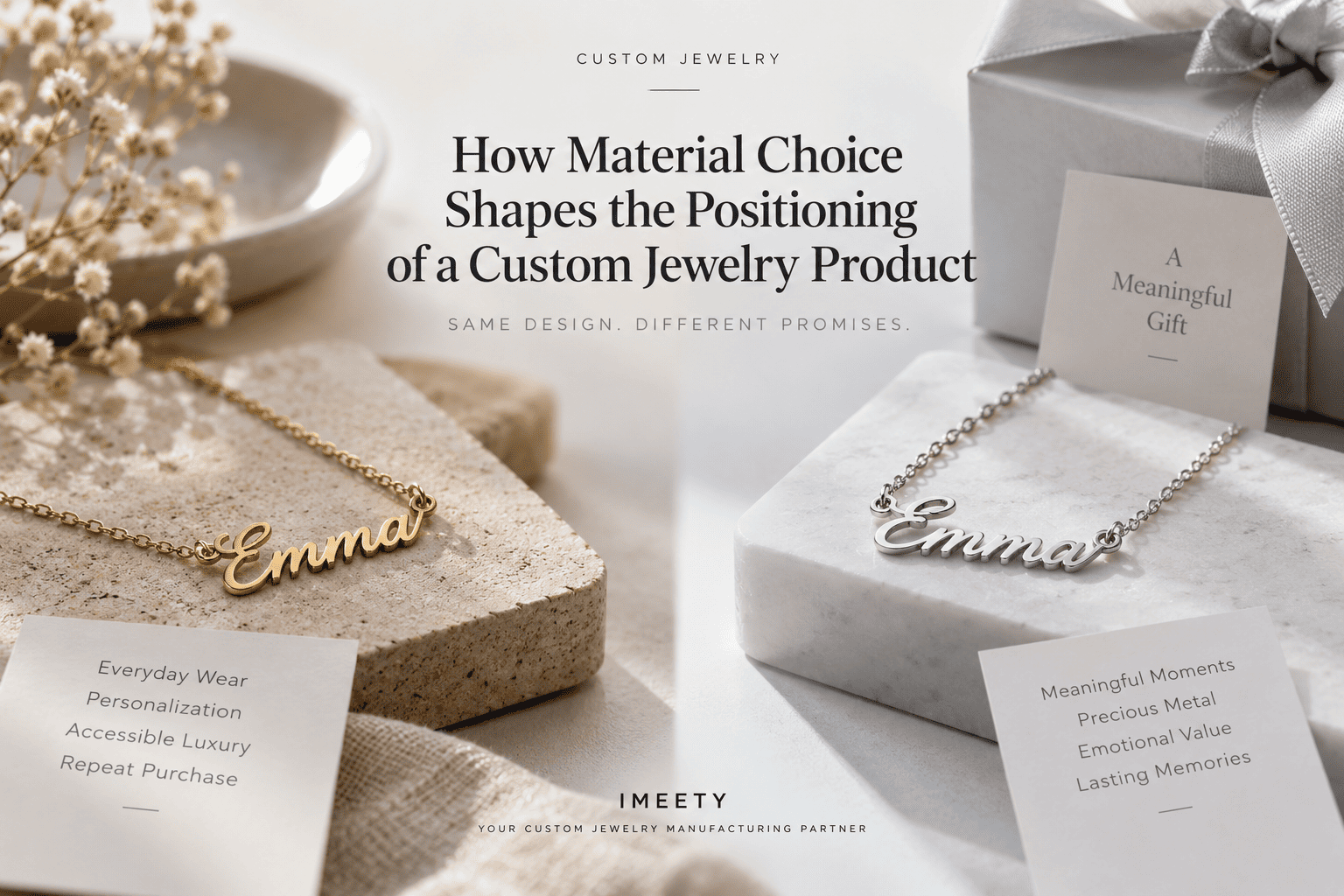
Material should not be treated as an afterthought.
Different materials can influence:
- physical feel;
- design possibilities;
- finishing;
- perceived value;
- product positioning;
- and the manufacturing approach.
A brief that simply says “gold necklace,” for example, may still leave several important questions unresolved.
Does “gold” mean solid gold, gold-plated sterling silver, gold-plated stainless steel, or another material and finish combination?
Likewise, “silver” can describe appearance rather than material.
A more production-ready direction should make the intended material clearer where that choice has already been made.
If the brand has not decided the material yet, that does not automatically mean the project cannot move forward.
Instead, material selection can become part of the development discussion.
The important point is to distinguish:
“We have chosen this material.”
from:
“We want this product experience and need to evaluate which material supports it.”
Both can be valid starting points.
Production readiness is about knowing which decisions are already defined and which still need evaluation.
3. Dimensions, Details, and Physical Relationships
A concept may communicate the overall look while leaving small but important physical relationships undefined.
For example:
- pendant width and height;
- thickness;
- chain length;
- bail or ring size;
- spacing between letters;
- stone dimensions;
- engraving position;
- component proportions;
- or the relationship between a focal element and the rest of the piece.
These details matter because jewelry is experienced at a very small physical scale.
A difference of only a few millimeters can change:
- visual balance;
- readability;
- physical presence;
- wearability;
- or how different components relate to one another.
That does not mean every dimension must be perfectly predicted before sampling.
Some decisions become clearer once the product is physically evaluated.
But the concept should contain enough dimensional direction to avoid manufacturing the product based primarily on guesswork.
4. Intended Production and Customer Experience
Production readiness also depends on what the product is expected to become commercially.
Consider:
- Is this a one-off custom project or a repeatable collection?
- Will every piece be identical, or will customers personalize names, initials, stones, or other details?
- Is the product intended for batch production or an order-by-order model?
- Is it a premium keepsake, an everyday product, or part of a broader branded experience?
- Are there functional or wearability expectations that matter to the customer?
These questions can influence how the product should be developed.
For example, a personalized jewelry product needs more than one attractive sample name.
The brand may eventually need to consider how different customer inputs affect the design while preserving the intended product experience.
Likewise, a commemorative or premium custom project may place greater importance on material perception, physical presence, or presentation than a product designed primarily around accessible everyday wear.
Production readiness is not only about whether an object can technically be made. It is about whether the manufacturing definition supports the product the brand intends to sell.
Common Gaps Between a Jewelry Concept and a Manufacturing Brief
Most production-readiness gaps fall into three categories.
The Appearance Is Clear, but the Physical Product Is Not
The brand knows exactly how the piece should look from the front, but dimensions, thickness, side profile, connections, or wearability remain unclear.
This is common with inspiration images, digital artwork, and renderings.
The next step is not necessarily to redesign the concept.
It is to identify the physical information still needed to translate the appearance into jewelry.
The Product Direction Is Clear, but Important Specifications Are Still Open
The brand may know:
“We want a premium personalized necklace with this typography and overall proportion.”
But decisions around material, thickness, chain, finish, or other details may still be open.
That does not mean the project is “not ready” in a binary sense.
It means the project still requires development decisions before production can be fully defined.
This distinction matters because a manufacturer should not silently fill every open specification with assumptions.
Some choices materially affect the finished product and should be discussed.
The Design Is Detailed, but Manufacturability Has Not Been Evaluated
A concept can contain many dimensions and visual details and still raise manufacturing questions.
For example:
- very fine areas may need adjustment at actual jewelry scale;
- connection points may need reconsideration;
- proportions may behave differently as a physical object;
- personalization may vary across customer inputs;
- or the intended effect may require a different construction approach.
In this situation, more detail is not necessarily the solution.
The useful next step is manufacturing evaluation.
Production readiness is not measured by how many specifications a document contains. It is measured by whether the important product decisions are sufficiently clear and manufacturable.
Production-Ready Does Not Mean Every Project Needs CAD
This is one of the most important distinctions in custom jewelry development.
When a design is not yet production-ready, it is easy to assume:
The next step must be CAD.
That is not true.
The appropriate development path depends on the product.
Relatively straightforward jewelry—such as certain flat name pieces, initials, engraved products, or simple cut-out designs—may be developed from accurate artwork, dimensions, material requirements, and other relevant specifications without requiring a full CAD development process.
A more dimensional, multi-part, or structurally complex product may require additional development and, where appropriate, CAD or other structural evaluation.
The important principle is:
Do not choose the development tool before understanding the development problem.
If the gap is simply an undefined dimension, solve the dimension.
If the material needs to be selected, evaluate the material.
If the product’s structure is unclear, additional structural development may be appropriate.
And if the concept is already sufficiently defined for its level of complexity, the project may be able to move relatively directly into physical sampling.
Production readiness therefore does not lead to one universal next step.
It helps determine which next step is actually necessary.
How to Prepare a Jewelry Concept for a Manufacturing Conversation
A brand does not need to become a jewelry engineer before contacting a manufacturer.
But better input creates a more useful manufacturing discussion.
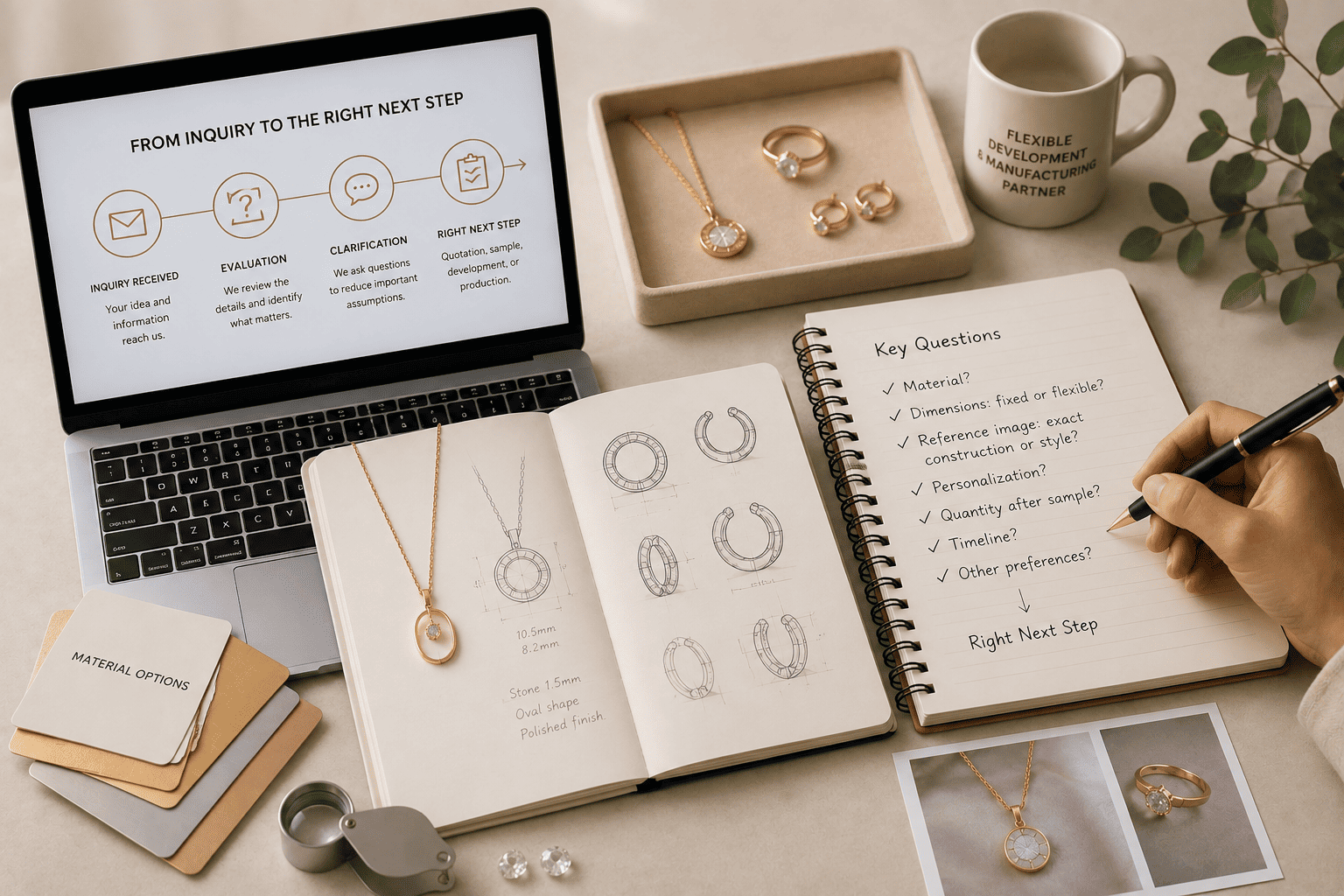
Before reaching out, gather what is already known.
Share the Visual Direction
This may include:
- sketches;
- vector artwork;
- reference images;
- renderings;
- existing product references;
- or marked-up images showing important details.
The purpose is to communicate the intended product clearly.
Define Important Specifications Where Possible
If already decided, share:
- target dimensions;
- preferred material;
- finish;
- chain or component preferences;
- personalization requirements;
- stones or decorative details;
- and other important product characteristics.
Do not invent specifications simply to make the brief look complete.
If something is genuinely undecided, identify it as an open question.
Explain the Product Context
Tell the manufacturer what the product is intended to be.
For example:
- a personalized order-by-order product;
- a small-batch collection;
- a premium keepsake;
- a commemorative project;
- a new design being tested;
- or a proven product being redeveloped.
Context helps manufacturing decisions reflect the product goal rather than only the drawing.
Separate Fixed Requirements From Flexible Decisions
This can make development much more efficient.
For example:
Fixed: overall visual concept, logo shape, intended material positioning.
Open to evaluation: exact thickness, connection method, component size.
This tells the manufacturing partner where the brand needs faithful execution and where manufacturing input can be useful.
How IMEETY Approaches Production Readiness
IMEETY works with growing brands as a Flexible Custom Jewelry Development & Manufacturing Partner.
That means we do not expect every inquiry to arrive as a completely engineered manufacturing package.
At the same time, manufacturing should not begin by guessing through important unresolved product decisions.
The first step is understanding:
- what the brand wants to create;
- what has already been decided;
- what information is still missing;
- and whether those gaps actually need additional development before sampling or production.
For one project, that may mean confirming dimensions, material, and finish before moving forward.
For another, it may involve evaluating how a particular structure or design effect can be physically achieved.
A more complex design may require additional development.
A straightforward personalized product may not.
The goal is to use the right level of development for the product—not to add development steps simply because they are available.
This is where development and manufacturing need to work together.
Manufacturing knowledge helps identify which unresolved details actually affect the physical product, while product development helps turn those decisions into something that can be meaningfully sampled and evaluated.
For brands preparing a custom project, our Custom Jewelry Manufacturer capability explains how IMEETY supports product development, sampling, flexible production, and scaling across different stages.
What Happens Once the Concept Is Ready for Manufacturing Evaluation?
Reaching production readiness does not mean every product follows the same path from that point forward.
The next question becomes:
What level of development does this particular jewelry concept actually require?
Some products may be sufficiently defined to move relatively directly toward physical sampling.
Others may need additional design clarification, structural evaluation, or CAD where the product genuinely requires it.
That is why the next manufacturing decision should not be:
Do we need CAD?
It should be:
What development path is appropriate for this product?
Understanding the appropriate development path is the next step after evaluating whether your concept is ready for manufacturing. Explore the different approaches in Two Paths to Manufacturing Your Jewelry Idea.
Together, the two decisions form a useful sequence:
Is the concept production-ready enough to evaluate?
↓
What development path does the product require?
↓
Physical Sampling
↓
Production Decision
That sequence helps prevent both extremes:
- entering production while important product decisions remain unresolved;
- or adding unnecessary development complexity to a product that does not need it.
A Production-Readiness Checklist for Growing Jewelry Brands
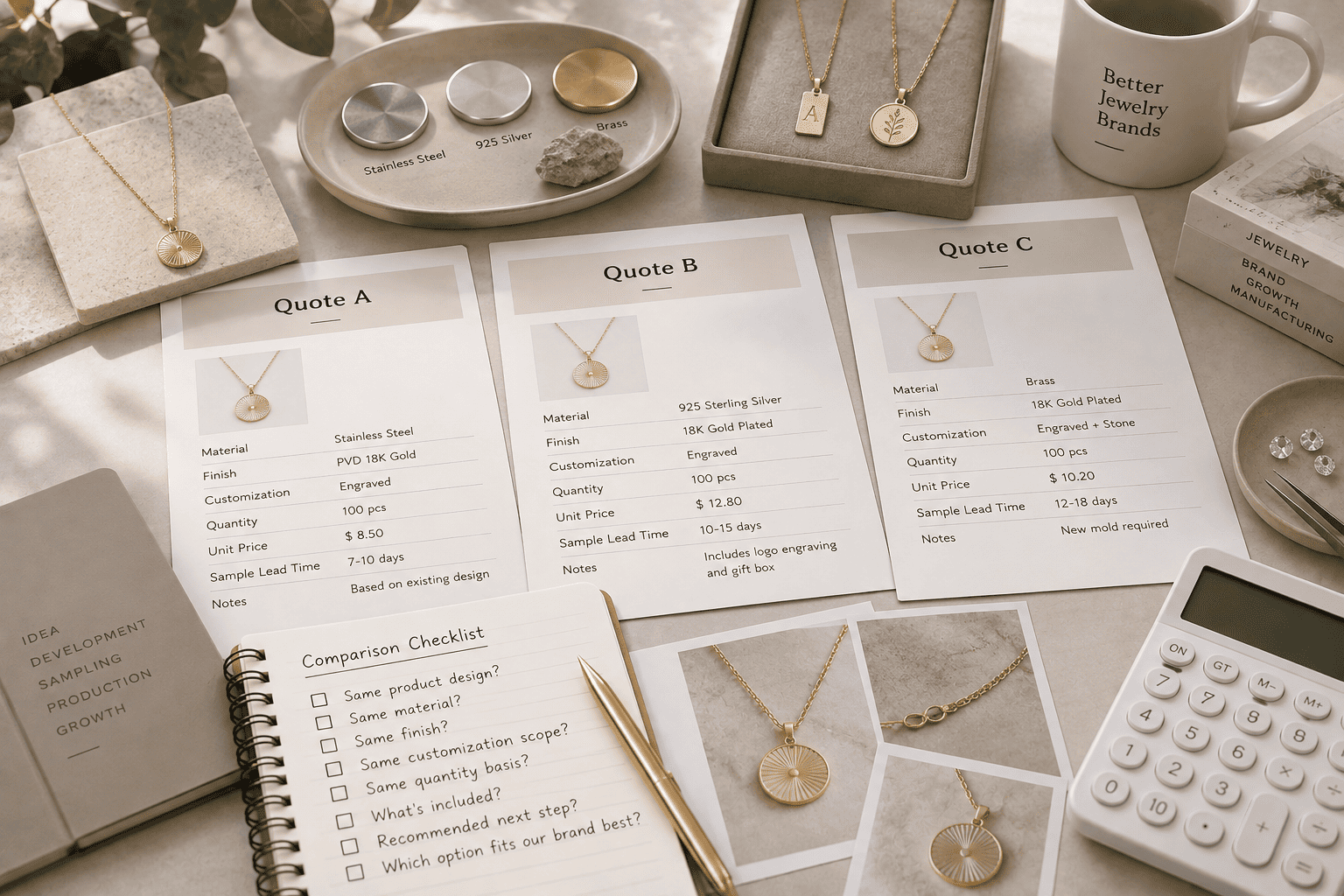
Before treating a detailed concept as ready to move forward, review five questions:
| Area | Question |
|---|---|
| Design Intent | Is the intended appearance and product experience clear? |
| Physical Definition | Are the important dimensions, proportions, connections, and functional relationships sufficiently understood? |
| Material & Finish | Have these been defined, or clearly identified as decisions that still need evaluation? |
| Manufacturability | Has the concept been considered as a physical jewelry product rather than only as a visual design? |
| Development Path | Is there enough information to determine what level of development should happen next? |
If the answer to the last question is yes, the concept does not necessarily need to have every possible manufacturing detail finalized.
It needs enough clarity to move into the appropriate next development and manufacturing decision without critical guesswork.
Conclusion
A detailed jewelry concept is not automatically a production-ready product.
But production readiness should not be misunderstood as a demand for exhaustive technical documentation, CAD, or a completely engineered product before a brand can speak with a manufacturer.
The real transition is simpler:
Design-Ready: We understand what this jewelry is intended to be.
↓
Production-Ready: We understand enough about the physical product to evaluate how it should be developed and manufactured.
↓
Development Path: We choose the level of development the product actually requires.
↓
Sample: We validate the idea as a physical product.
For growing jewelry brands, understanding these stages creates better manufacturing conversations.
It helps prevent important decisions from being left to assumption, while also avoiding unnecessary development steps.
And most importantly, it shifts the question from:
“Is my design detailed enough?”
to:
“Do we have the right information to make the next manufacturing decision?”
That is the point where a detailed jewelry concept begins to become a manufacturable product.
Frequently Asked Questions (FAQ)
A custom jewelry manufacturer usually needs information about your product concept, design references, material preferences (e.g., sterling silver or stainless steel), customization requirements, expected order volume (MOQ), and overall production goals. The more clearly these factors are defined, the easier it is to evaluate the right manufacturing approach.
Yes, a reference image is a useful starting point, but additional details are usually needed before production decisions can be made. Providing details such as size, material preference, structure, and finishing expectations helps your manufacturing partner establish a clear and efficient production plan.
No. The required development process depends on the specific product requirements. Some straightforward custom designs can follow efficient customization methods, while complex or unique structural pieces may require 3D CAD modeling and prototyping to ensure manufacturing precision.
A design is closer to being production-ready when the overall product direction is clear—including its physical structure, material expectations, customization details, and intended business purpose. A flexible manufacturing partner like IMEETY can help identify and fill any remaining technical gaps before production begins.