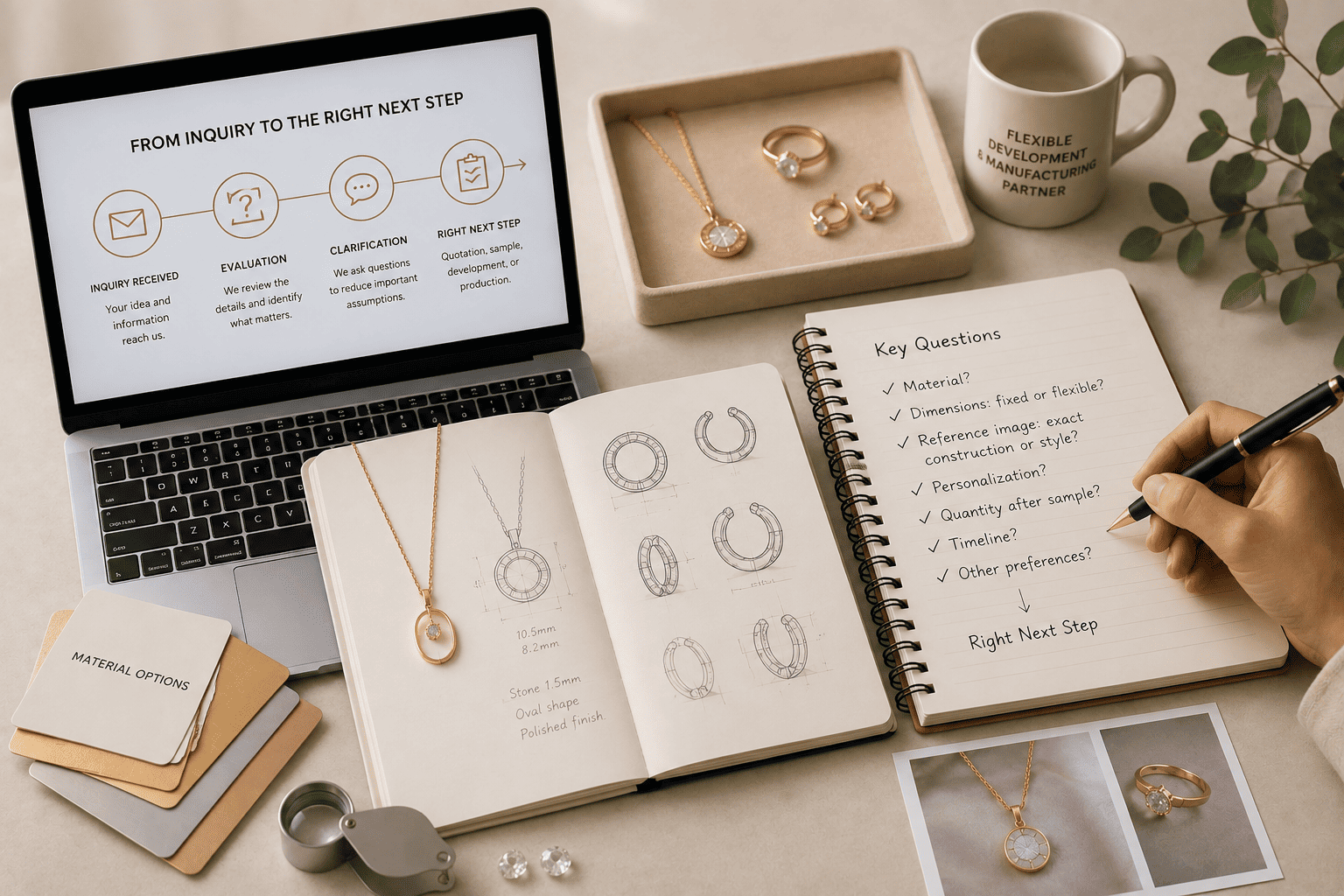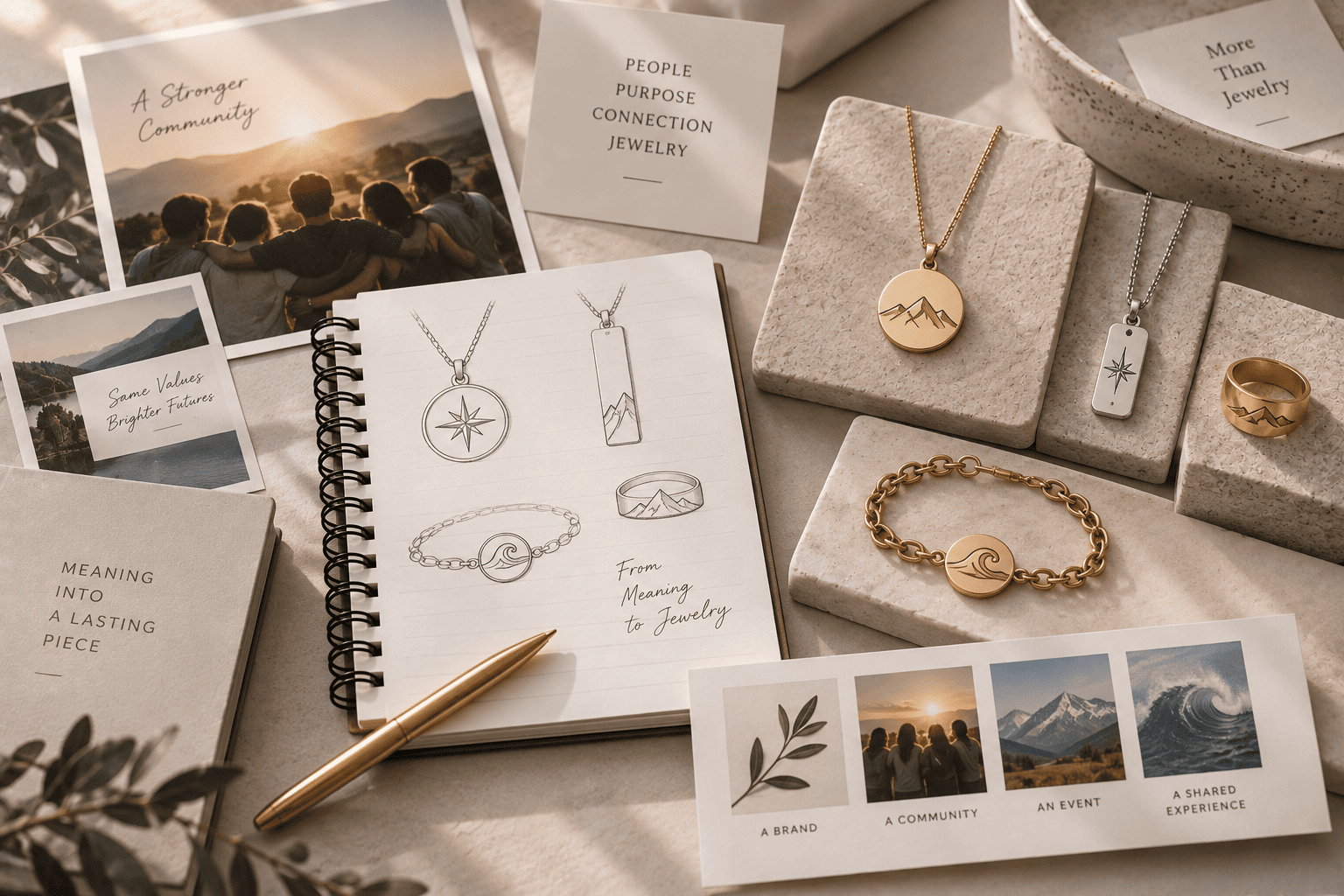

Sometimes a custom jewelry project begins with a clear product idea. You already know you want to create a name necklace, an engraved bracelet, or a particular pendant, and the next questions are about how that product should be developed.
But not every project begins with the jewelry itself.
A company may want to create something meaningful for important customers. A community may want a piece that members recognize as their own. A project, event, or milestone may deserve something people can keep after the moment has passed, while an existing audience may share a symbol, person, story, or experience that could become the basis of a jewelry product.
In situations like these, the customer often knows why the jewelry should exist before knowing what the jewelry should actually be. That changes where product development should begin.
The first question is not whether to make a necklace, bracelet, ring, or charm. It is what the jewelry is meant to represent—and how that meaning can be translated into a product people will genuinely want to wear, keep, receive, or buy.
Meaning should come before the jewelry format.
Custom Jewelry Can Carry More Than a Logo
When a brand or organization first considers custom jewelry, one of the most obvious approaches is to place its logo on a pendant, bracelet, or another familiar jewelry form. Sometimes that is exactly the right solution, particularly when direct brand recognition is part of the purpose.
But a brand or shared experience can also appear in jewelry more subtly. A symbol, phrase, date, initial, shape, location, or another meaningful detail may represent belonging to a community, recognition from a brand, participation in an event, appreciation for an important customer, or connection to a person or experience.
This distinction matters because jewelry is different from simply placing branding on a promotional object. People may wear it close to the body, keep it for years, give it to someone else, or connect it with a particular memory. The product therefore has two jobs to do: it needs to express the intended connection, and it still needs to work naturally as jewelry.
The strongest connection is not always the most visible branding.
Start With What the Jewelry Is Meant to Represent
Before choosing the product format, define the meaning the jewelry needs to carry.
Imagine a brand preparing a piece for a major anniversary. The project could easily begin with, “We need an anniversary necklace.” But that still leaves the most important question unanswered: what should someone remember or recognize when they receive that necklace?
Perhaps the piece represents ten years of connection between the brand and its customers, or recognizes a smaller group of people who contributed to that journey. The anniversary may simply be the occasion, while the real meaning lies in a symbol or story the audience already associates with the brand. Each direction could lead to a very different product even though all of them began with the same event.
A community project can work in much the same way. A fan community, membership group, or audience built around a shared interest may already have visual references, phrases, dates, symbols, or stories that members recognize immediately. The development question is not simply how to reproduce one of those elements in metal, but which element can carry the shared meaning most naturally as jewelry.
Before discussing the physical design, it therefore helps to ask:
What should someone feel, remember, or recognize when they receive or wear this piece?
Once that becomes clearer, later product decisions have a much stronger reference point.
Who Will Wear or Receive It Changes the Product
Meaning does not exist separately from the people the jewelry is intended for.
A piece created as a gift for important customers plays a different role from jewelry developed for members of a community. An event keepsake is different again, as is a limited product that an existing audience will choose whether or not to purchase. The underlying brand or symbol might be the same, but the relationship between the person and the jewelry changes.
One useful question early in development is:
Is the jewelry primarily a gift, a keepsake, a symbol of belonging, or a product the audience is choosing to buy?
For a gift, the experience of receiving and keeping the piece may be especially important. For a community product, recognition and shared identity may matter more. If the jewelry will be sold rather than given, it also needs to work as a product customers value enough to choose independently—not simply as something meaningful to the organization creating it.
That relationship can influence how visible the branding should be, how much personalization makes sense, what type of jewelry feels appropriate, and how material, finish, presentation, and price fit the intended experience. Understanding the recipient gives those later decisions a clearer purpose.
Decide How the Shared Meaning Should Appear in the Jewelry
Once the meaning and audience are clearer, the next question is how directly that connection should appear in the design.
Sometimes the connection should be immediately recognizable. A logo, organization name, or familiar symbol may be central to the piece because visible identification is part of what the wearer values.
In other cases, the strongest design may be understood mainly by the people it was created for. A motif, phrase, date, coordinate, shape, or small visual detail can carry a shared reference without making the jewelry look like conventional branded merchandise. Someone outside the group may simply see an attractive piece, while the intended wearer understands what it represents.
Shared meaning and individual personalization can also coexist. The overall design may represent the same community, event, or brand experience, while a name, initial, date, birthstone, or another personalized element gives each piece an individual connection.
None of these approaches is inherently stronger than another. More visible branding is not automatically more meaningful, just as subtle symbolism is not automatically more sophisticated. The appropriate level of expression depends on what the jewelry is supposed to do.
A useful test is to imagine the piece without any explanation around it. Does the design still feel appropriate as jewelry? And for the intended recipient, does it still carry enough of the connection that gave the product a reason to exist?
When both answers are yes, the concept is beginning to move beyond “branding on jewelry” toward a more integrated product idea.
Choose the Jewelry Form After the Meaning Is Clear
Only after the meaning, audience, and level of expression become clearer does it make sense to decide whether the idea should become a necklace, bracelet, ring, charm, pendant, or another jewelry format.
This order matters because starting with “we want a necklace” can force the story into a predetermined product. Starting with the meaning instead creates room to ask which jewelry form can carry that idea most naturally.
A symbol that needs a clear visual surface may work differently from a short phrase. A product designed around several names may require a different structure from a single commemorative element, while a piece intended for frequent wear may call for a different approach from something created primarily as a keepsake. Even familiar product categories can therefore lead to very different design directions.
The objective is not to find the most unusual format. It is to choose a form that allows the meaning to become part of the jewelry rather than something added awkwardly afterward.
The Product Still Needs to Work as Jewelry
A meaningful story can give a product a strong reason to exist, but meaning alone does not make the physical product successful. The jewelry still needs to be considered in terms of how it will look, feel, wear, and function.
A highly detailed symbol may need simplification when translated into a small jewelry scale. A phrase that works well in print may need adjustment before it can become a readable and balanced pendant, while personalization can affect the proportions or structure of the piece. As the concept becomes physical, material, finish, workmanship, personalization, and presentation should support the intended experience rather than being selected independently from it.
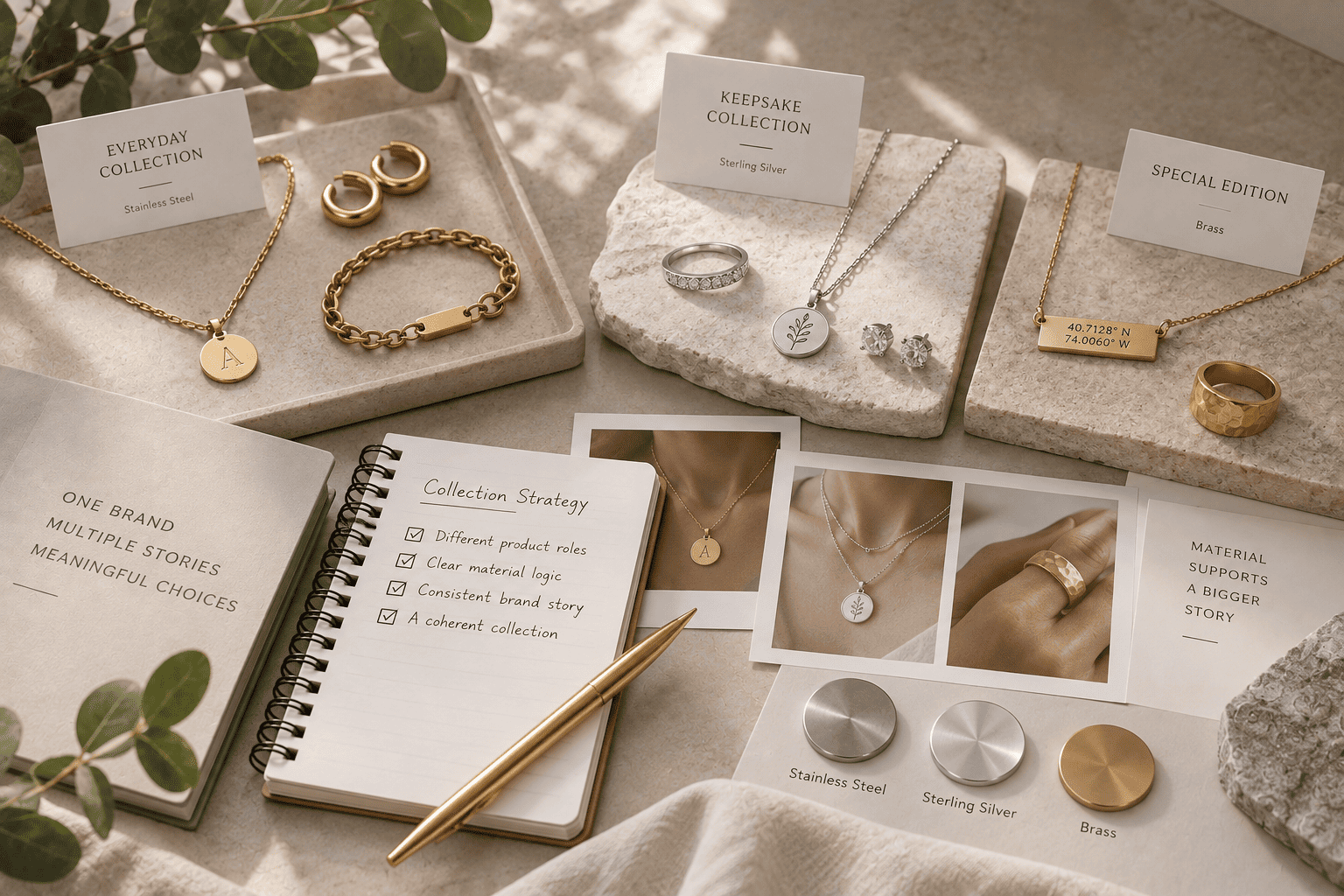
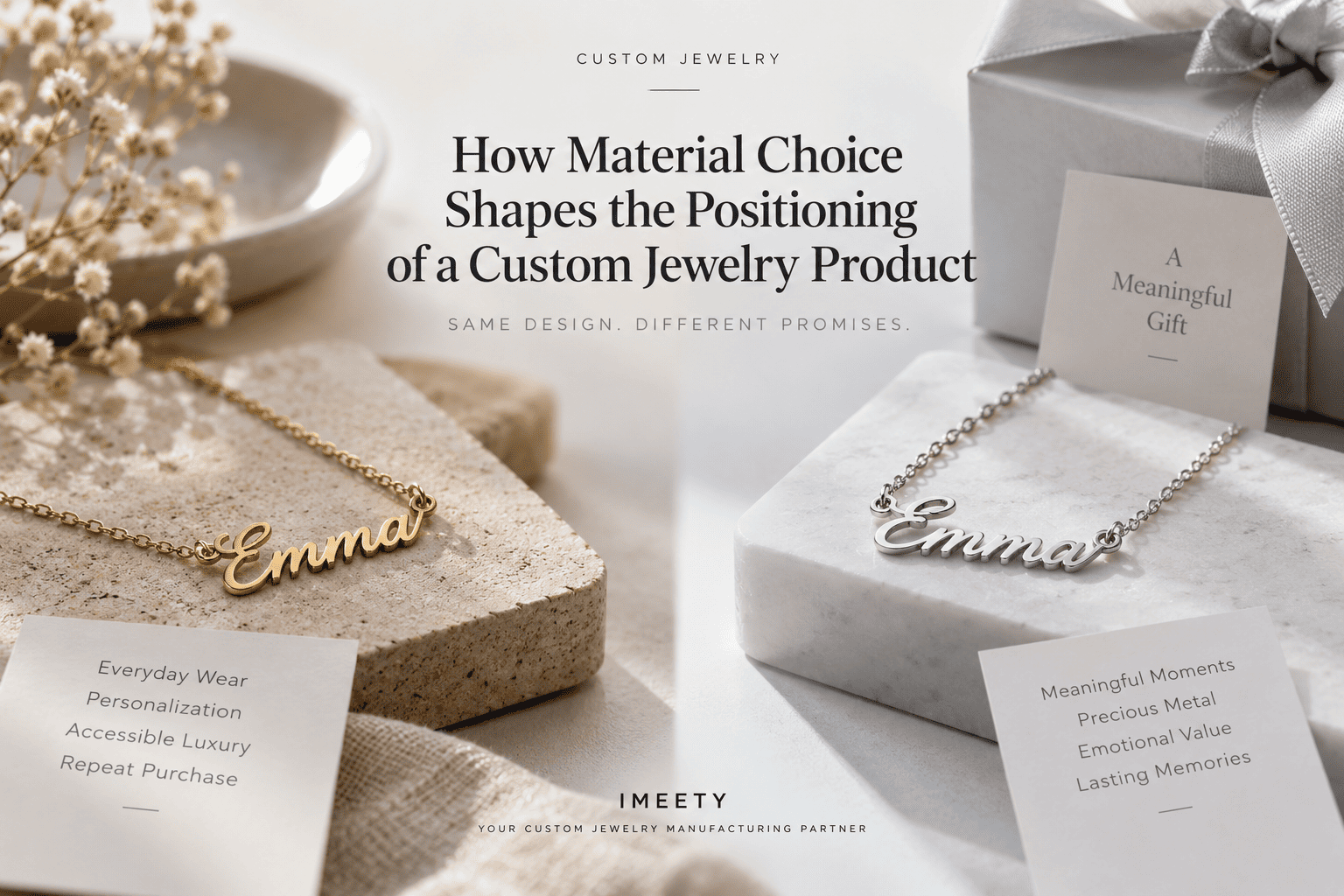
Material is a good example. A brand should not choose stainless steel, sterling silver, brass, or another material simply because one sounds more appropriate for “brand jewelry.” The material needs to make sense in the context of the design, intended use, customer expectation, and overall product experience.
Presentation may matter as well, particularly when the jewelry is being given rather than purchased as part of a conventional jewelry collection. Packaging or a card can provide context around why the piece exists, while the jewelry itself should still feel worth keeping independently.
Meaning can give the product a reason to exist, but it does not remove the need for the product itself to be well considered.
From Shared Meaning to a Manufacturable Jewelry Concept
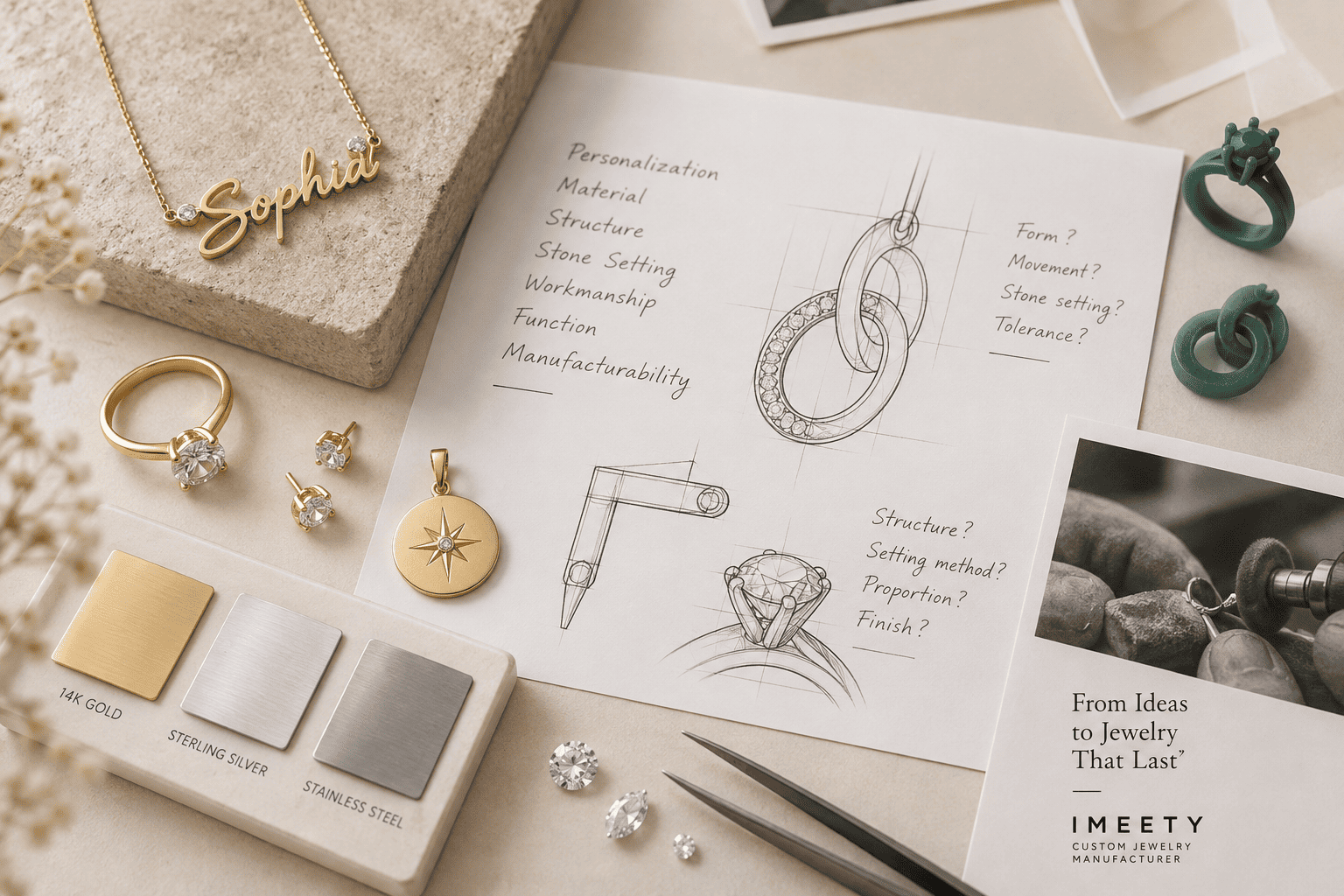
A brand-experience jewelry project does not need to begin with a complete technical design. The starting point might be a logo, photograph, phrase, event date, community idea, rough sketch, reference, or simply a story about what the jewelry is supposed to represent.
That can be enough to begin a useful development conversation.
What matters initially is understanding which parts of the idea carry the meaning and what the finished product is expected to do for the people receiving or wearing it. From there, an abstract concept can gradually become a physical product direction, with the jewelry form, proportions, material, finish, personalization, and other manufacturing decisions evaluated in relation to that purpose.
Some ideas translate relatively directly into a manufacturable product. Others need more development before the appropriate structure or expression becomes clear. In either case, the objective is not to make the original idea more complicated—it is to preserve what matters while giving it a form that can actually become jewelry.
A Simple Framework Before You Start Development
You do not need a finished design to begin thinking productively about a brand-experience jewelry project. Before focusing on technical specifications, five connected questions can help establish a clearer direction.
1. What Are We Trying to Represent?
Start with the underlying connection rather than the object. Is the jewelry about recognition, belonging, appreciation, a milestone, participation, memory, or another shared experience?
Knowing why the product should exist gives the later design decisions something to support.
2. Who Is the Jewelry For?
Consider the relationship between the recipient and the project. A VIP customer, community member, event participant, project contributor, and paying customer may each experience the same underlying idea differently.
The product needs to make sense from their perspective, not only from the perspective of the organization creating it.
3. What Should the Person Feel, Remember, or Recognize?
This begins turning abstract meaning into design intent. The desired connection might be immediate and visible, or it may be personal and subtle.
What matters is identifying which part of the experience should survive in the finished jewelry.
4. How Visible Should the Brand or Community Connection Be?
Direct branding, shared symbolism, and personalized expression can all work when they support the intended relationship between the person and the product.
A larger logo does not necessarily create a stronger connection. The appropriate expression is the one that makes the intended meaning feel natural in the jewelry.
5. What Jewelry Form Can Carry That Meaning Naturally?
Only after those questions become clearer should the necklace, bracelet, ring, pendant, charm, or another format become the center of the decision.
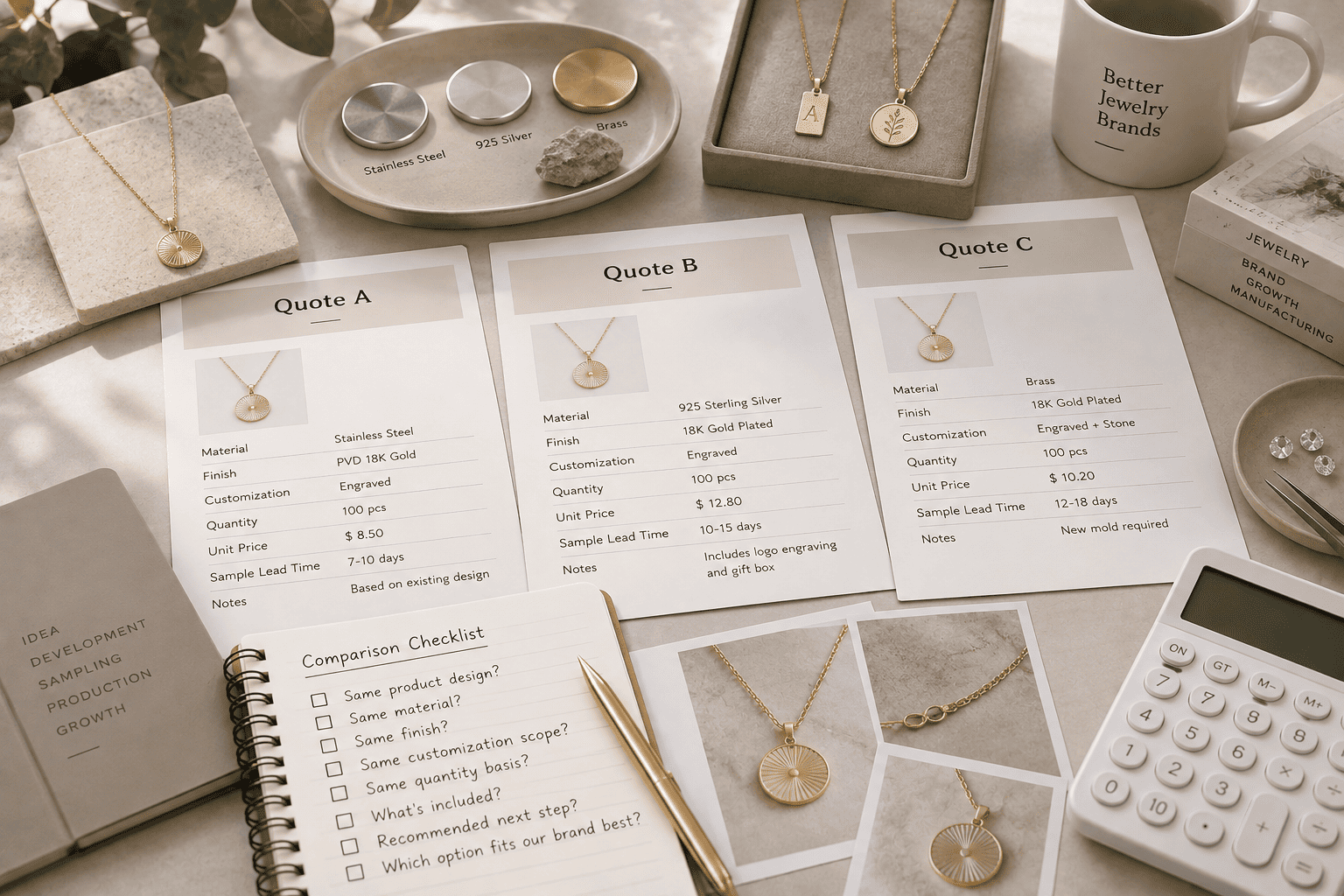
The format should support the idea rather than forcing the idea to fit it. From there, material, proportions, finish, personalization, workmanship, sampling, quantity, and manufacturing can be evaluated with much clearer context.
IMEETY’s Perspective: Develop the Meaning Into the Product
For brand-experience projects, a complete jewelry design is not always the starting point.
A customer may come to IMEETY with a logo, symbol, image, phrase, event, community idea, reference, or story rather than a finished product specification. What matters first is understanding what needs to survive the transition from that idea into a physical piece of jewelry.
Sometimes the direction is already relatively clear. In other projects, the product form, level of personalization, or way the shared meaning should appear still needs to be explored. From there, the material, structure, finish, workmanship, quantity context, and other development requirements can be evaluated around the product the idea is actually becoming.
As a Flexible Custom Jewelry Development & Manufacturing Partner, IMEETY supports this transition from meaningful concept to manufacturable jewelry. Our Custom Jewelry for Brand Experience solution is intended for brands, communities, projects, and other customers that want jewelry to become a physical expression of an existing relationship, identity, occasion, or shared experience.
The objective is not simply to put a brand onto jewelry. It is to develop jewelry that has a reason to belong to that experience.
Final Thoughts
A brand-experience jewelry project does not need to begin with a finished product idea. It can begin with a relationship, identity, milestone, community, or shared experience that deserves a physical expression.
The development task is to understand what matters in that experience and give it a jewelry form that feels natural to the people it is meant for. Once that direction is clear, design and manufacturing decisions have something meaningful to support.
Meaning should come before the jewelry format.
When that meaning survives the journey into the physical product, the jewelry becomes more than an object carrying a brand name. It becomes something people can wear or keep because the experience behind it already matters to them.