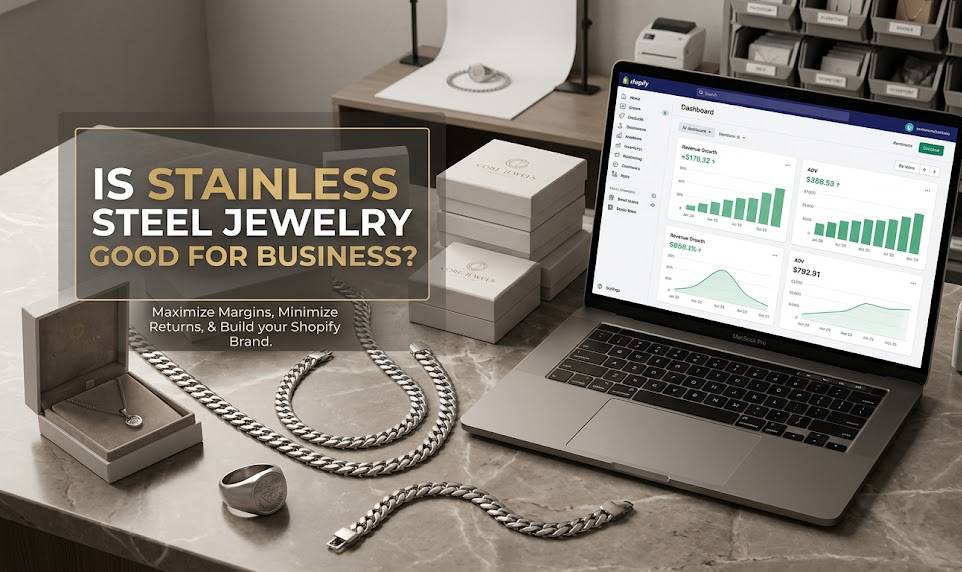

Look around the current e-commerce landscape, and you’ll notice a major shift: independent Shopify labels and viral Instagram brands are quietly moving away from traditional brass and cheap alloys. Instead, stainless steel jewelry has rapidly emerged as the undisputed backbone of modern fashion accessory brands.
But as an e-commerce founder or product developer, you have to look past the consumer hype. Is it actually a viable, high-margin category for your specific business infrastructure?
When you dive into the economics of the jewelry trade—especially within the highly competitive made-to-order and personalized product niches—the material you choose dictates your entire customer satisfaction rate. In this breakdown, we will dissect the raw commercial realities, the financial upsides, and the scalability potential of partnering with a specialized custom stainless steel jewelry manufacturer to anchor your next collection.
What Is Stainless Steel Jewelry?(The Commercial Definition)
Stripping away the complex technical jargon, stainless steel used in the fashion jewelry trade is a highly refined iron-based alloy blended with chromium. This specific composition creates an invisible, self-healing passive layer on the metal’s surface, which acts as a permanent shield against rust, everyday oxidation, and aggressive tarnish.
For a growing brands scalable product line or online jewelry brand, this material profile isn’t just a collection of cool manufacturing facts—it is a massive financial insurance policy for your shop.
Because premium-grade stainless steel is inherently hypoallergenic and completely resilient to sweat, perfumes, and daily wear, it has become the gold standard for custom name necklaces and personalized identity pieces. It provides the exact weight, metallic luster, and premium tactile feel of precious metals, but at a fraction of the raw material cost. This unique balance makes it an incredibly practical, low-maintenance, and highly profitable choice for modern minimalist & luxury brands looking to protect their reputations.
The Core Advantages: Why Stainless Steel Perfects the E-commerce Model
For a small or growing jewelry brand, you aren’t just choosing a metal; you are choosing your business model. You need a material that protects your limited cash flow while delivering a product that customers actually rave about on social media.
Here is exactly why stainless steel is the most strategic material to scale your boutique:
🔹Unbeatable Cost-to-Perceived-Value Ratio
Let’s talk numbers. Stainless steel is significantly more cost-effective to source than sterling silver or solid gold, yet it carries a remarkably high perceived value when polished correctly. For your business, this price gap unlocks two massive advantages:
- Healthy Markups: You can maintain premium retail pricing on your Shopify store while keeping your cost of goods sold (COGS) incredibly low, leading to highly attractive profit margins.
- Low-Risk Testing: Because your upfront material cost is minimized, you can test 20 different custom styles simultaneously without tying up all your working capital in expensive raw metals.
🔹 “Zero-Maintenance” Durability (Lowers Your Return Rates)
The biggest nightmare for an online jewelry store is the “green skin” complaint or an inbox full of angry emails about a necklace turning black after two weeks. Standard alloys tarnish almost immediately when exposed to water or sweat.
Stainless steel, however, is practically indestructible for daily wear. It doesn’t tarnish easily, it survives the shower and gym, and it requires zero maintenance from the consumer. Shifting to this material instantly drops your customer refund rates and saves your customer support team hours of headache.
🔹 Structural Strength: Perfect for Distinctive, High-Detail Aesthetics
Stainless steel is an inherently strong, resilient metal, which opens up incredible design possibilities that softer metals can’t handle.
If you want to launch bold, chunky statement rings, geometric initial pendants, or crisp, deep-etched name necklaces, stainless steel holds its shape perfectly.
It doesn’t bend, warp, or scratch easily during daily use. This structural integrity allows our production lines to achieve razor-sharp laser cuts and clean, premium edges that make your pieces look like high-end designer jewelry rather than cheap fast-fashion trinkets.
The Realistic Limitations: Is It the Right Fit for Your Brand?
No material is perfect. To build a sustainable jewelry business, you need to know exactly where stainless steel falls short so you can design around its limitations. If you are aiming for a specific market niche, keep these three realities in mind:
- Lower Perceived Value Than Sterling Silver:Let’s be realistic! consumers naturally associate gold and silver with traditional luxury. Even though a flawlessly polished stainless steel piece can look identical to white gold at first glance, you cannot stamp it with a “925” hallmark.
- The Business Impact: If your brand positioning relies heavily on the “fine jewelry” narrative or you want to charge a massive luxury premium ($150+ for a simple pendant), stainless steel will limit your narrative. It is built for accessible, premium everyday fashion, not legacy heirloom luxury.
- Higher Rigidity (Less Flexibility for Delicate, Intricate Settings): Stainless steel is incredibly tough—which we love for durability—but that strength is a double-edged sword in production. It requires specialized heavy machinery and intense heat to shape.
- The Business Impact: If your brand identity is built on ultra-delicate, romantic designs with complex, microscopic prong-set cubic zirconias or intricate wire-wrapping, stainless steel is too stubborn to work with. For those highly fluid, dainty collections, silver remains the easier canvas. Stainless steel thrives in clean cuts, crisp laser engravings, and structurally solid geometric shapes.
At the end of the day, succeeding in the e-commerce jewelry space isn’t about finding the “best” metal, it’s about alignment. If your store focuses on bold statement pieces, durable everyday wear, and high-margin personalized items like name necklaces, stainless steel is an absolute powerhouse that protects your cash flow.
However, if you are still figuring out your collection’s direction or want to see how different materials stack up against each other, navigating your supply chain options is the next step. You can explore our dedicated custom jewelry manufacturing capabilities page to see exactly what kind of designs, finishes, and low-MOQ setups fit your brand’s current scaling phase.
Is Stainless Steel Jewelry Actually Profitable?
The short answer is yes—remarkably so. For small, independent storefronts and scaling jewelry brands, stainless steel is often the silent engine behind their earliest and most reliable profit spikes.
It isn’t profitable just because it is “cheap to buy.” It is profitable because of how the material economics align with online retail realities:
Exceptional Retail Markup Potential (The 5X–10X Rule)
Because modern finishing techniques give stainless steel the exact weight and high-polish sheen, the consumer’s perceived value is incredibly high. While your sourcing cost stays remarkably low, a well-photographed custom name necklace or statement piece can easily command a $35 to $65 price tag on Shopify. This allows small brands to pocket 70% to 80%+ gross margins—giving you the crucial ad-spend buffer you need to survive on Facebook, Instagram, or TikTok ads.
Protecting Profits by Eliminating “Invisible Leakage”
In e-commerce, your profit isn’t just what you make on the sale, it’s what you keep. Traditional alloy jewelry suffers from massive “invisible leakage”—meaning your profits get eaten alive by customer refunds, chargebacks, and replacements when the product turns skin green or snaps after three wears. Stainless steel’s absolute durability plugs this leak entirely. Low return rates mean higher customer lifetime value (LTV) and pure profit retention.
The Perfect Springboard for Low-MOQ and Growing Brands
Most legacy factories require you to buy thousands of units per style, which instantly kills a small brand’s budget. Stainless steel manufacturing processes are highly adaptable to agile, modern setups. This means you can partner with a flexible backend to run low-MOQ tests or seamless made-to-order fulfillment. You can scale your collection at your own pace—testing the waters with zero heavy inventory pressure, and only doubling down on styles that your dashboard proves are winners.
💡 Strategic Playbook: This is exactly why so many digital jewelry empires start exclusively with a stainless steel core. It allows them to aggressively stack up capital, build a fiercely loyal customer base, and establish their brand identity safely before ever investing a single dollar into volatile, high-risk precious metals.
Not Sure Which Material Is Right for Your Business?
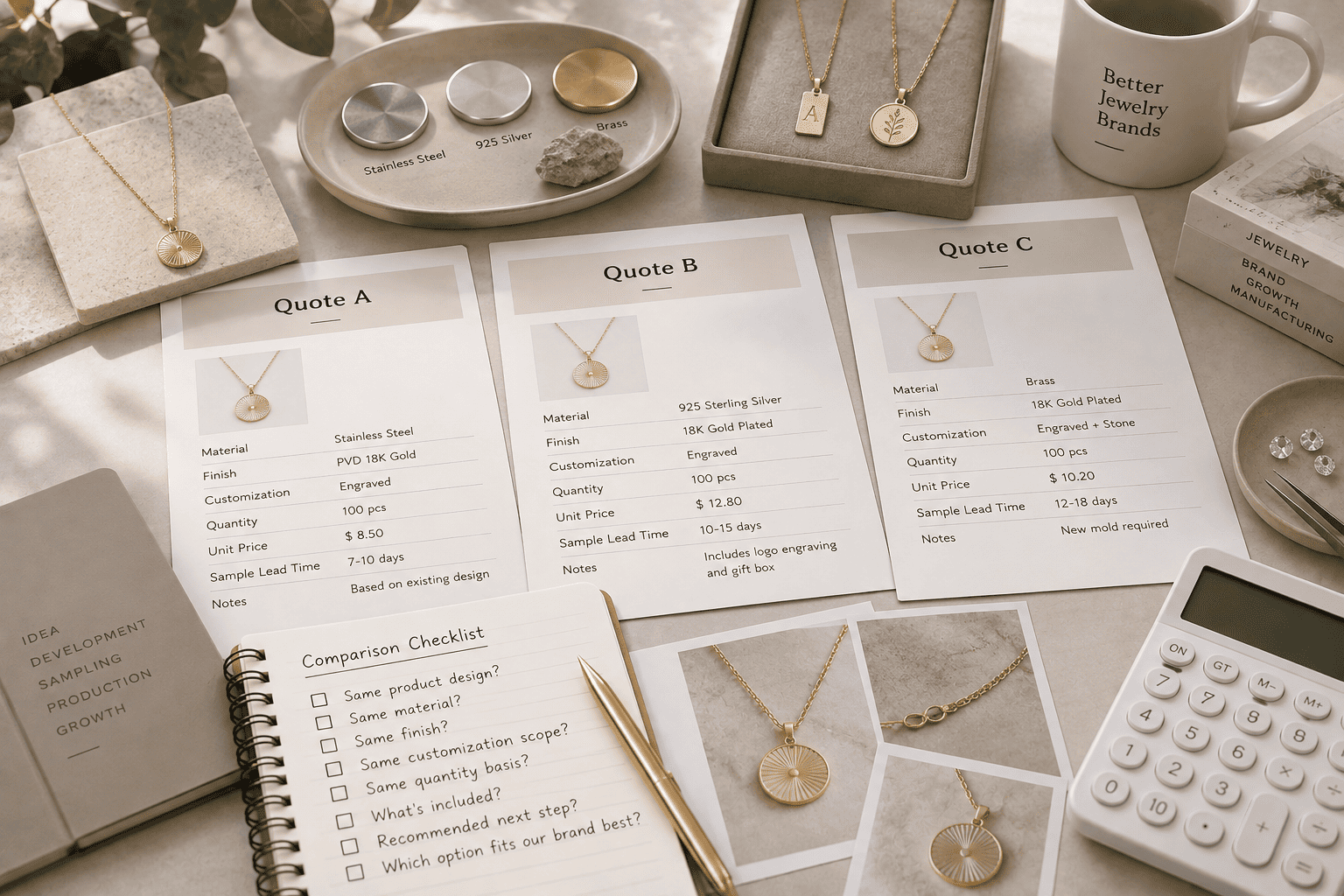
Navigating the jewelry supply chain can feel overwhelming when you are trying to balance premium branding with a tight budget. Choosing between stainless steel, sterling silver, or high-end plating options isn’t just a design choice—it dictates your pricing strategy, your ad copy, and your target audience.
You don’t have to figure it out alone. We specialize in helping emerging labels and growing Shopify boutiques engineer the exact right material mix based on their specific market positioning and cash flow reality.
When you partner with our agile team, you get access to a production line built around flexibility:
- True Material Versatility: Whether your current collection calls for rugged stainless steel, delicate silver accents, or ultra-thick, long-lasting gold plating, we manage the technical complexity for you.
- Low-MOQ Safeguards: No punishing enterprise minimums. We keep our starting requirements highly accessible so your business can scale organically without heavy inventory debt.
- Fast-Turnaround Logistics: Our workflow is optimized for speed, ensuring your storefront stays responsive to fast-moving social media trends and seasonal gifting rushes.
⚡ Get Expert Supply Chain Advice (Risk-Free)
Whether you are stuck between materials, unsure about pricing margins, or want to test a rough design idea, our production team is here to help you map out the most cost-effective pipeline.
👉 [ DROP US A LINE: DISCUSS YOUR MATERIAL & PRODUCTION STRATEGY ]
Who Should Honestly Build Their Core Collection on Stainless Steel? (The Checklist)
Not every scaling label is built to handle the delicate, high-maintenance nature of precious metals, and no serious brand wants to drown in the low-margin, fast-fashion race. In modern e-commerce, 316L stainless steel shines brightest when integrated into specific, data-driven business models.
If you are expanding a Shopify storefront, running an active Instagram-driven label, or a growing brand looking to build a multi-year product line, you should heavily anchor your catalog in stainless steel if your business matches any of these four architectures:
1. The Customer-Obsessed Shopify Brand (Maximizing Retention)
If you are running a scaling storefront where brand equity and 5-star customer reviews are your lifeblood, you cannot afford the invisible profit leakage caused by quality-control crises or sudden refund surges.
- Why It Fits: You need a product that arrives in your custom microfibre pouches looking flawless, survives daily wear, and absolutely never turns a customer’s skin green. Stainless steel provides a bulletproof “set-it-and-forget-it” reliability. It completely eliminates chemical tarnishing complaints, freeing up your team’s energy to focus entirely on scaling your Meta ads and maximizing Customer Lifetime Value (LTV).
2. The Catalog-Expanding Growth Stage Store
If your brand has passed its survival phase and you are now looking to safely branch out into personalized niches (like custom name scripts or coordinate bar pendants), protecting your operating capital is still a high priority.
- Why It Fits: Sinking thousands of dollars into massive, unvalidated factory runs of sterling silver necklaces that might end up as warehouse deadstock is a dangerous gamble. Utilizing high-grade stainless steel paired with our low-MOQ support gives you the ultimate playground. You can launch 15 diverse font designs simultaneously, let your real dashboard analytics spot the winners, and build a permanent, structured product line with zero financial anxiety.
3. The Social-Media & Influencer-Driven Label
If your primary marketing engine relies on TikTok viral videos, Instagram Reels, and continuous gifting campaigns with micro-influencers, your business model runs on rapid aesthetic momentum and visual impulse buys.
- Why It Fits: Social-media shoppers demand high-impact, chunky, or structural statement pieces that pop on camera, but they often operate under a specific psychological price ceiling (typically $35 to $55). Stainless steel allows you to manufacture heavy-weight, high-shine, and intricate geometric custom charms that look ultra-premium on screen, keeping your ad conversion rates high and your production margins remarkably healthy.
4. The Everyday Premium Accessory Boutique (The “Waterproof” Angle)
If your long-term brand positioning is focused on “premium, durable everyday luxury” rather than legacy heirloom fine jewelry, you are sitting in the most profitable sweet spot of the modern accessory market.
- Why It Fits: Modern shoppers expect their everyday pieces to survive the gym, the beach, and the shower without rusting or fading—but they also demand a premium, substantial tactile weight. High-grade stainless steel with advanced PVD gold coating fills this exact market gap. It allows you to market 100% waterproof, sweatproof jewelry that drives massive repeat-purchase rates and naturally elevates your Average Order Value (AOV).
Stainless Steel vs. 925 Sterling Silver: Which Fits Your Current Phase?
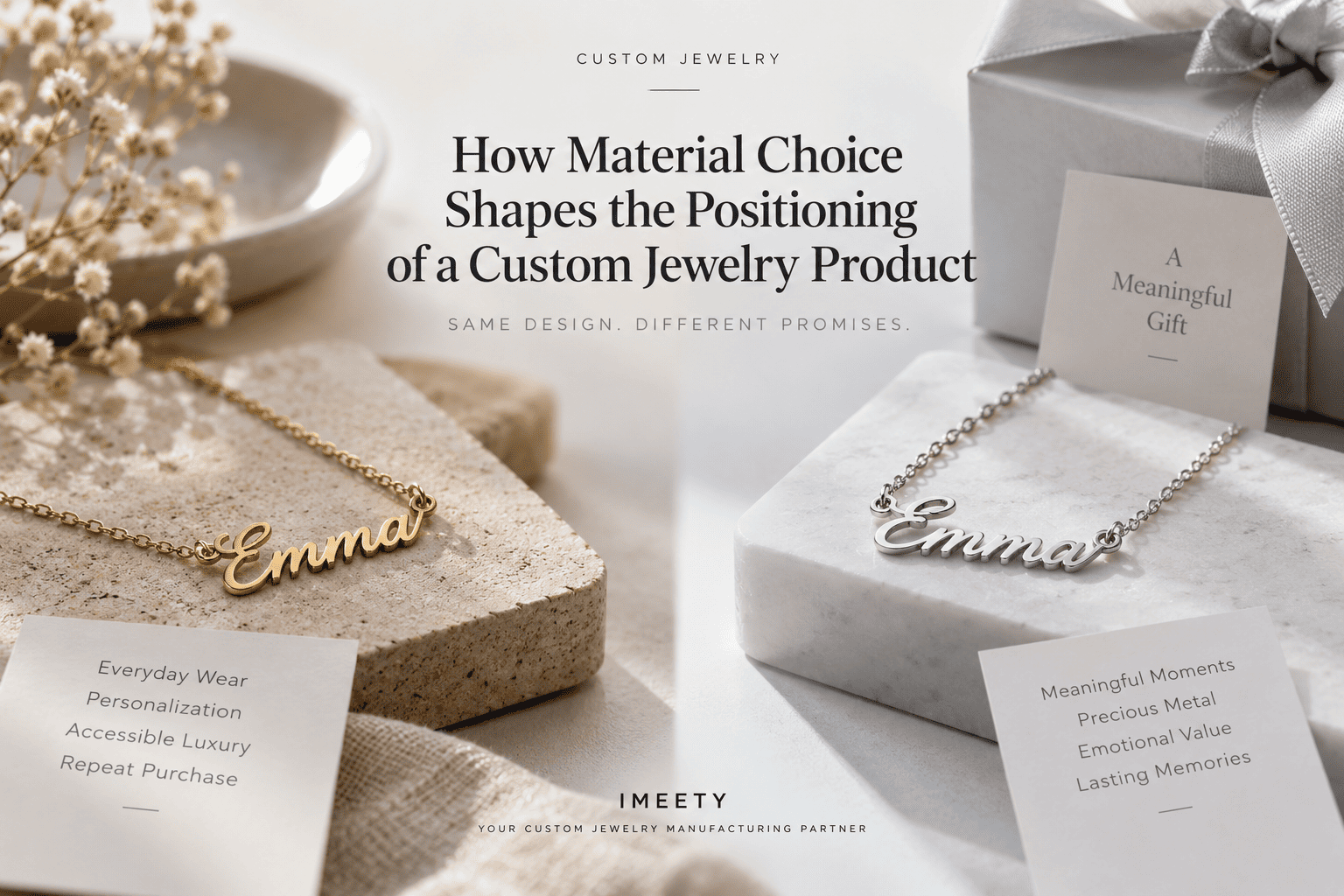
In the modern jewelry industry, it is a massive mistake to view stainless steel and 925 sterling silver as bitter rivals. They aren’t trying to beat each other—they serve entirely different consumer mindsets. As a flexible supply chain partner, our production lines handle both materials daily, and we often advise growing brands to leverage both to build a balanced, highly profitable ecosystem.
The choice shouldn’t be based on which metal is “better,” but rather on which strategy fits your current market positioning:
The Stainless Steel Playbook: Agility & Volume
- The Core Focus: Maximum durability, everyday lifestyle wear, and practical price.
- The Commercial Edge: It is the ultimate shield for your cash flow. Because it is highly cost-effective and completely tarnish-resistant, it allows your Shopify store to maintain aggressive 5X–10X markups, run frictionless low-MOQ tests on viral personalized designs, and offer waterproof daily wear that drives down return rates to practically zero.
The 925 Sterling Silver Playbook: Prestige & Premium Margins
- The Core Focus: Timeless value, luxury gifting emotional appeal, and prestige positioning.
- The Commercial Edge: Silver unlocks a completely different psychological tier for your brand. It allows you to proudly stamp your pieces with the “925” hallmark, instantly justifying premium price points ($80 to $150+). It is the perfect canvas for ultra-dainty, highly intricate romance designs, micro-pave crystal settings, and fine luxury gifting campaigns where consumers demand precious metal status.
The Hybrid Strategy: Why Not Both?
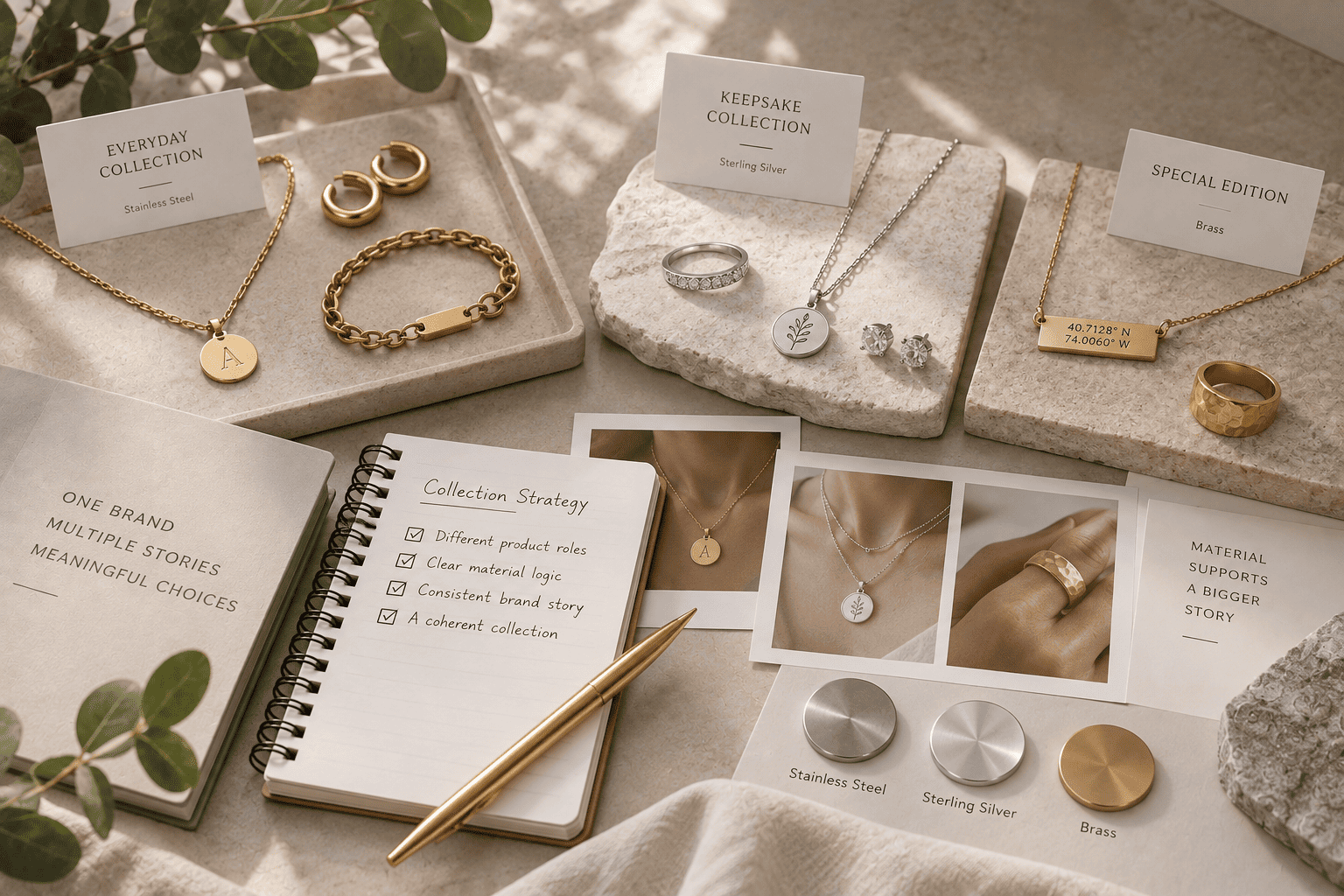
Many of the most successful scaling jewelry brands don’t limit themselves to just one metal. They use stainless steel for their high-traffic, fast-moving custom name necklaces to build volume and hook impulse buyers on social media. Simultaneously, they drop limited-edition 925 silver collections to upsell their existing customers and boost their Average Order Value (AOV).
Ultimately, your supply chain should adapt to your business ambition, not restrict it. If you want a deep-dive technical and financial comparison of how these raw materials affect your packaging, shipping weight, and consumer perception, check out our comprehensive industry analysis on the [ Ultimate Guide to Custom Jewelry Materials ] to engineer your perfect product mix.
Conclusion: Launching Safely, Scaling Smarter
Building a successful jewelry brand in today’s hyper-competitive e-commerce space isn’t about chasing the most expensive materials, it is about finding the ultimate balance between raw production cost, daily product durability, and capital liquidity.
For small boutiques and growing Shopify labels, high-grade stainless steel offers exactly that—a risk-mitigated, highly resilient foundation that protects your margins while delivering a flawless, premium customer experience that builds word-of-mouth loyalty. It is the smartest springboard to validate your designs, accumulate your brand’s initial capital, and scale your audience safely.
Let’s Turn Your Design Blueprint Into Reality
You don’t need an enterprise budget or a massive team to get started. At IMEETY, we have spent years engineering a flexible, low-MOQ production pipeline specifically designed to help solo founders, digital boutiques, and growing brands launch without heavy inventory debt.
Whether you want to launch a viral series of custom name necklaces, test a bold statement collection in durable stainless steel, or mix in premium 925 sterling silver elements—we are here to manage the technical supply chain while you focus on marketing.
Start Your Custom Jewelry Business with the Right Materials
📩Tell us your product idea — we’ll help you choose the best material and bring it to life.
No obligation. We reply within 24 hours. 👇