
Starting a custom jewelry business gives you the opportunity to build a brand around products that reflect a particular style, meaning, or customer experience. Whether you want to create personalized name necklaces, develop original jewelry designs, or launch a small collection for a specific audience, custom jewelry offers different ways to turn your ideas into products customers can connect with.

But building the business involves more than choosing attractive designs and opening an online store. You need to understand who your products are for, decide how they will be customized, evaluate what is practical to manufacture, and choose a production approach that fits your plans. These decisions are closely connected, and the choices you make early on can influence everything from product development and inventory to the experience you offer customers.
This guide walks through eight practical steps, from defining your first product direction to preparing for launch and learning from your initial orders.
Step 1: Define Your Target Customer and Product Direction
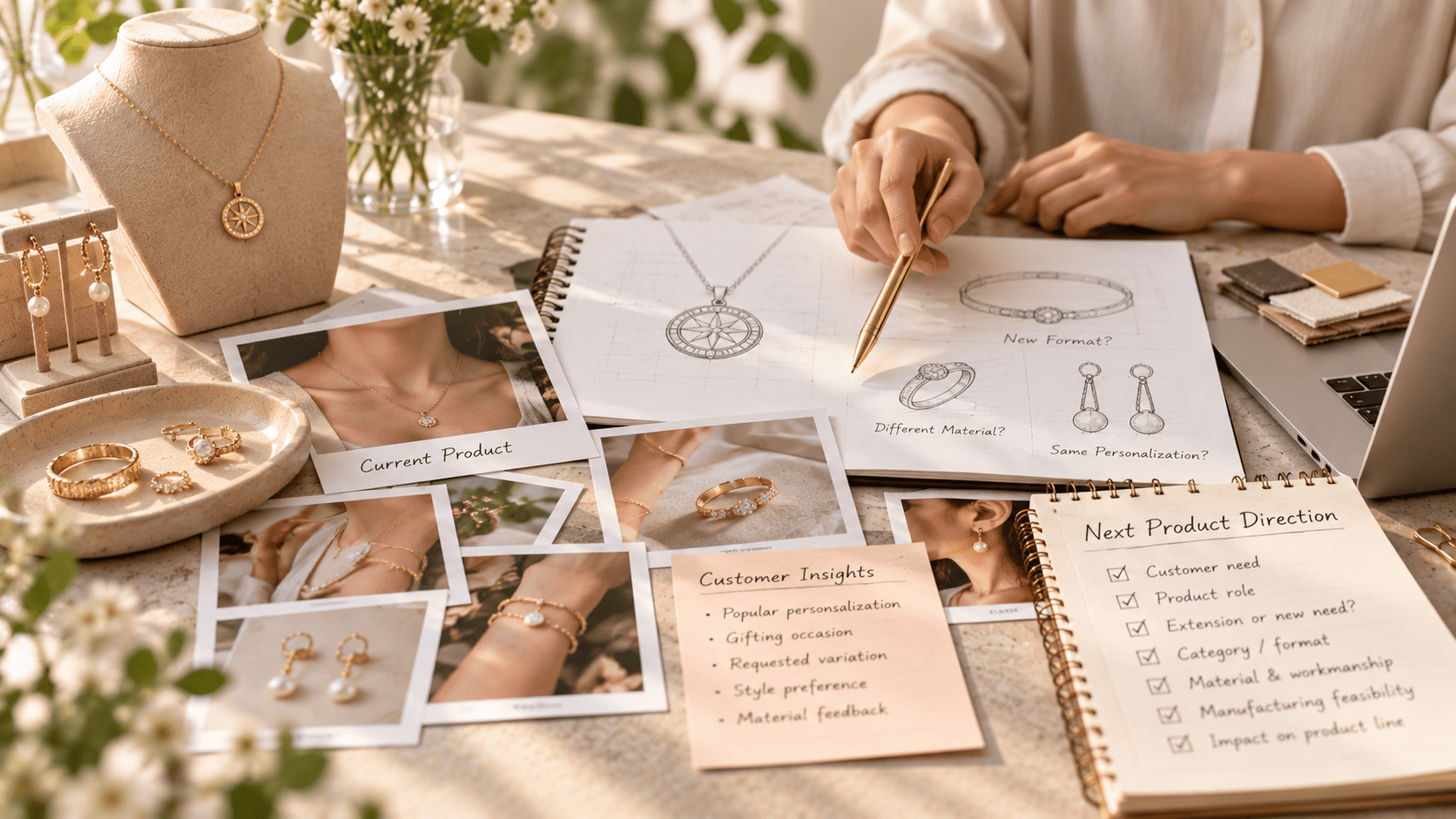
Before deciding what jewelry to manufacture, think about who you want to create it for and why they would choose your products. Some customers look for meaningful personalized gifts, while others are drawn to everyday jewelry with a distinctive style or a collection that reflects their identity. These motivations influence product design, material choices, customization options, pricing, and even how the jewelry should be presented.
A focused product direction can make your early decisions easier. For example, you might start with personalized family jewelry, minimalist engraved pieces, or a small collection built around an original design concept. Each direction creates different expectations, so it is worth considering not only what the product looks like, but also what customers should value about it.
At this stage, try to answer three questions:
- Who is the product for? Consider their preferences, buying motivations, and expectations.
- What makes your jewelry distinctive? This might be its design, personalization experience, materials, or meaning.
- What experience should the product deliver? Think about appearance, comfort, intended use, and presentation.
You do not need to finalize every detail before exploring manufacturing. However, having a clear direction helps you evaluate ideas consistently instead of developing unrelated products simply because they appear attractive or popular.
Step 2: Decide How Your Jewelry Will Be Customized
Not all custom jewelry businesses operate in the same way, and one of the most important early decisions is determining what customization means for your brand. For some businesses, customization happens during product development: the brand creates an original design, works with a manufacturer to produce it, and then sells the finished collection. For others, customization happens with each customer order, when a shopper selects a name, initials, date, engraving, or another personal detail. Some brands combine both approaches, developing their own distinctive designs while allowing customers to personalize selected elements.
These approaches create different manufacturing and operational requirements. An original collection may involve more design development, sample evaluation, and attention to consistency across repeat production. An order-by-order personalized product, meanwhile, requires a reliable way to communicate individual customer details, manage variations, and ensure that each finished piece reflects the information provided. A brand combining both approaches needs to consider both sets of requirements.
Neither model is inherently better. The right choice depends on the customer experience you want to offer and how your business is prepared to manage production. For example, if customers enter names or dates through your Shopify store, you need to consider how that information will be collected, checked, and transferred into manufacturing instructions. If your business focuses on an original collection, establishing clear product specifications for consistent production may be the greater priority.
Making this distinction early helps you choose a customization approach that fits both your brand vision and the practical requirements of manufacturing and fulfilling orders.
Ready to Explore Your Custom Jewelry Idea?
Whether you’re developing an original collection or planning personalized jewelry for your customers, IMEETY can help you evaluate your design and explore a suitable manufacturing approach.
👉 Discuss Your Jewelry Project
No obligation. We reply within 24 hours.
Step 3: Evaluate Your First Product Idea Before Investing in Production
Once you have a product direction, the next step is understanding what it will take to manufacture it. A design that looks appealing in a sketch or reference image may still need adjustments before it can become a finished piece of jewelry. Dimensions, materials, component connections, engraving areas, and construction details can all influence whether the intended design can be produced as expected.
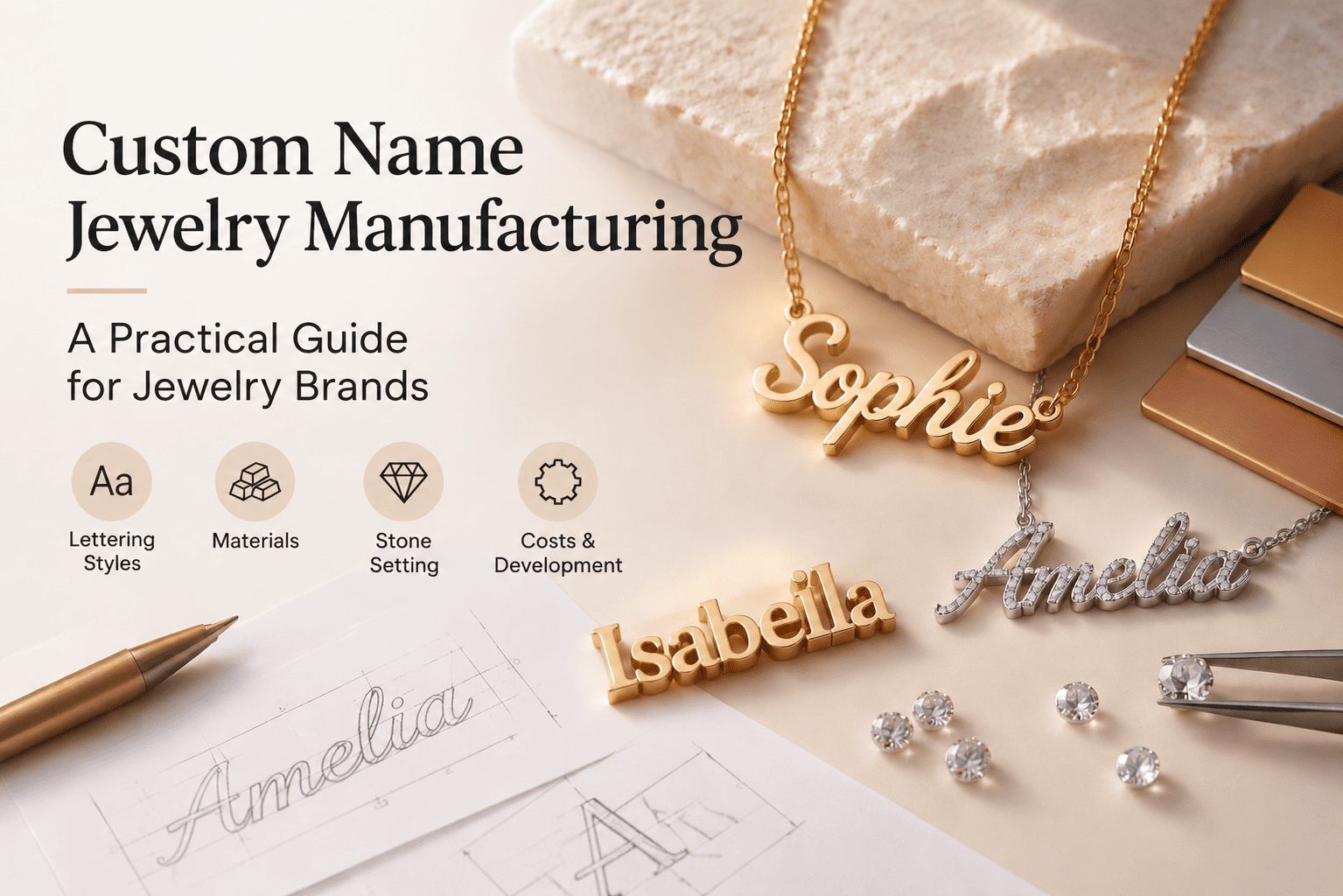
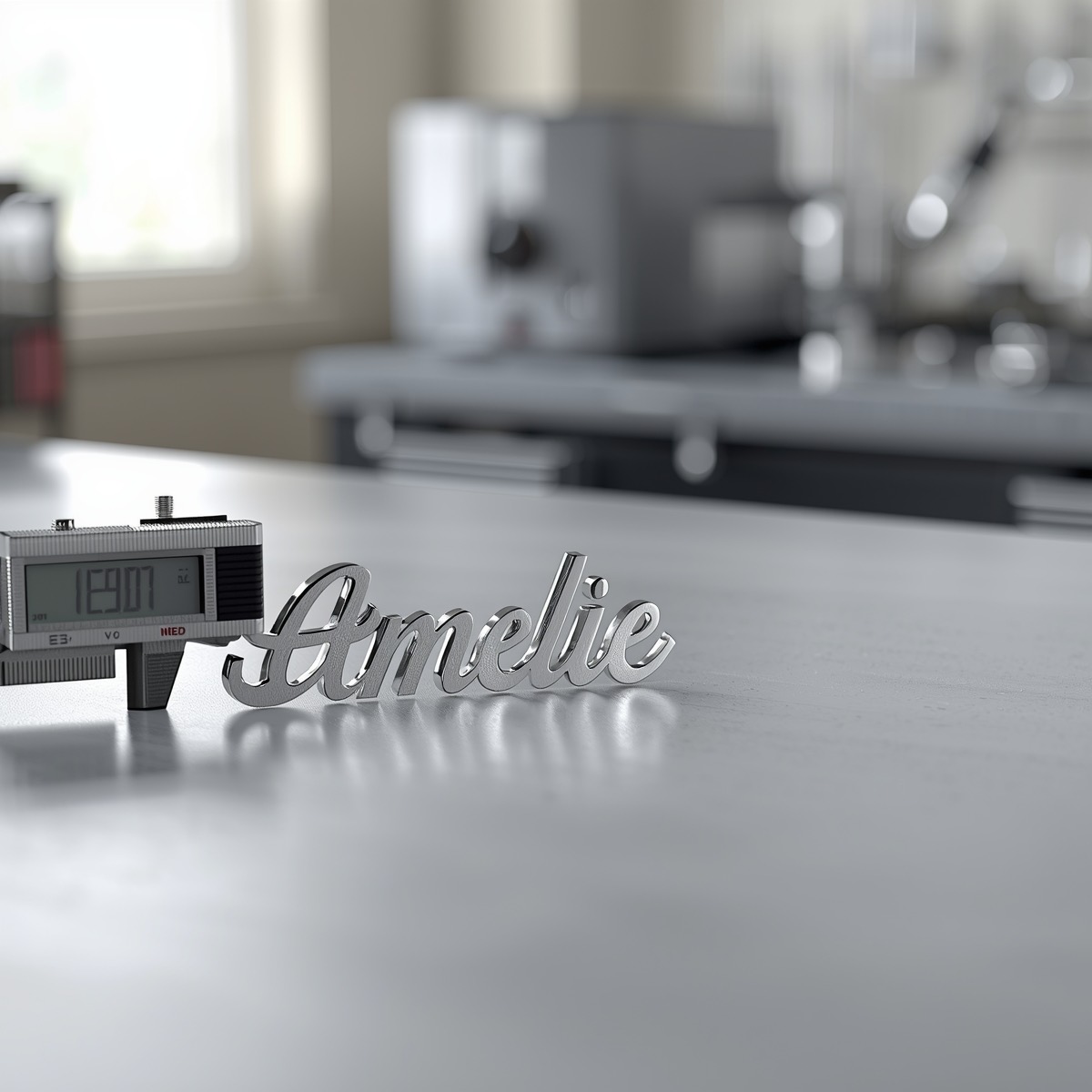
Consider a delicate name necklace, for example. Its appearance depends not only on the chosen font but also on how the letters connect, how different name lengths affect the proportions, and whether the finished piece has sufficient structural support. A pendant with several components may raise different questions about assembly or movement, while a simple engraved design may require little additional development once its specifications are clear.
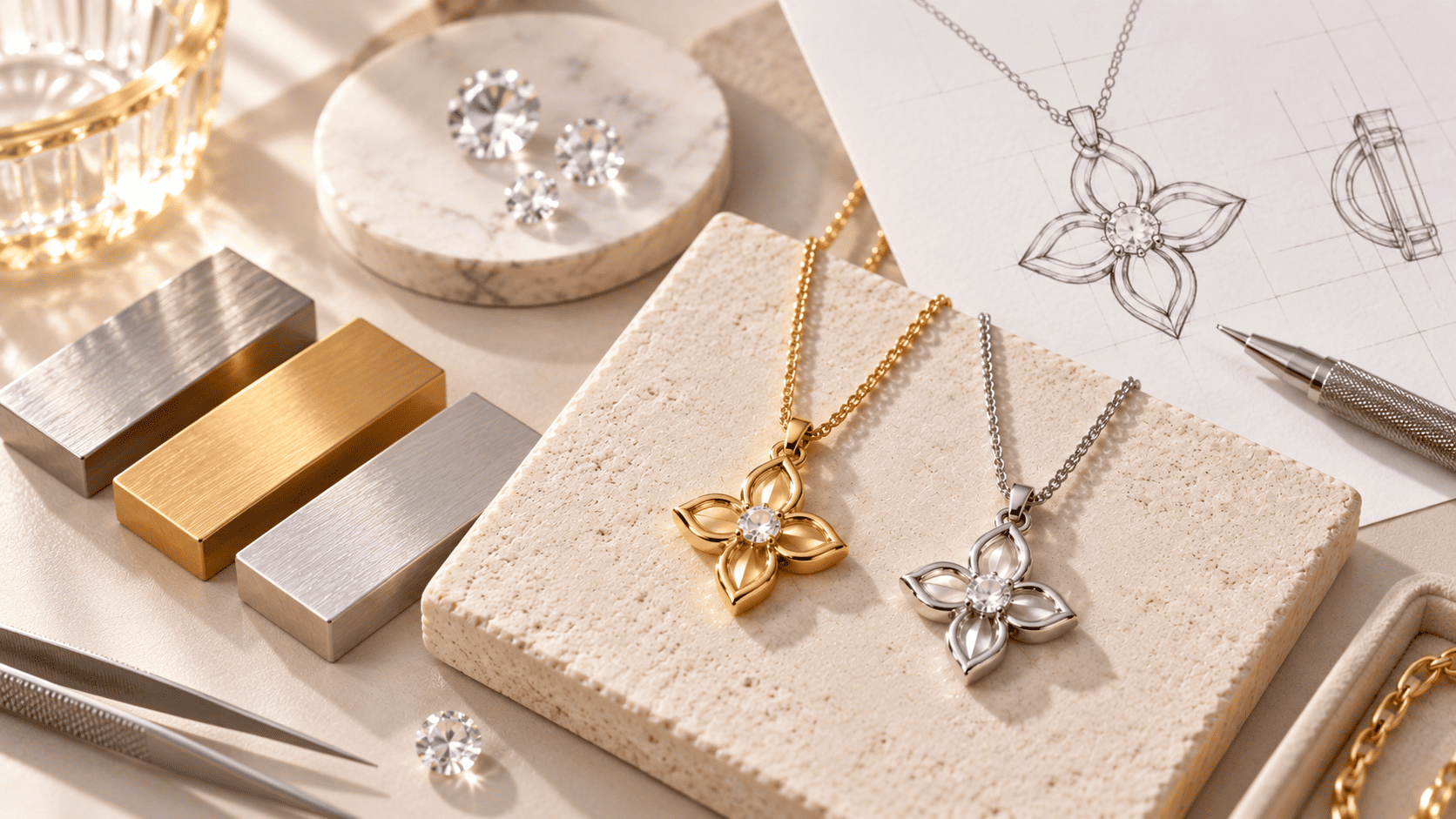
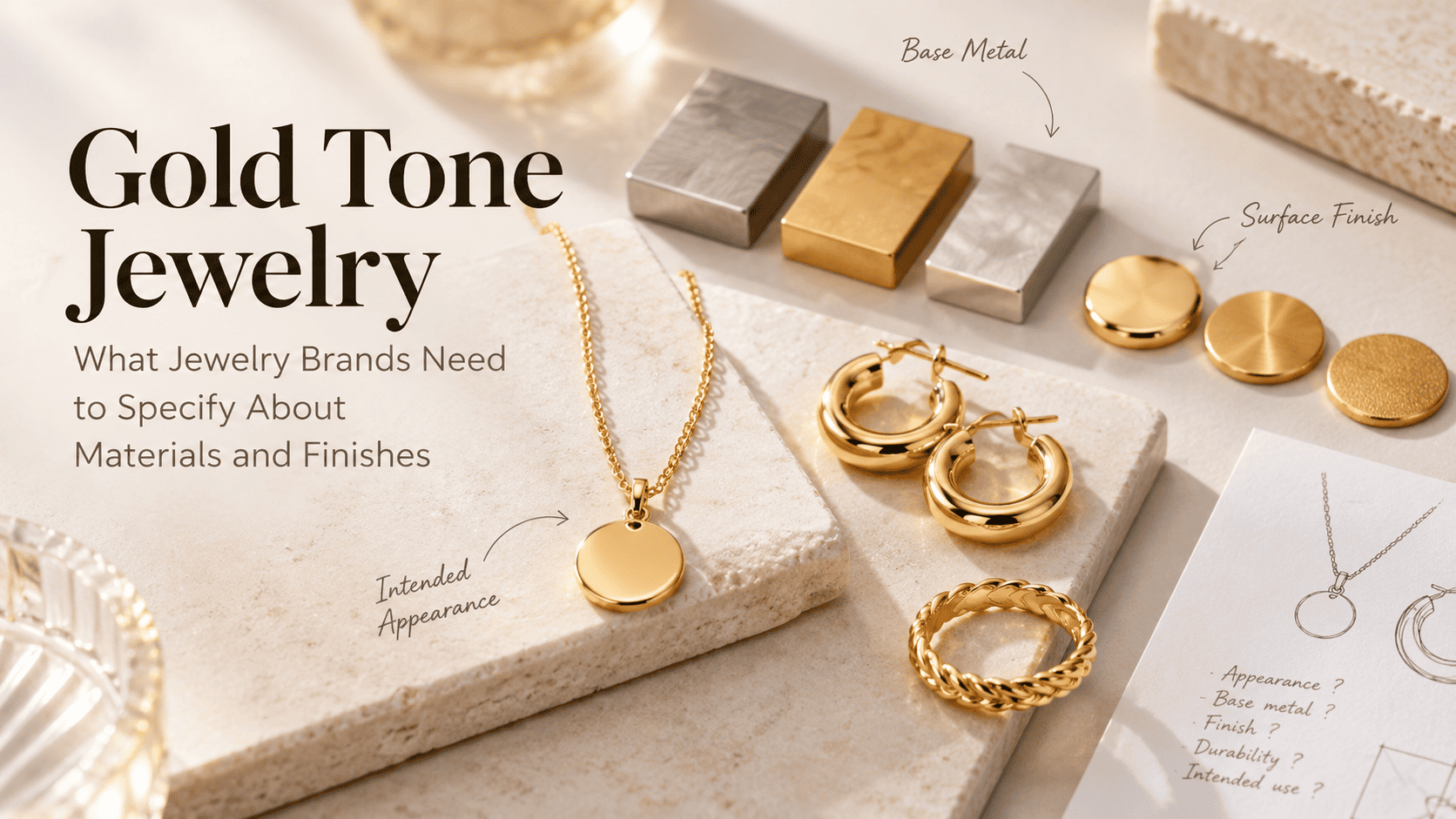
Material selection should follow the product’s intended characteristics rather than a fixed assumption about which metal is best. Stainless steel and sterling silver can both be appropriate for custom jewelry, but their properties, manufacturing processes, and commercial considerations differ. The suitable choice depends on your design, desired appearance, customer expectations, and product requirements.
Before committing to development, it helps to clarify:
- The intended appearance and approximate dimensions.
- Preferred materials and finishes, if already decided.
- Engraving, stone setting, or personalization requirements.
- Components such as chains, clasps, or attachments.
- Design details that are essential to your brand.
- Areas where you are open to manufacturing recommendations.
You do not need to resolve every technical question yourself. A manufacturing partner can help evaluate feasibility and identify which details require further clarification. What matters is recognizing the difference between having a promising product idea and having a design that is ready for production, so you can choose an appropriate development approach rather than assuming every project requires the same process.
Step 4: Find a Manufacturing Partner That Fits Your Business
Choosing a manufacturer is not simply about finding a supplier that can produce jewelry. You need a partner whose capabilities match your designs and whose working approach fits the way you intend to operate your business. A brand developing an original collection may need support with design evaluation, sampling, and repeat production, while a personalized jewelry business may place greater emphasis on handling individual order variations accurately.
When comparing manufacturers, look at their experience with your product type, how they approach development questions, and whether they can explain what information is needed before production decisions are made. A useful manufacturing conversation should help you understand what is feasible, which details still need confirmation, and what an appropriate next step would involve. A custom jewelry manufacturing partner should contribute practical manufacturing judgment without taking over the brand decisions that belong to you.
Price and minimum order quantity matter, but they should not be considered in isolation. A low quotation may reflect different assumptions about materials, components, quantities, or development work, while a low advertised MOQ does not necessarily mean the manufacturer is suitable for every design or order model. Comparing suppliers becomes more meaningful when the product requirements and scope of work are clear.
If you are preparing to approach potential suppliers, understanding <how to find a reliable custom jewelry manufacturer> can help you evaluate their capabilities, communication, and production arrangements in greater detail.
Step 5: Develop and Evaluate Your First Samples
Sampling gives you the opportunity to evaluate your product as a physical piece rather than relying only on drawings or reference images. Depending on the design, preparation may involve confirming specifications, evaluating construction details, or using technical drawings or CAD where necessary. The level of development should reflect the product’s actual requirements; a straightforward design does not automatically need an elaborate process.
When your sample is ready, review it against what you intended to create. Look at proportions, dimensions, surface finish, engraving clarity, and any details that affect how the jewelry looks or functions. If the product includes personalization, consider how different names, characters, or engraving combinations may influence the finished appearance. For wearable pieces, comfort, component connections, and clasp function may also need attention.
Sample feedback is most useful when it identifies a specific difference or concern. Saying that a pendant feels too heavy, an engraving is difficult to read, or a connection needs evaluation gives the manufacturer a clearer basis for discussion than a general comment that the piece does not look right. It also helps distinguish manufacturing issues from design preferences that were not fully established earlier.
Before approving a sample, make sure you understand which specifications and details are being accepted for future production. Our guide to <evaluating custom jewelry samples before production> explores how to review a sample and decide whether it is ready to move forward.
Sample approval should establish a shared understanding of the intended finished product. That understanding becomes especially valuable when you begin your first production order or need to reproduce the same design later.
Step 6: Choose an Initial Production Approach That Fits Your Risk and Demand
After developing your first product, you need to decide how it will be produced for sale. This decision involves balancing inventory exposure, production costs, delivery expectations, and your ability to respond as customer demand becomes clearer. Different jewelry products and business models may call for different arrangements, even within the same brand.
Small-batch production can make sense when you want a defined quantity of finished jewelry available for sale, particularly if the design is established and you have reasonable confidence in demand. Order-by-order production may be more suitable for certain personalized products, where individual customer details are required before manufacturing. Some brands use both approaches, holding inventory for selected designs while producing personalized variations after receiving orders.
Each arrangement has trade-offs. Producing smaller quantities may reduce inventory commitments, but it can also affect unit pricing or production efficiency. Order-by-order manufacturing may reduce the need to stock every personalized variation, yet it requires reliable order information and realistic production and delivery expectations. Larger batches can offer different cost advantages, but they also create greater inventory exposure if demand is uncertain.
This is why low MOQ custom jewelry manufacturing should be evaluated in relation to your actual product and business needs, rather than treated as a universal solution for beginners. The quantity that makes sense for one design may not be appropriate for another, especially when development, tooling, or personalization requirements differ.
It is also useful to think beyond the first order. If a product sells well, you may need to reorder it using the same approved specifications. If customer feedback suggests a change, you will need to distinguish a repeat order from a revised design. Establishing these expectations early can make the transition from product testing to ongoing production easier to manage.
Step 7: Prepare Your Brand and Customer Experience
Manufacturing a product is only part of launching a jewelry business. You also need to present it in a way that helps customers understand what they are buying and what makes it relevant to them. Your brand identity, product photography, descriptions, packaging, and ordering experience should support a consistent impression rather than operate as unrelated details.
For personalized jewelry, the ordering experience deserves particular attention. Customers need to know which elements they can customize, how to enter names or other information, and what variations are available. If your Shopify store collects personalization details, the information shown to customers should correspond to what can actually be produced. Clear instructions can reduce confusion before an order reaches manufacturing.
Packaging also contributes to the customer experience, but it should reflect your product and brand requirements rather than be treated as an automatic upgrade. A simple presentation may be appropriate for one collection, while another may benefit from branded boxes, cards, or other details. If you are developing products under your own label, private label jewelry manufacturing can be part of the discussion about how manufacturing and brand presentation work together.
Your sales channel is another decision to make in the context of your audience and operating model. Shopify, Etsy, social commerce, and other channels provide different ways to present and sell jewelry. A Shopify store may give you more direct control over the brand experience and customization interface, while a marketplace may offer a different route to product discovery. Neither choice removes the need for clear product information, realistic fulfillment expectations, and a reliable way to manage customer orders.
Step 8: Launch, Learn, and Improve Your Product Decisions
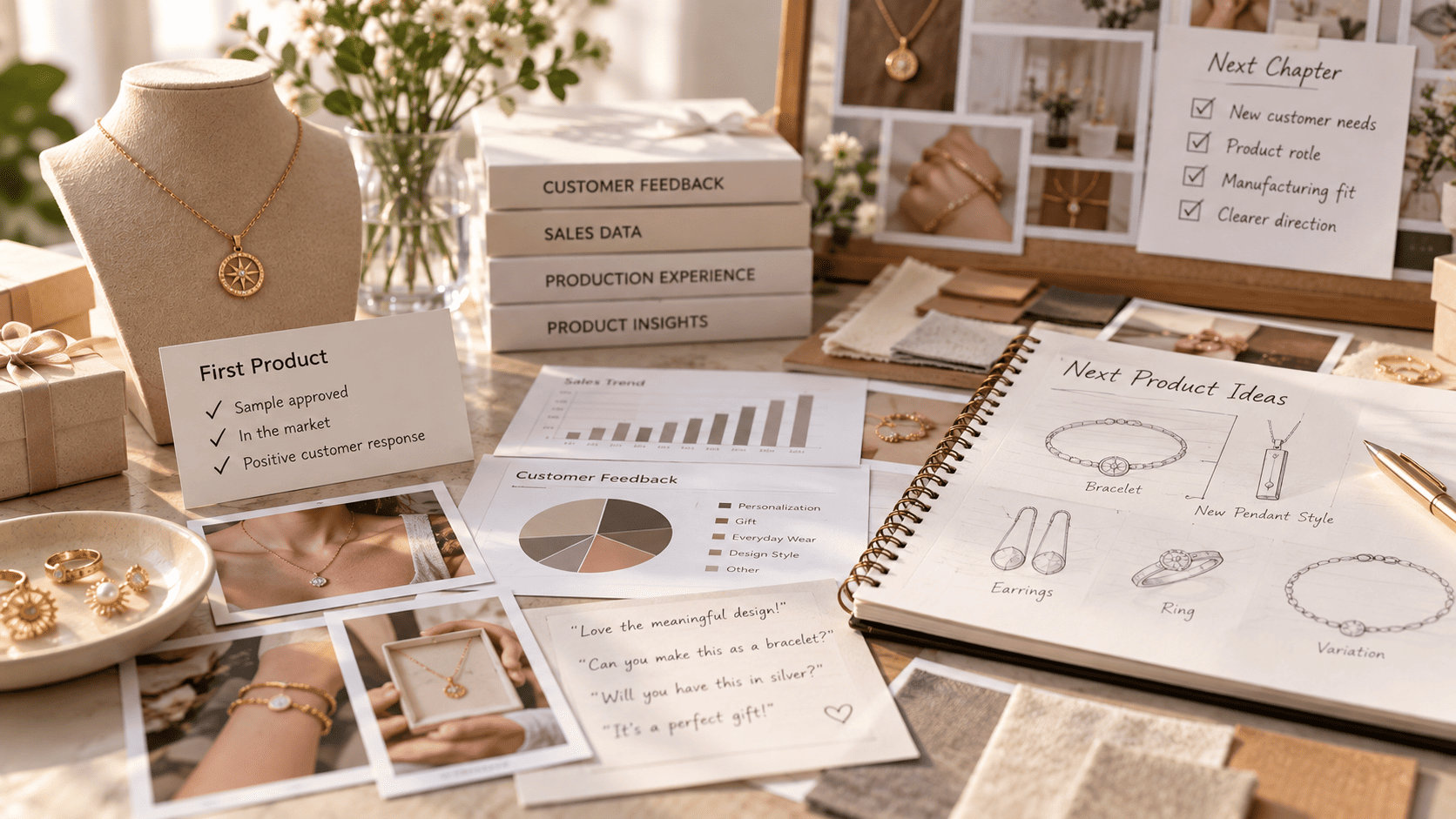
Your first launch gives you information that may not have been available during product development. Customer questions, order patterns, product feedback, and fulfillment experience can reveal whether your initial assumptions were accurate and which details need attention. The purpose of this stage is not to change the product whenever someone expresses a preference, but to understand what the feedback means for your business.
For example, customers may repeatedly ask for a different chain length, struggle to understand a personalization option, or show stronger interest in one finish than another. Some of these observations may justify a product change, while others may be addressed through clearer descriptions, better ordering instructions, or more accurate product photography. Separating manufacturing issues from customer expectations helps you avoid unnecessary development work while still responding to genuine problems.
As demand becomes clearer, you can make more informed decisions about repeat orders, new variations, inventory, and collection expansion. Keeping approved specifications and earlier production decisions organized also helps when you return to the manufacturer for another order. Instead of restarting every discussion, both sides can build on what has already been established.
You do not need to launch a large collection to begin learning. A focused first product can provide useful evidence about your customers and your production model, helping you decide what to maintain, improve, or develop next.
Common Mistakes When Starting a Custom Jewelry Business
Many early difficulties come from decisions made before the brand has enough information, rather than from a single major mistake. Being aware of a few common patterns can help you approach your first launch more carefully.
❌Starting with too many unrelated products. A broad collection increases development work, inventory decisions, and operational complexity before you know which products customers actually want. A more focused direction can make early feedback easier to interpret.
❌Treating a design idea as production-ready. A sketch or reference image may communicate the appearance you want without establishing dimensions, construction, materials, or other specifications needed for manufacturing. Clarifying these details before production can prevent misunderstandings.
❌Choosing a manufacturer based only on price or MOQ. A quotation is useful only when you understand what it includes and whether the proposed manufacturing arrangement fits your product. Lower initial quantities may help in some situations, but they do not eliminate development costs or other production considerations.
❌Approving samples without clear evaluation. A sample should be reviewed against the intended product requirements, including the details that matter to its appearance and function. Approval based only on a general impression may leave important questions unresolved.
❌Overlooking how customization affects fulfillment. When customers submit different names, dates, or engraving instructions, those details must reach production accurately. Your customization experience and your order-handling process need to work together.
These issues are easier to manage when you approach each stage as a decision that needs enough information, rather than a task to complete as quickly as possible.
Final Thoughts: Build a Custom Jewelry Business Around a Product You Can Deliver Well
Starting a custom jewelry business does not require a large initial collection or a fully developed plan for every stage of future growth. It requires a clear product direction, an understanding of the customers you want to serve, and a practical way to develop, manufacture, and deliver your first products.
The decisions you make along the way are connected. Your customization model influences manufacturing requirements, your design affects development and sampling, and your production arrangement shapes inventory and fulfillment. As you begin receiving real orders, that experience can help you decide which products to improve, repeat, or expand.
At IMEETY, we support growing Shopify and DTC jewelry brands with flexible custom jewelry development and manufacturing based on their own designs and requirements. If you are preparing your first custom jewelry product or collection, you can contact IMEETY to discuss your product direction and manufacturing needs. 👇